
A shipping-port phone is registered to Webex and still shows a Survivability Gateway registration left from a test, even though the cloud path is healthy. What should be verified before making changes?
Select an answer to reveal the explanation.
Short Explanation
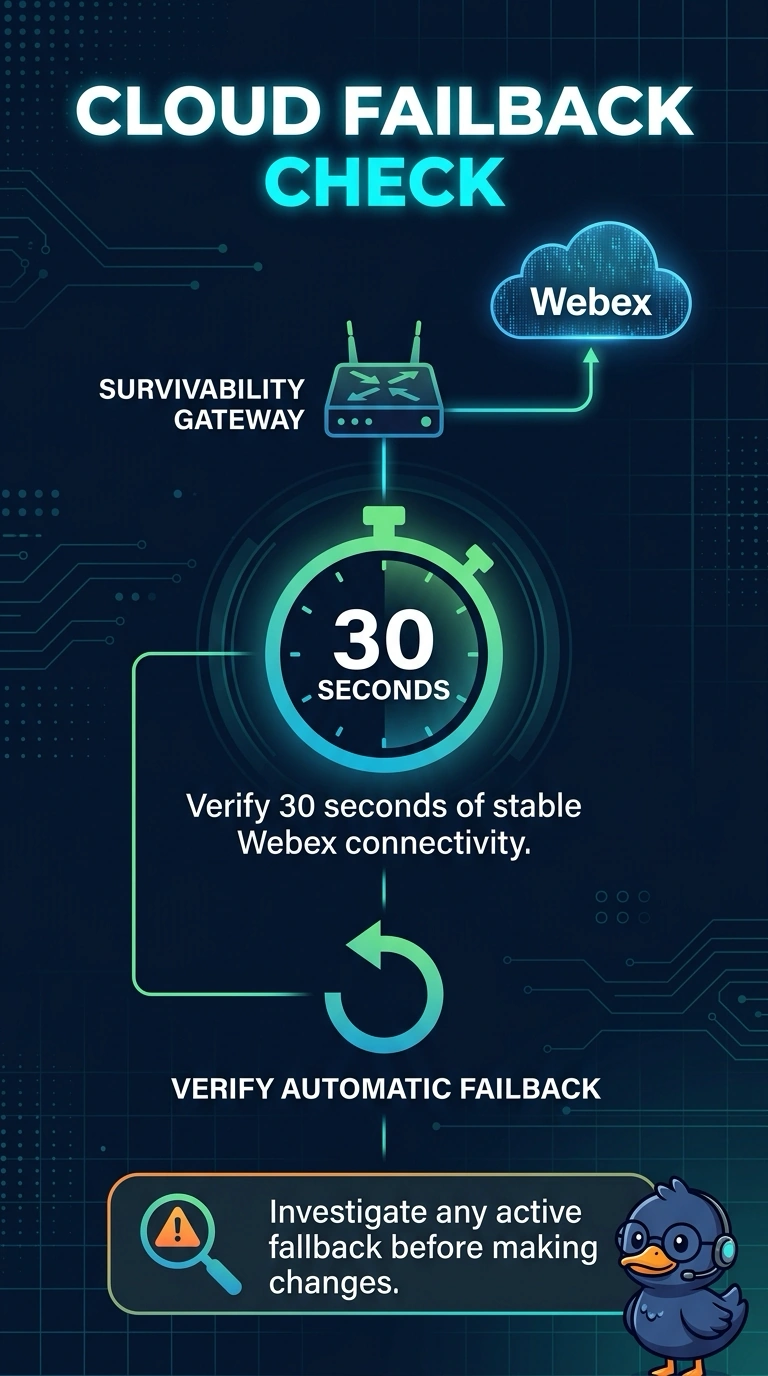
You’ve spotted a leftover test entry, so pause before clearing or changing anything. Verify automatic failback after at least 30 seconds of stable Webex connectivity, and investigate any continuing active fallback first.
Full Explanation
Phones normally register to Webex in the cloud when the path is healthy; the Survivability Gateway is the configured local fallback for outages. When connectivity returns, the phone should automatically fail back to Webex, and at least 30 seconds of stable Webex connectivity is needed to confirm that recovery. The configured backup gateway remains available for future outages, so an old registration entry alone does not prove that it still handles call control. Before making changes, verify automatic failback and investigate whether fallback is actually still active. Leaving the survivability registration in place on the assumption that it is the normal cloud registration confuses the fallback role: the gateway is not the normal registrar while the cloud path is healthy, even though its configuration is retained. Adding a translation pattern cannot rewrite a survivability registration into a Webex registration; translation patterns alter dialed digits for routing and do not change the registrar. Enabling hot desking also does not drop a test registration or select the cloud registrar; it changes who signs in on a shared device. Exam caveat: distinguish a retained fallback configuration or stale entry from active fallback call control. As a practical check, confirm the phone’s current Webex registration and whether the gateway is actually serving call control before changing the configuration.