
A new school location uses headquarters’ premises-based PSTN connection. External PSTN calls leave through headquarters in another country. What should this location use for local PSTN egress?
Select an answer to reveal the explanation.
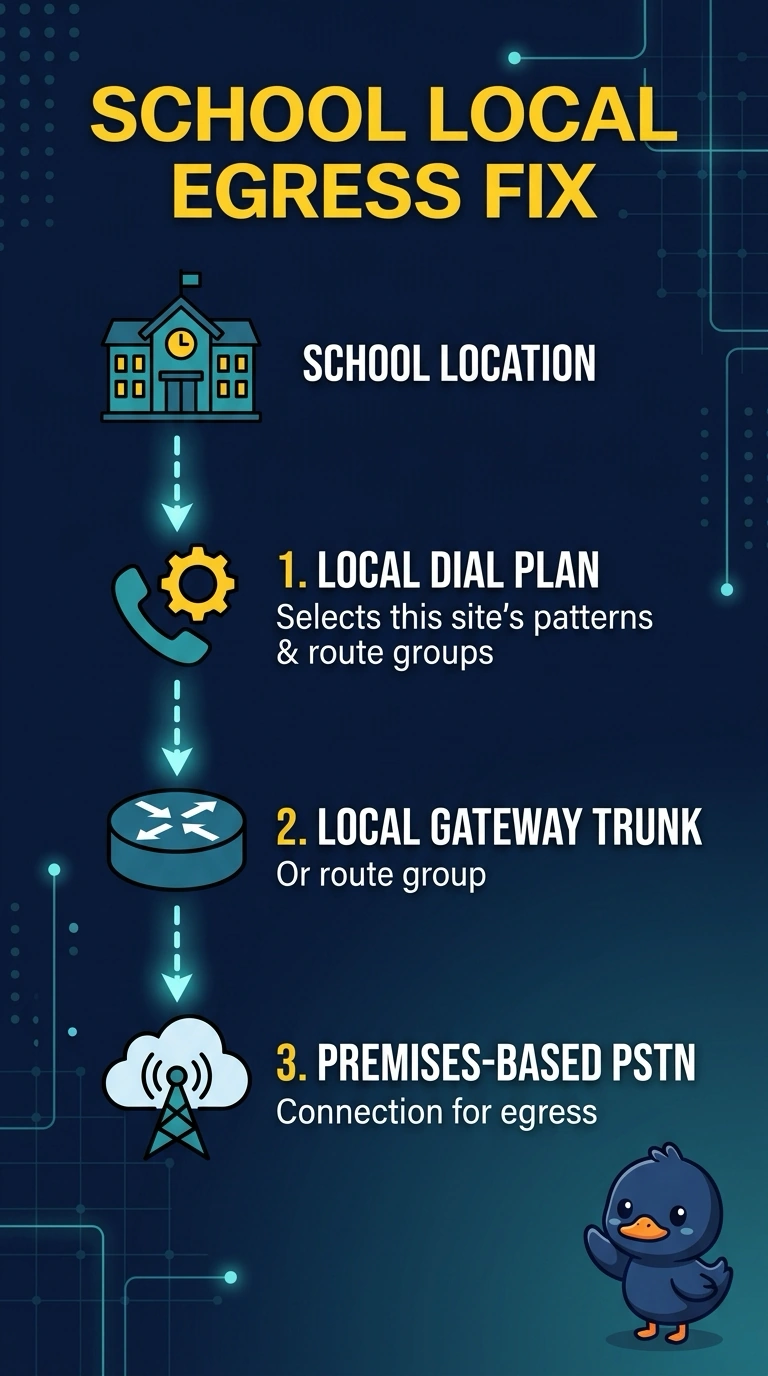
Short Explanation
You are pushing the school’s calls out through headquarters in another country. You give the school its own local egress with its Local Gateway trunk or route group. You will see local calls leave locally while on-premises dialing still works across locations.
Full Explanation
The school location is currently assigned to headquarters’ premises-based PSTN connection, so external PSTN calls leave through headquarters in another country with wrong toll, caller ID, and emergency handling for the school. The fix is to configure the school location’s premises-based PSTN connection to use the school’s Local Gateway trunk or route group, which gives the school local PSTN egress while headquarters keeps its own path. Organization dial plans match on-premises destinations across locations, so internal on-premises calling still resolves while PSTN breakout stays local to each location. A hybrid calendar connection only shows meetings on devices and has no control over trunk selection or which country gateway a placed call uses. A replaced single sign-on signing certificate only restores trust with the identity provider to return sign-in and cannot steer placed calls to a local gateway. A hot-desking sign-in on a shared board only attaches one user to the device for personalized experience and does not create a local PSTN path. Operational check: place an external PSTN call from the school location and confirm it selects the school trunk or route group and egresses locally.