
Internal callers at a clinic hear that the nurse extension is vacant. That extension was never assigned to the nurse. What makes the nurse reachable on an internal call?
Select an answer to reveal the explanation.
Short Explanation
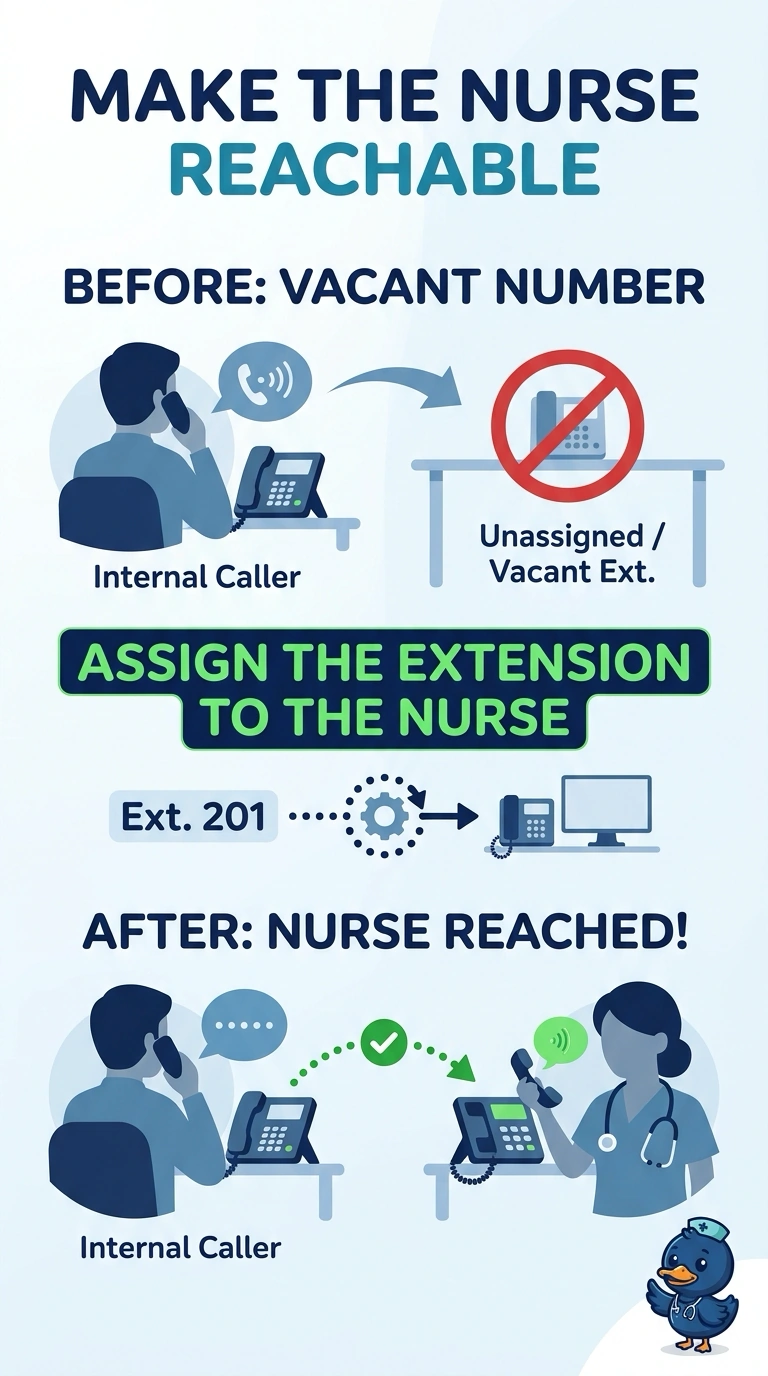
Think of a mailbox slot with no name card, so the clerk tells every visitor the box is empty. You assign the extension to the nurse so internal callers reach that person. A route group of trunks does not create the missing number or assign it automatically.
Full Explanation
An extension has to exist and be assigned before internal callers can reach the nurse. Assigning the extension to the nurse replaces the vacant treatment with a real destination. Adding the nurse to a route group of trunks does not create the missing extension or assign it; a route group is an ordered set of trunks used for capacity and failover. A translation pattern rewrites dialed digits, but it does not assign an extension, so callers still have no number bound to that user. Allowing international calling controls whether that call type is permitted; it does not bind an extension that was never assigned. Vacant treatment means the dialed extension is not bound to a person, so the issue is number assignment rather than trunk routing, digit rewriting, or international-call permission. Exam caveat: distinguish an unassigned number from a routing or call-permission issue; changing those settings does not assign the extension. Operational check: assign the extension, place an internal test call to it, and confirm it rings the nurse instead of playing the vacant treatment.