
After a factory closes for the day, callers to the main number still hear the open-hours menu. Which control should have switched what those callers hear?
Select an answer to reveal the explanation.
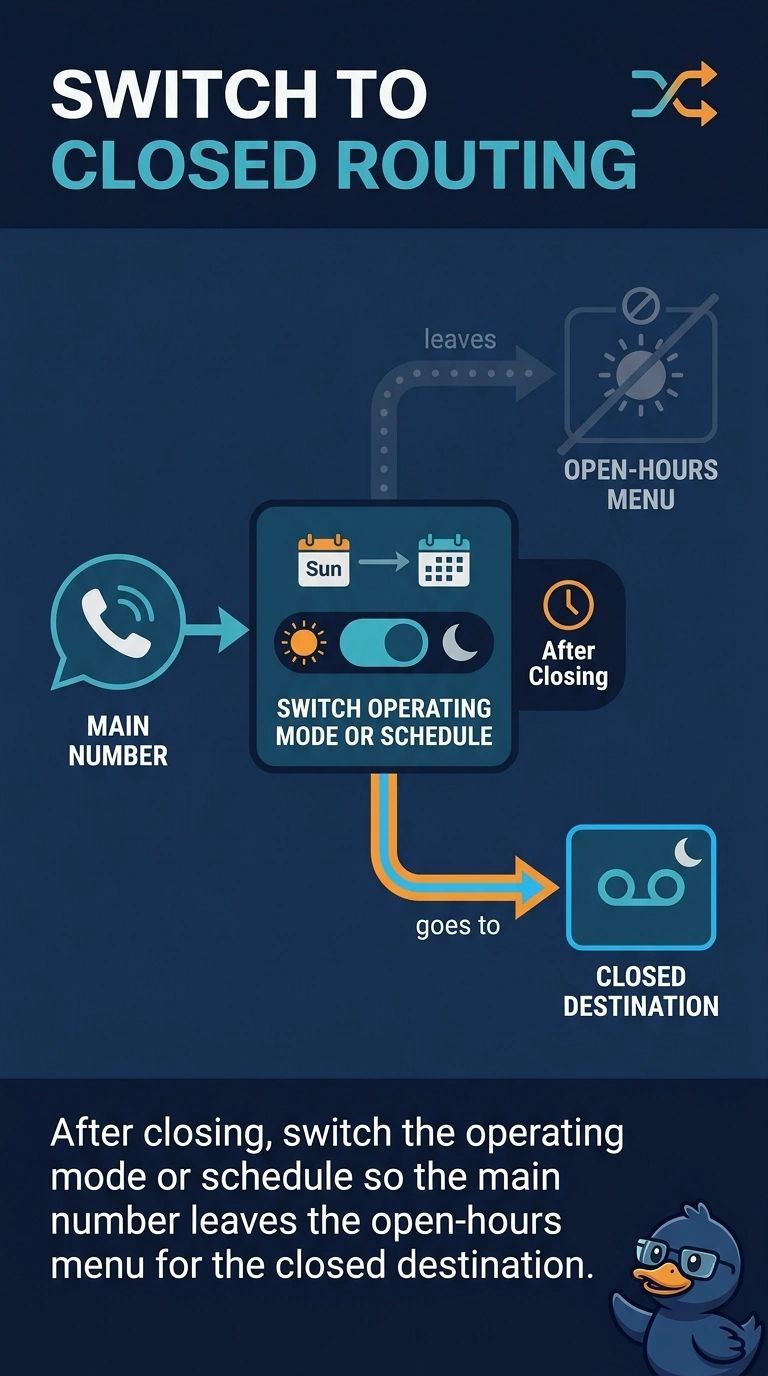
Short Explanation
A shop can leave the open sign in the window after you lock the door if nobody flips it at closing time. You need the operating mode or schedule to move the factory main number off the open menu. A translation pattern rewrites digits, and it is not a clock.
Full Explanation
An operating mode or schedule chooses which greeting or destination is active for open, closed, and holiday time. Switch the operating mode or schedule so the main number leaves the open menu for the closed destination, which is what should have changed when the factory closed and callers kept hearing the open-hours menu. The mode is a clock for routing, not a digit rewrite. Add a translation pattern on the main number, which rewrites digits and does not watch the clock or select the after-hours greeting, and you alter the number instead of selecting the closed destination. Fail the call over to the next trunk in the route group after the first trunk rejects the factory call and you pick another PSTN path, which does not choose the greeting. Require a hot-desk sign-in on a shared desk device before the factory greeting is allowed to play and you ask a person to sign in to a Board or Desk device, which is not how the main-number menu changes after closing. Exam caveat: schedules pick the active greeting or destination, and they do not rewrite digits or choose the trunk. Operational check: review the factory main number after closing and confirm the closed mode is the one in effect and that it points at the closed destination rather than the open menu.