
A hospital call queue shows a healthy trunk, but agents who signed out at shift change do not hear it ring. Which change lets those agents receive queue calls again?
Select an answer to reveal the explanation.
Short Explanation
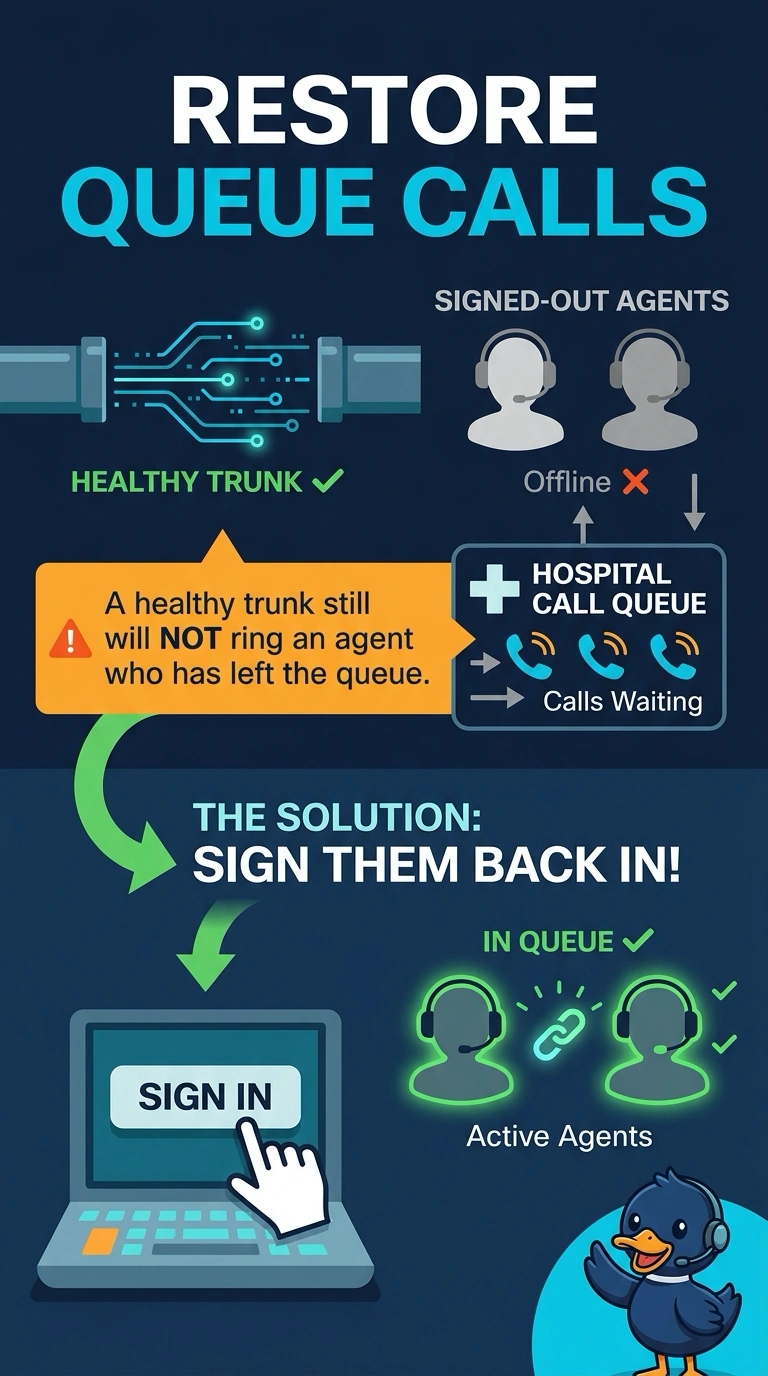
A front desk can have a working outside line and still miss you when the clerk has stepped away from the queue. You put those agents back into the hospital call queue, because a healthy trunk does not ring someone who is signed out. Swapping the trunk is the trap when the agents have simply left the queue.
Full Explanation
A Webex Calling queue offers a call only to agents who are signed into that queue. Sign those signed-out agents back into the hospital call queue, because a healthy trunk still will not ring an agent who has left the queue. Trunk status and queue membership are different checks, so the path can stay up while the evening agents stay silent. Replace the hospital location trunk, treating each signed-out agent as proof that the PSTN path itself has failed, and you rebuild a path that is already healthy without returning anyone to the queue. Add a translation pattern that rewrites the queue number into each signed-out agent's personal extension and you change digits rather than membership, so the caller can leave the queue path entirely. Remove internal call permission so the queue no longer consults the hospital dial plan for these callers and you block a call type instead of signing the agents back in. Exam caveat: registration, the dial plan, and PSTN reachability are separate faults, and a healthy trunk does not show that an agent is joined to the queue. Operational check: confirm each evening agent is signed into the hospital queue, then place a test call that rings those agents while the trunk status stays healthy.