
Control Hub shows a clinic certificate-based trunk offline. The gateway answers, but OPTIONS and the Contact header omit the FQDN that public DNS publishes for it. What must those messages carry?
Select an answer to reveal the explanation.
Short Explanation
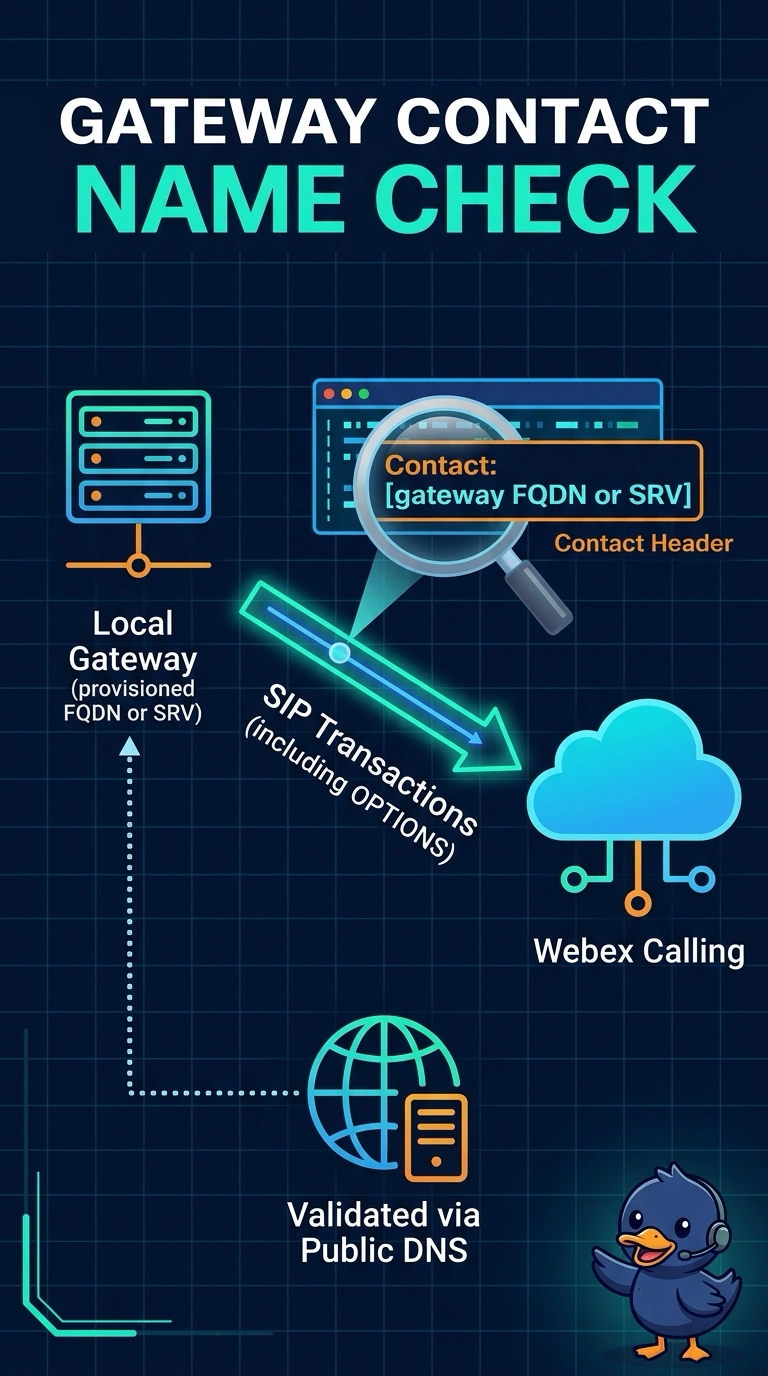
If the return address on the envelope does not match the public directory, the front office marks the sender missing. You put the gateway FQDN in the Contact header, including OPTIONS, so it matches the published name. Without that name, Control Hub leaves the certificate-based trunk offline.
Full Explanation
Control Hub marks a certificate-based trunk online when it sees the gateway FQDN in the Contact header, including OPTIONS, and that name has to be the one public DNS publishes. A private address alone does not satisfy that check, and the claim that a certificate-based trunk ignores names and comes online from a digest registration describes the registration-based model instead. A wildcard name in the Contact header is not a substitute for the gateway name, and wildcard certificates are not supported on this trunk. The calling user's extension in the Contact header names a line and does not identify the gateway name to Control Hub. OPTIONS counts here because that keepalive is one of the messages that must present the gateway FQDN Control Hub compares with public DNS. Exam caveat: this model has no automated configuration troubleshooting in Control Hub, so the header and DNS name have to be compared directly. Operational check: capture OPTIONS from the clinic gateway and confirm the Contact header FQDN matches the public DNS record, then refresh the trunk status. Also verify the name, certificate identity, TLS connectivity and DNS record.