
A clinic builds a certificate-based local gateway, but the gateway domain is not verified in Control Hub and no public DNS record exists for it. What must be finished before that trunk can be trusted?
Select an answer to reveal the explanation.
Short Explanation
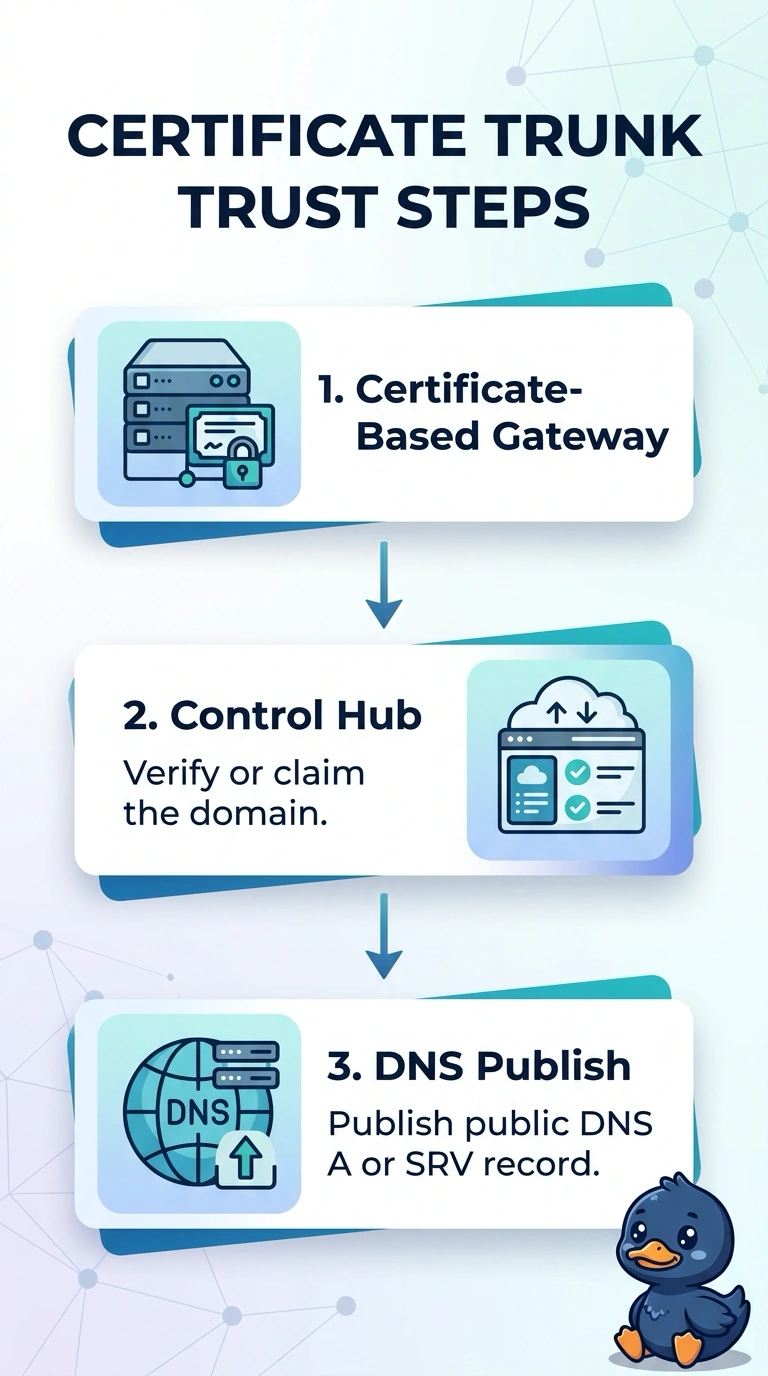
Think of the gateway as a guest whose name must be on the guard desk’s list: you need to verify or claim the domain in Control Hub as required for the trunk identity, and publish its public DNS A or SRV record before the certificate-based trunk can be trusted. You can’t substitute a digest password or dynamic NAT, which fit a registration-based trunk, or keep only a private certificate name without the public DNS name.
Full Explanation
A certificate-based local gateway requires the domain used for its trunk identity to be verified or claimed in Control Hub as required, a public DNS A or SRV record, and a CA-signed certificate before the trunk can be trusted. To complete the setup, verify or claim the domain in Control Hub and publish the public DNS record for the gateway. Leaving the domain unverified and using dynamic NAT fits a registration-based trunk, where dynamic NAT is acceptable, but does not meet this certificate-based model. Enrolling the gateway with only a digest password is also the registration-based path; it does not verify the gateway domain in Control Hub. Skipping the public DNS name and keeping a private certificate name leaves Control Hub without the published gateway name this certificate-based trunk needs. Exam caveat: wildcard certificates are not supported for this model, so the DNS name and certificate name must match a real gateway FQDN. Practical check: confirm that the clinic domain shows as verified in Control Hub and that a public DNS lookup returns the gateway record before expecting the trunk to be trusted.