
A warehouse enables hybrid calendar on its room devices and expects that change to move message encryption keys into the warehouse data center. What does hybrid calendar actually do?
Select an answer to reveal the explanation.
Short Explanation
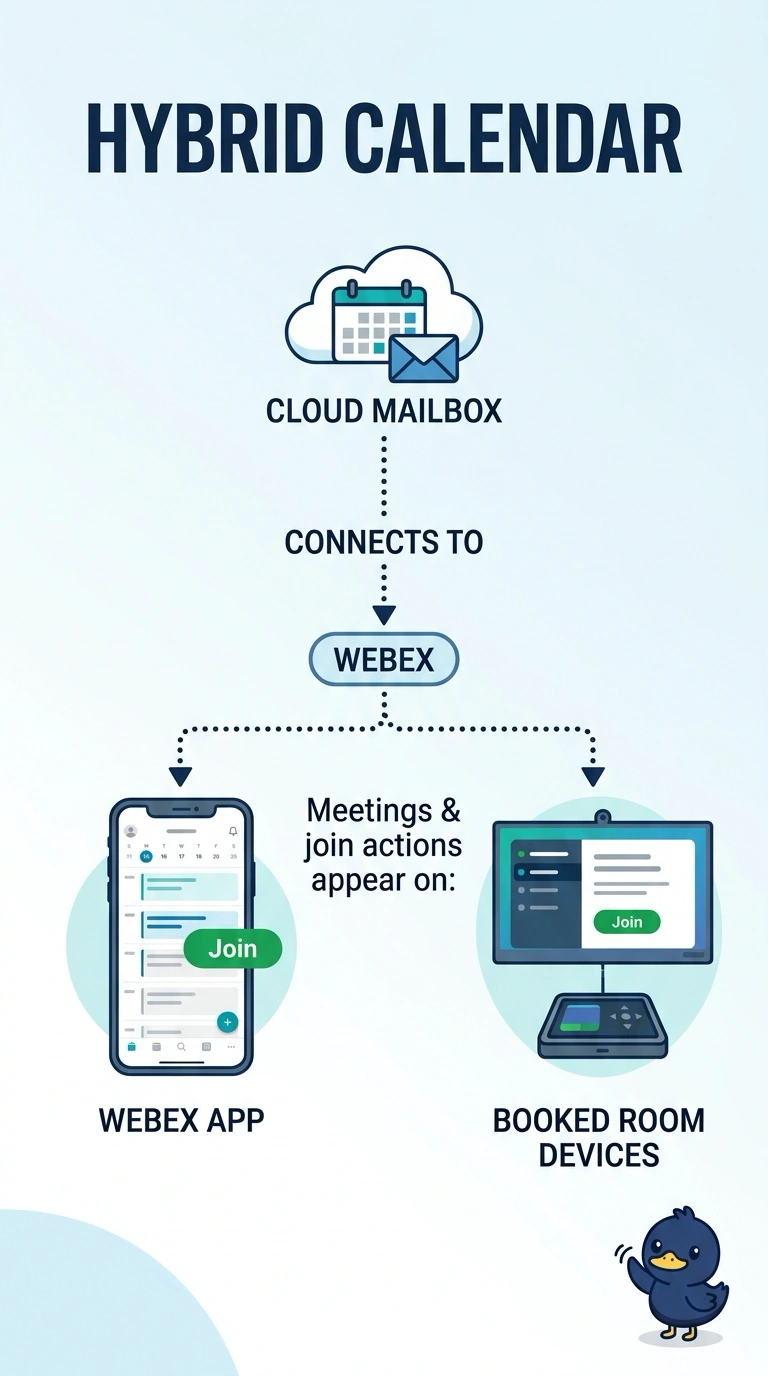
Posting a meeting on the warehouse door is not the same as moving the safe into the building. You use hybrid calendar to show meetings and a join action on the Webex app and on room devices. It does not move key management on-premises the way Hybrid Data Security does.
Full Explanation
Hybrid calendar connects a cloud mailbox so meetings and a join action appear on the Webex app and on room devices. That is a scheduling connection, and it does not relocate encryption keys. The statement that it moves key management, indexing, and compliance into the warehouse data center describes Hybrid Data Security, which is a different deployment and not a calendar feature. Verifying the organization domain and publishing public DNS is a requirement of a certificate-based local-gateway trunk, not of calendar sync. Registering the gateway with a digest username is how a registration-based trunk comes up, and that registration is unrelated to whether meetings appear on a device. Exam caveat: Hybrid Data Security moves key management, indexing, and compliance to the customer data center, while identity and encrypted content storage stay in the cloud. Operational check: book a warehouse meeting in the connected mailbox and confirm the room device offers join, then confirm key placement was not changed by that calendar setup.