
Hospital counsel wants to turn off the message retention policy because AI meeting summaries now exist and are treated as the legal record. Which control should remain in place?
Select an answer to reveal the explanation.
Short Explanation
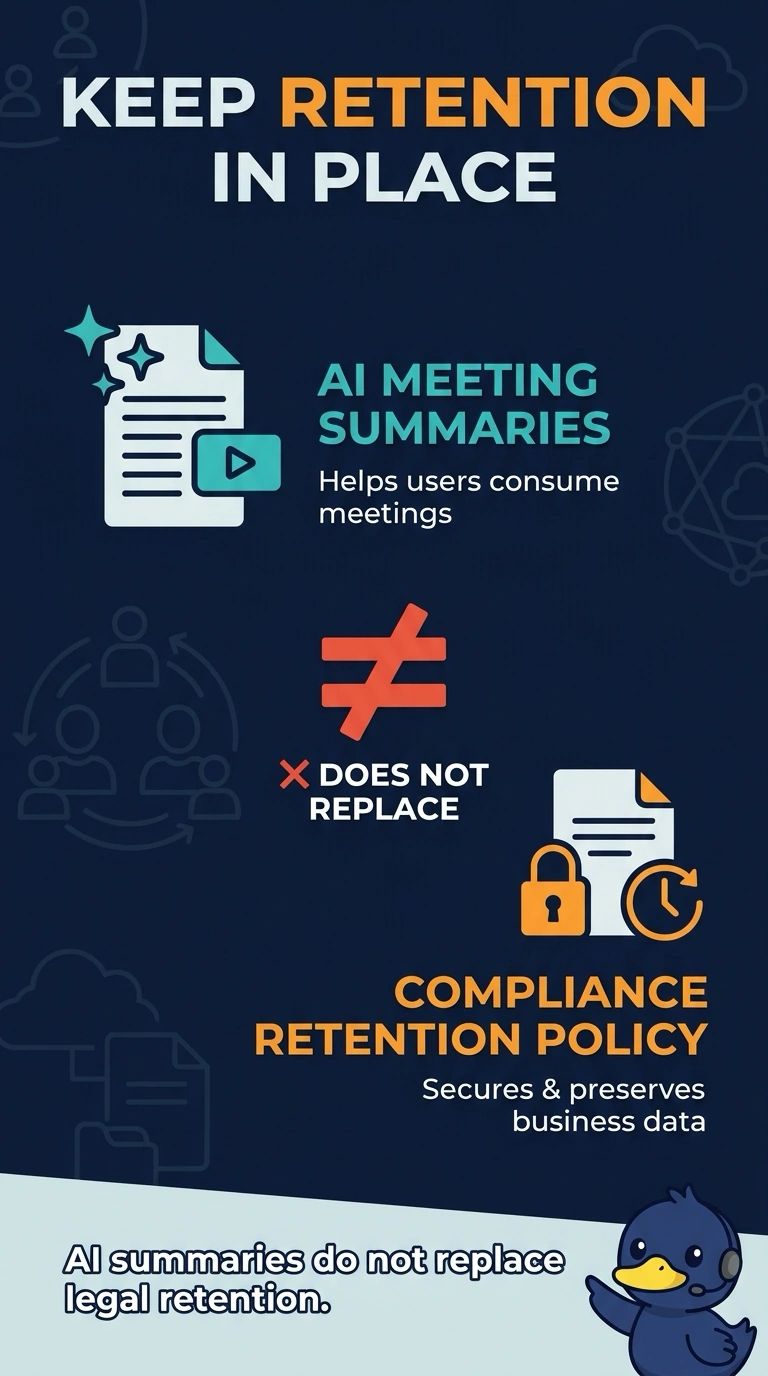
A meeting summary is like notes scribbled on a napkin after lunch. You can read them later, but they are not the record the hospital must keep for a set time. The trap is retiring the retention policy because an AI summary now exists.
Full Explanation
A meeting summary helps people consume a meeting. It is a reading aid, and it does not replace a retention policy or decide how long messages must be kept. Hospital counsel should keep the compliance retention policy in place. Retiring the message retention policy and treating the AI meeting summary as the legal record confuses that aid with the compliance control that actually keeps messages. Moving message retention onto the local gateway trunk fails because a trunk carries calls and does not become the store for organization message retention, and call recordings are a different object from retained messages. Placing the meeting summary inside the key management service misses that service's job. The key management service creates the keys clients use to encrypt content. It does not hold message content for the retention period. Exam caveat: generating a summary can still help readers, but the retention schedule remains the compliance policy, and turning that policy off leaves messages without the hold counsel expects. Operational check: note a test message's retention deadline, generate a summary of a meeting that mentioned it, and confirm the message still follows the compliance schedule.