
University counsel needs eDiscovery of a departed employee's Webex messages and files. Which service should perform that search?
Select an answer to reveal the explanation.
Short Explanation
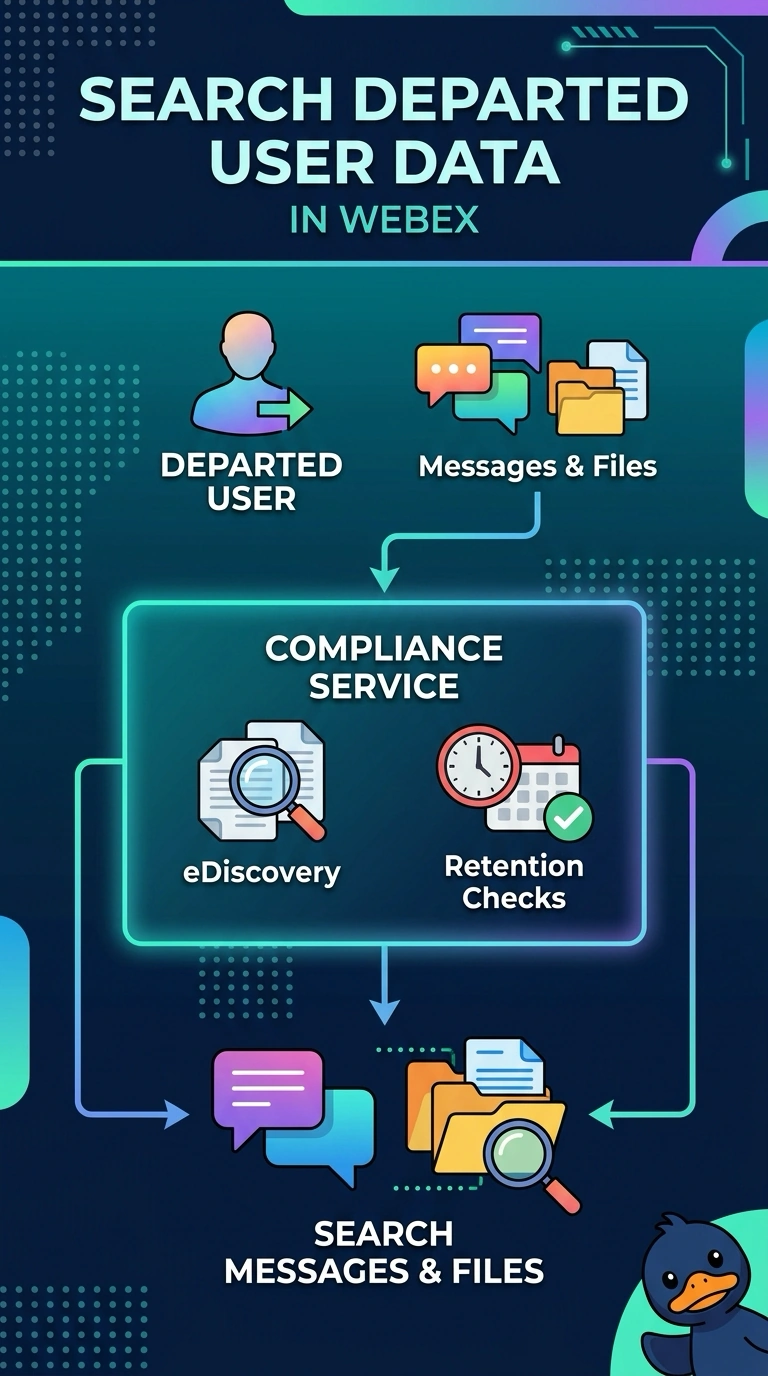
A records request is like asking the archive desk to pull a file, not like tracing which hallway the person walked. You use the compliance service, which is built for eDiscovery. The trap is expecting a call trace, or a search index, to hand you stored plaintext.
Full Explanation
The compliance service supports eDiscovery and retention checks, so a search for a departed user's messages and files belongs there. A dial-plan trace on the old extension shows how calls were routed. It does not reconstruct message and file history, because messaging content is not a dial-plan object. The indexing service creates encrypted search indexes. Search retained, in-scope content through Control Hub eDiscovery as a compliance officer. The content server stores the encrypted messages and files. Opening those objects directly skips the compliance search and does not give counsel a proper eDiscovery result. Exam caveat: retention checks and eDiscovery share the compliance service, so a dial-plan trace run the same day does not satisfy counsel if that compliance search was never started. Operational check: run the departed user's search from the compliance workflow and confirm results come back as discovery output rather than as a call trace or a raw file dump. This keeps eDiscovery distinct from routing, indexing, and storage.