
A university security review asks how Webex search can find words in messages without keeping those messages in the clear inside the search database. Which description matches the indexing service?
Select an answer to reveal the explanation.
Short Explanation
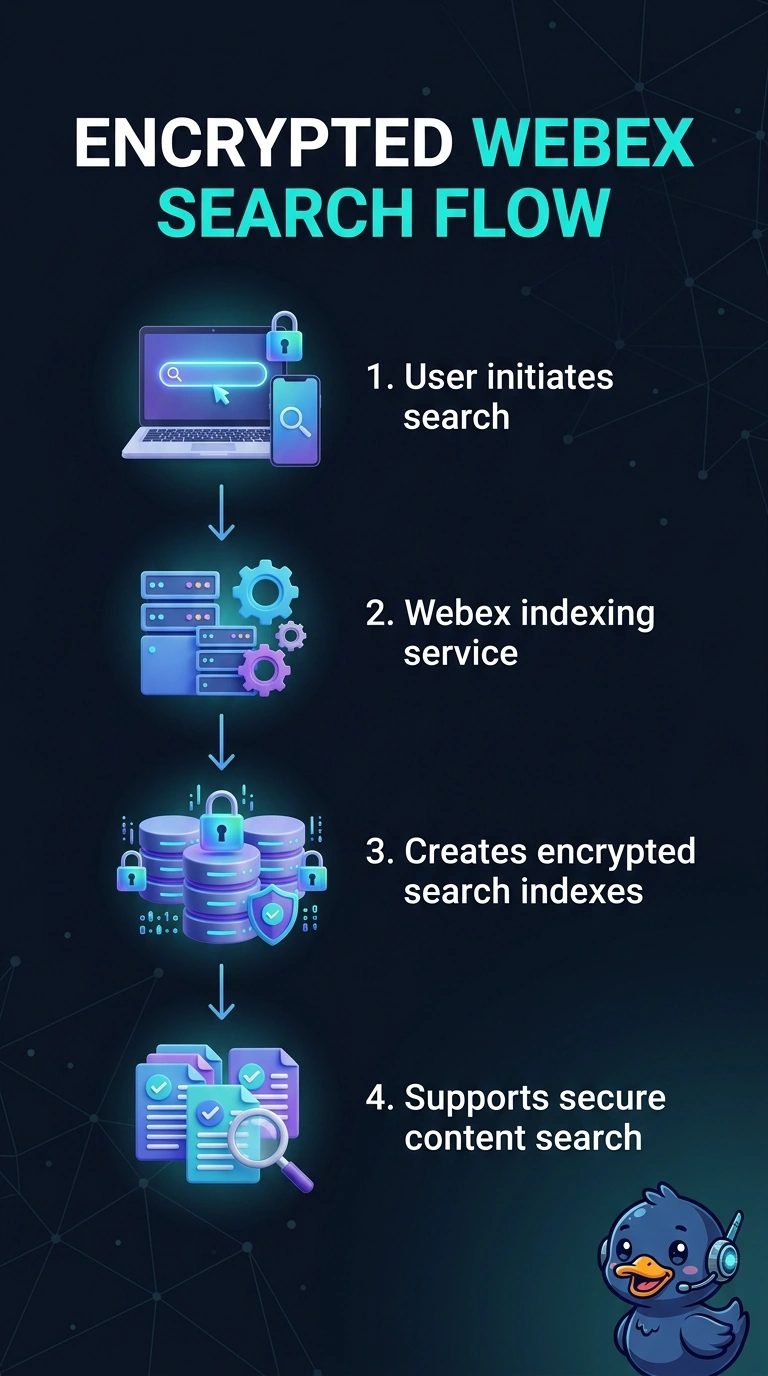
Think of a locked card catalog you can search without photocopying every page. The Webex indexing service creates encrypted search indexes that support content search. The trap you must avoid is assuming readable messages have to sit in the search database.
Full Explanation
The Webex indexing service creates encrypted search indexes that support content search. The client encrypts the message before sending it for indexing. The search index is encrypted and the content storage realm holds encrypted messages. This lets you find words without keeping messages in the clear, because search uses the encrypted index rather than readable bodies. The compliance service keeps plaintext university messages so eDiscovery can read them without building a hashed index assigns the work to the wrong service, because compliance supports eDiscovery and retention checks rather than creating search indexes. The identity service stores the search index and authenticates each query by decrypting the person's password confuses authentication with indexing, because identity authenticates the user rather than holding the search index. The indexing service stores full plaintext copies of university messages in the search database so later queries can read them directly describes the design the review should reject, because both the index and the storage realm remain encrypted. Exam caveat: the content server stores encrypted messages and files, with no plaintext copy left for search. Operational check: review the security design and confirm search is described as encrypted indexes, with no requirement that the search database retain readable message bodies.