
A hotel chain must allow tail-end hop-off toward one country and forbid it toward another. One unrestricted route currently sends both countries out the same path. How should the dial plan be built?
Select an answer to reveal the explanation.
Short Explanation
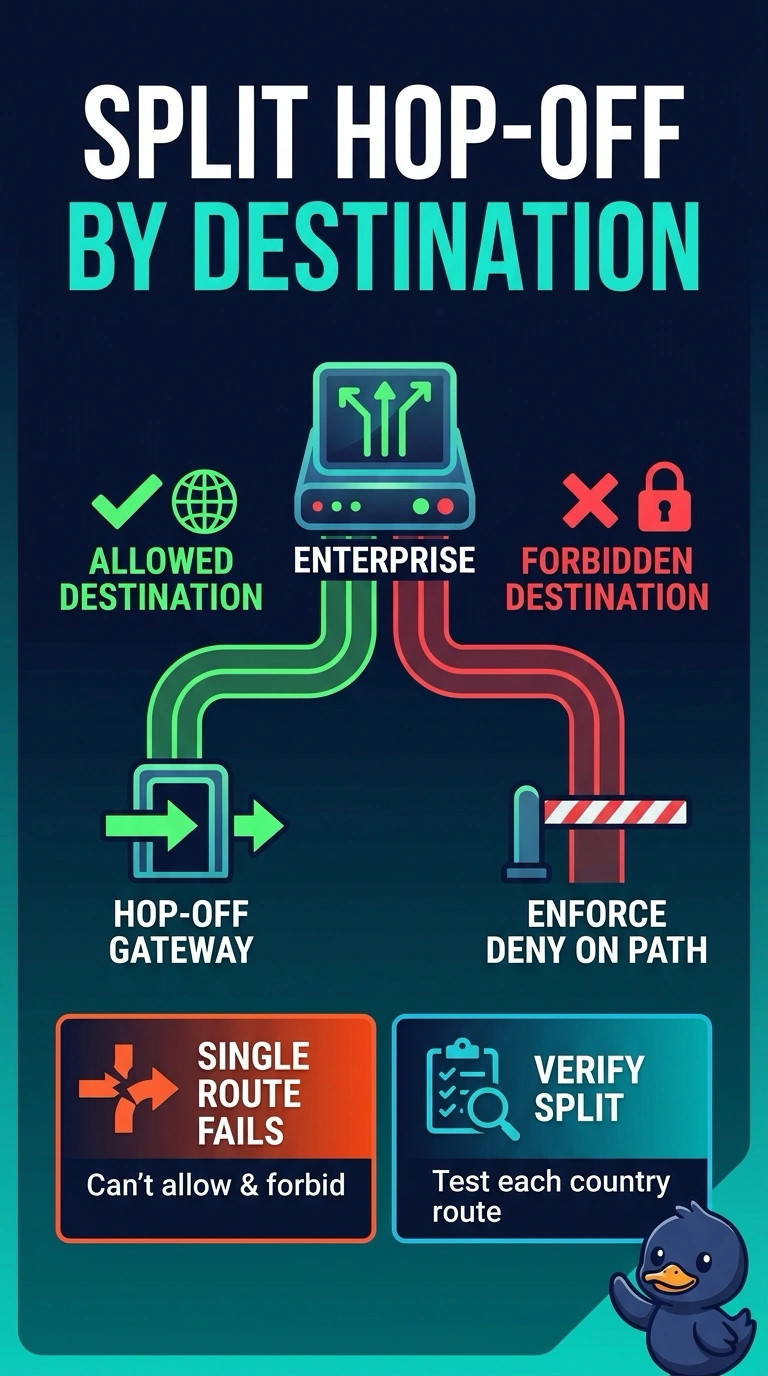
One corridor with no split cannot be permitted for one destination and forbidden for another. You branch the dial plan by destination so the two countries take different routes. The trap is keeping a single unrestricted route and hoping a location name or a survivability setting sorts the countries apart.
Full Explanation
Tail-end hop-off is wanted for one country and forbidden for another, so those destinations cannot share one unrestricted route that treats them the same. The dial plan has to choose a different route by destination. Branch the hotel dial plan by destination so the allowed country and the forbidden country take different routes. Keep the one unrestricted route and allow both countries through call permissions so they continue to share that same path does the opposite of the requirement. Opening permissions so both countries share the unrestricted route would allow the country that must be forbidden. Use one unrestricted route group for every country and depend on the hotel location name to block the country where hop-off is forbidden expects a location label to filter destinations. A location owns numbers, the gateway or trunk, and local calling identity. The location name does not silently block one country inside a single unrestricted route group. Disable site survivability until both countries are forced to share the same PSTN trunk and the same permissions turns off backup calling and still leaves both countries on one path. Survivability is the local fallback registrar during a cloud outage. It does not split hop-off policy by country. Exam caveat: a single unrestricted route cannot both allow and forbid the same style of hop-off. Operational check: place a test call to each country and confirm the dial plan sends them on different routes.