
A neighborhood clinic wants Unified CM alerts and certificate status in Control Hub, and it does not want every phone moved to Webex Calling. Which approach matches that request?
Select an answer to reveal the explanation.
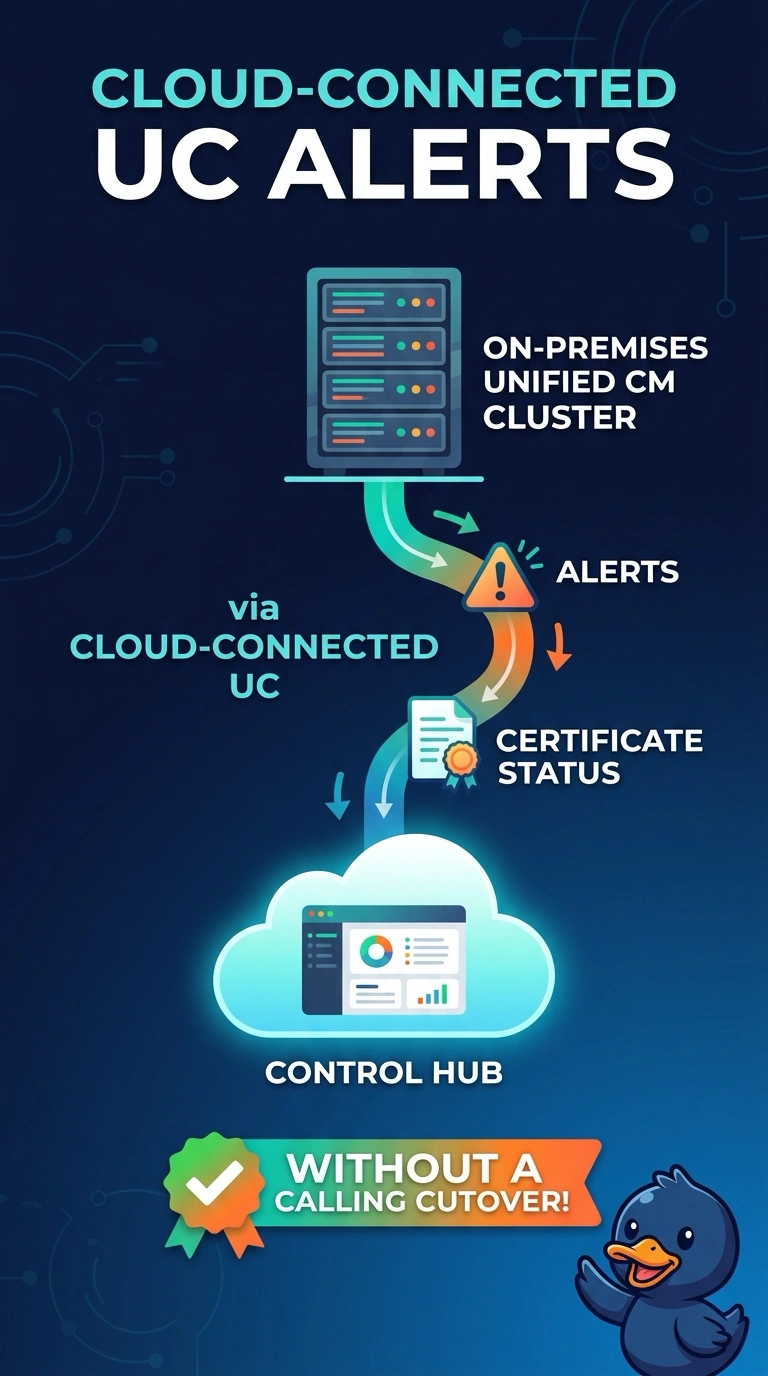
Short Explanation
A window into the clinic records is not the same job as moving the clinic across town. You use Cloud-Connected UC when you want Unified CM visibility in Control Hub and you are not cutting the phones over. The trap is treating a calling cutover as the way to see the cluster.
Full Explanation
Cloud-Connected UC connects an on-premises Unified CM cluster to Control Hub for cloud-connected operations. It does not by itself convert every phone to a Webex Calling registration. The clinic wants alerts and certificate status in Control Hub while phones stay on Unified CM, so you use Cloud-Connected UC so the on-premises Unified CM cluster reports alerts and certificate status into Control Hub without a calling cutover. Cutting every clinic phone over to a Webex Calling registration so Control Hub replaces the on-premises Unified CM cluster as the only call-control server is a calling migration, which this request explicitly avoids. Replacing the clinic dial plan with a cloud route group and retiring the Unified CM cluster before the weekend change window removes the cluster instead of reporting on it. Pointing the clinic local gateway registration at Control Hub and treating that trunk status as the Unified CM cluster health view watches a calling trunk, and a local gateway registration does not feed Unified CM analytics. On the exam, visibility for an on-premises cluster is Cloud-Connected UC, and a cutover to Webex Calling is a different project. In operations, confirm the cluster shows current in Control Hub while the clinic phones still register to Unified CM.