
A bank engineer pasted the Entra ID SCIM bearer token into a ticket that later circulated outside the team. Provisioning from Entra ID into Control Hub still accepts that token. Which action retires the exposed credential?
Select an answer to reveal the explanation.
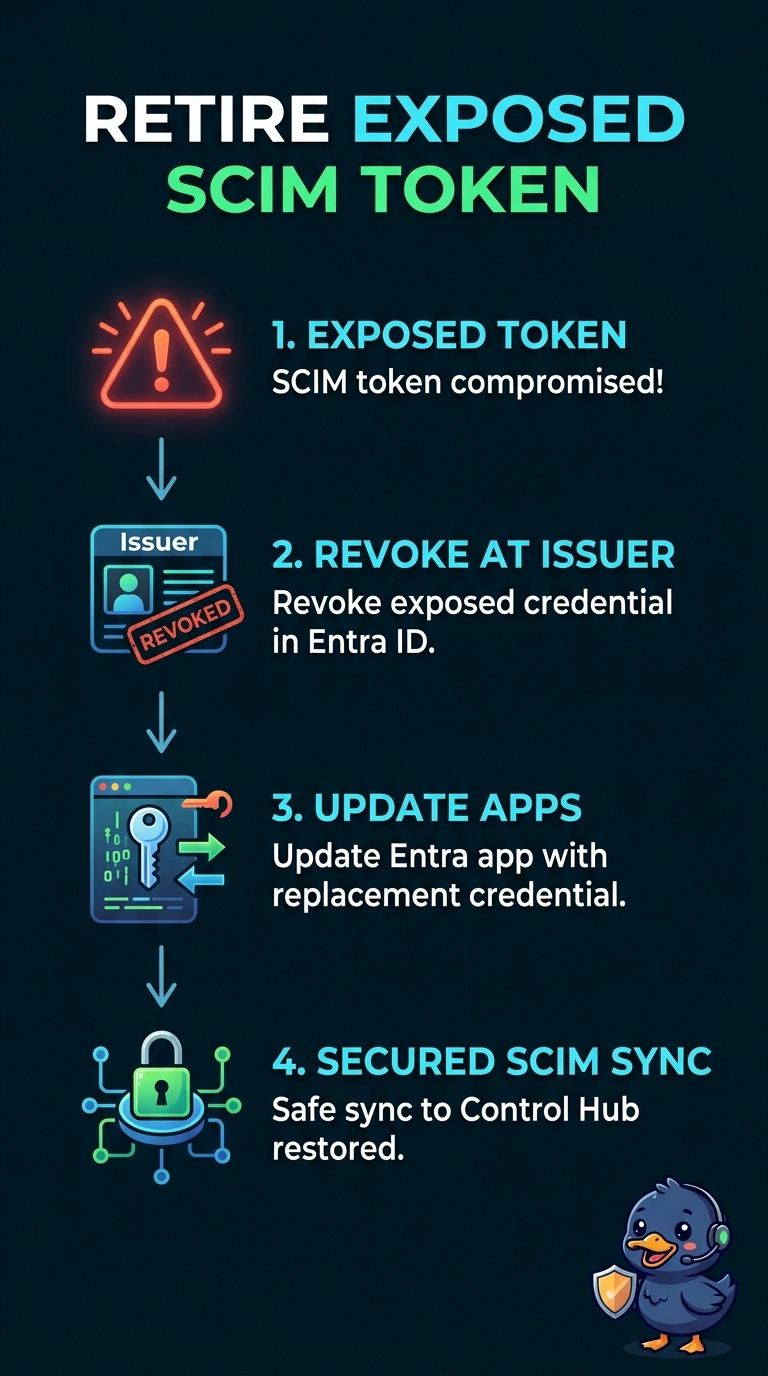
Short Explanation
A leaked spare key still opens the door until you change the lock. You rotate the SCIM bearer token so the value in that ticket can no longer provision users. Replacing the sign-on certificate, restarting a connector this bank is not using, or pulling licenses leaves the leaked token alive.
Full Explanation
Rotate the SCIM bearer token on the Entra ID provisioning app so the leaked value can no longer create or update bank users in Control Hub. The bearer token is the credential the provisioning app presents, so replacing that token is what stops the leaked value from writing users. Replace the single sign-on signing certificate on the bank identity provider and leave the current SCIM bearer token unchanged. A signing certificate authenticates single sign-on redirects, and replacing it does not revoke the SCIM bearer token. Restart the on-premises Directory Connector even though these bank users are provisioned by SCIM rather than that connector. Directory Connector is a different sync path, and restarting it does not retire a SCIM token while SCIM still owns provisioning. Remove calling licenses from bank users so the leaked SCIM token has a smaller set of accounts it is able to change. Taking licenses away changes what a user can use, and it does not invalidate the token that can still provision users. Exam caveat: Directory Connector and SCIM must not both own the same organization, so fix the SCIM credential on the SCIM path rather than treating this as a connector outage. Confirm the old bearer token is rejected and the new credential provisions a test user.