
A utility provisioning application creates users in Control Hub through SCIM but never updates the department attribute after it changes in the identity provider. The supported department attribute is omitted from updates in the provisioning mapping. Where is the gap?
Select an answer to reveal the explanation.
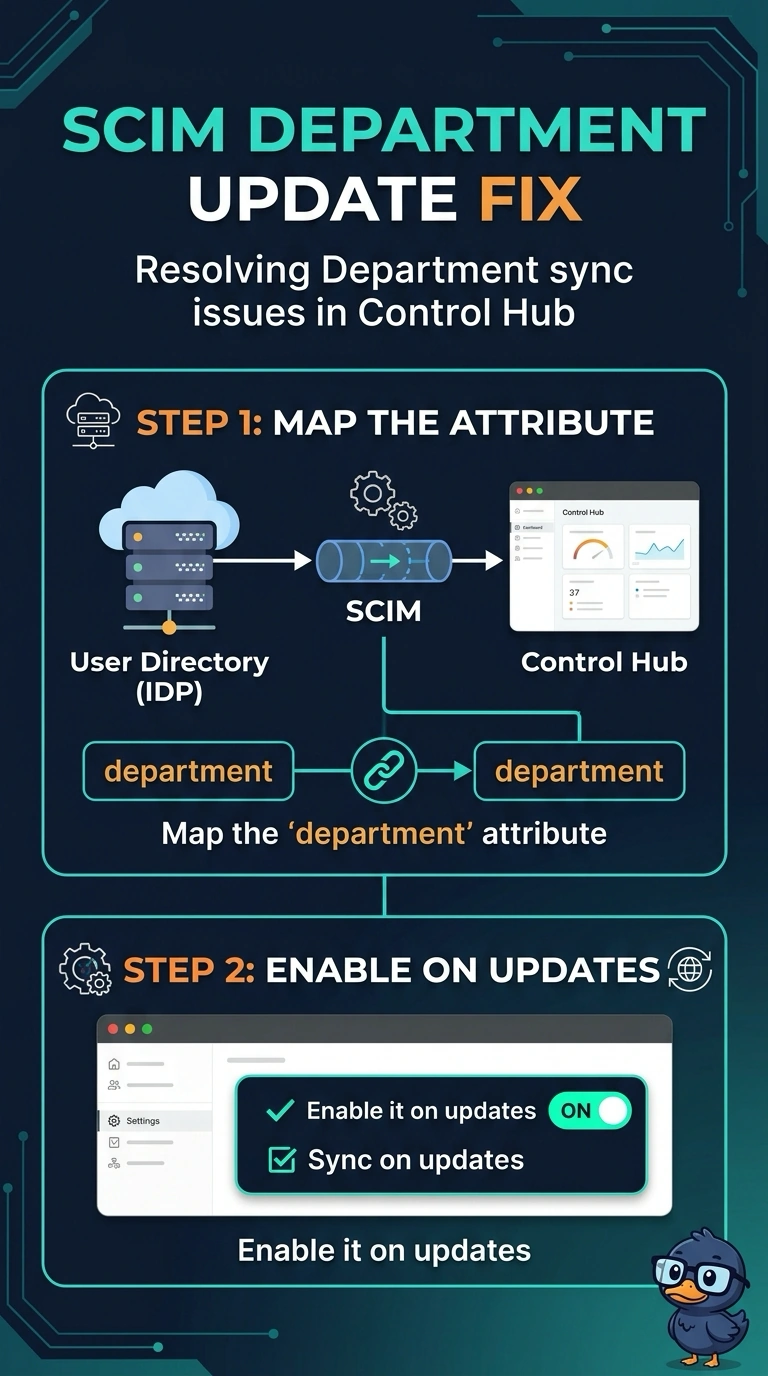
Short Explanation
Think of a new-hire form that copies the name and leaves the department line blank every time the form is sent again. You map the department attribute in the provisioning application so later changes in the identity provider are written to Control Hub. The trap is a translation pattern, a second directory connector, or a retention timer, none of which pushes that attribute.
Full Explanation
SCIM provisioning follows create, update, and delete only for the attributes the provisioning application actually maps. Users appear, and the department value stays stale, because the supported department attribute is omitted from updates in the provisioning mapping. The fix is to map the supported department attribute and enable it on updates, so later changes in the identity provider are written to Control Hub. Check the outgoing provisioning payload to verify the mapping applies on updates. A create that succeeds does not prove every attribute is mapped, so an update of one field can stay silent while new users still appear. Adding a translation pattern so the department value is rewritten into the Control Hub user record on each call uses a dial-plan rewrite, and a translation pattern does not push a directory attribute. Installing Directory Connector beside the SCIM app so both sources can push the department attribute adds a second owner, and Directory Connector and SCIM must not both own the same organization. Lengthening organization message retention, because retention must allow SCIM to write the department attribute, changes how long messages are kept, and retention does not carry directory attributes.