
A construction firm developer calls the Meetings API to obtain other people's Webex message plaintext, expecting the meeting roster to include that decrypted text. What is the sound approach?
Select an answer to reveal the explanation.
Short Explanation
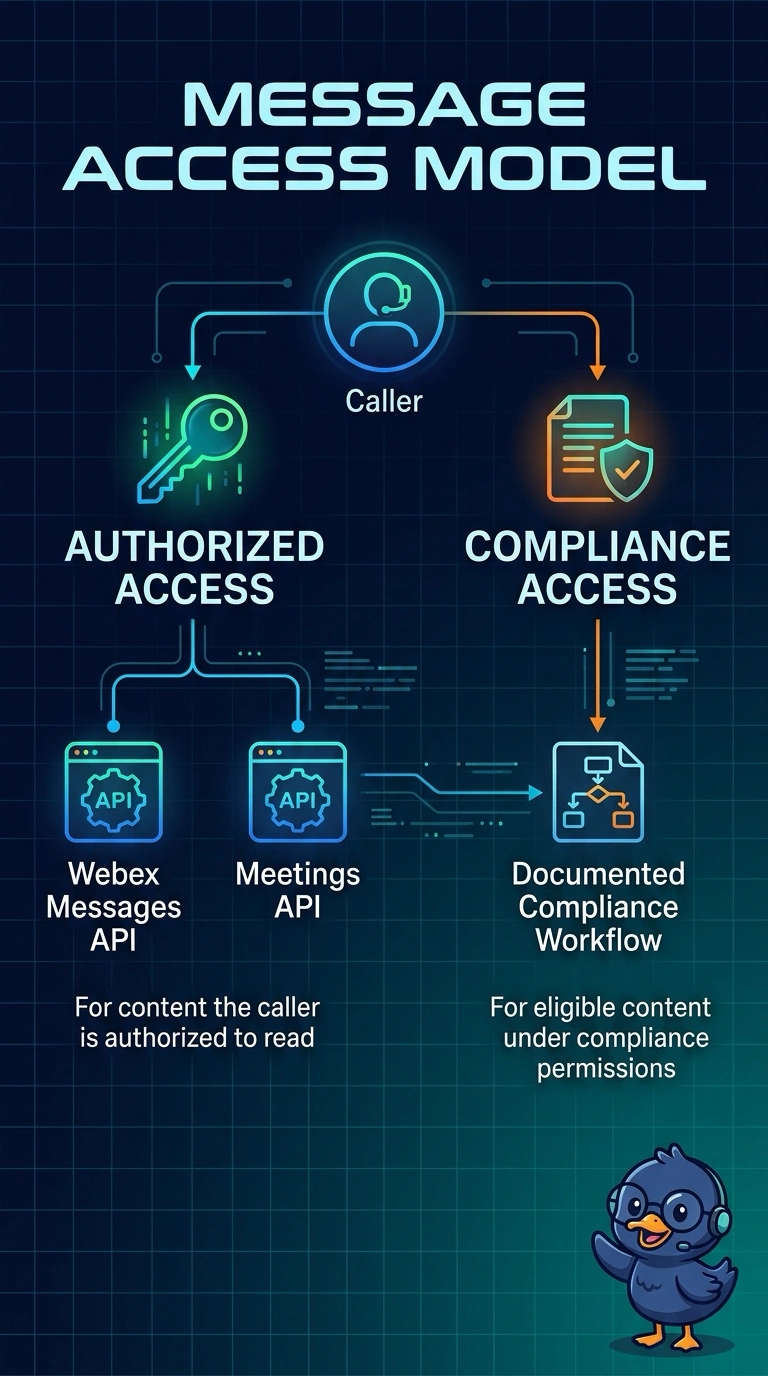
You asked the front desk for the words inside a sealed letter, and the front desk only keeps the meeting list. Message content follows the messaging and key model, and a REST call should not be expected to return other people's plaintext. The trap is reading a meeting roster and treating it as decrypted messages.
Full Explanation
Messaging works with spaces and messages. Meetings works with meetings. The key service creates the keys clients use to encrypt content, and the content server stores the encrypted messages and files. Other people's message plaintext is not a meeting roster, so use the messaging and key model for message content, and do not expect a REST call to return other people's plaintext. A meeting roster contains participant data. It cannot return Webex space messages. The People API works with users, including licenses and roles, and that user API does not return the plaintext of their messages. The Calling API works with calling features, and call detail records do not include the decrypted text of their messages. On exam day, choose the API family that matches the object, and do not treat a meeting, a person, or a call record as decrypted message content. After the change, review the integration and confirm it uses messaging for spaces and messages and does not request other people's plaintext from Meetings, People, or Calling.