
An airline lounge Board runs a macro, and the macro file contains a Webex bot token that any occupant who opens the device can read. Where should that token be kept?
Select an answer to reveal the explanation.
Short Explanation
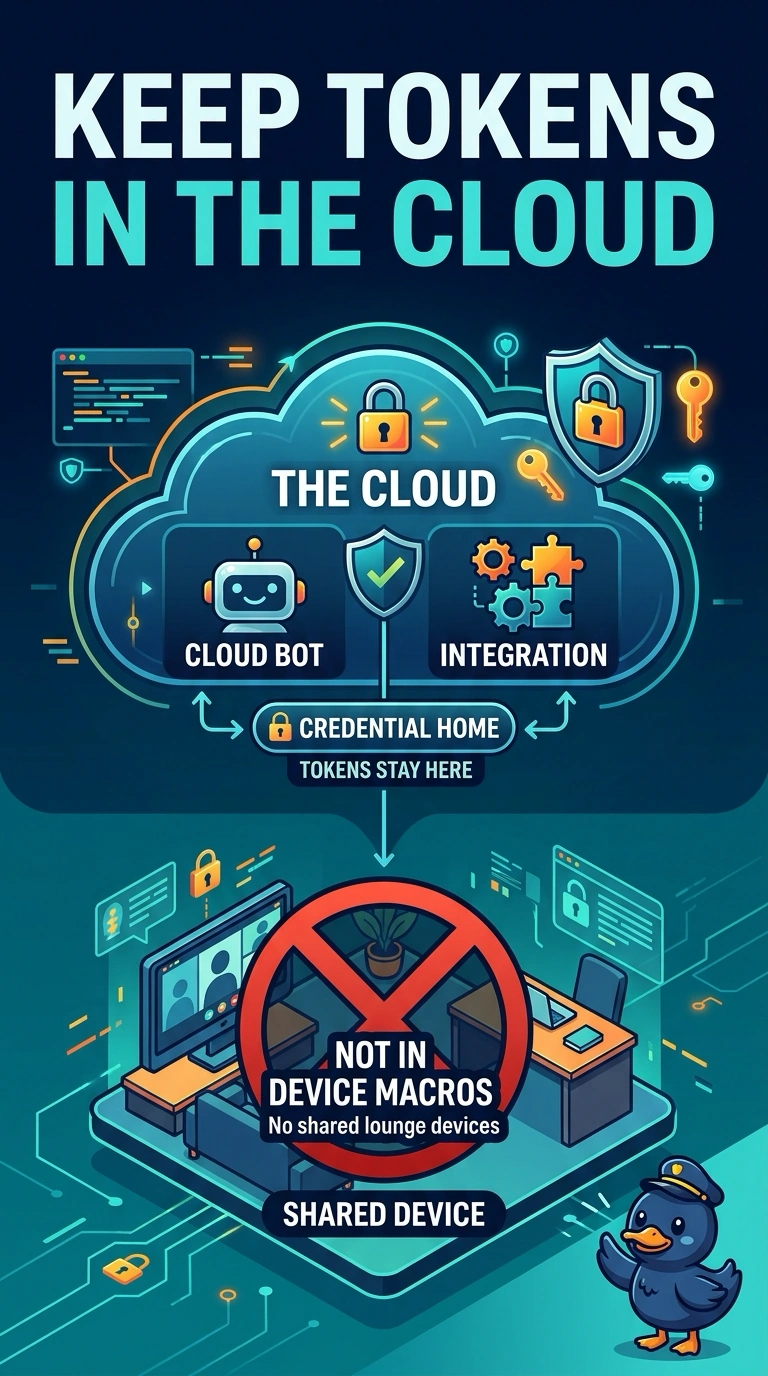
Leaving the building master key on the lounge table means every visitor can copy it. You keep the Webex bot token in the cloud bot or integration, not in a macro on the shared Board. Storing that token in the macro is the trap, because anyone who opens the device can read it.
Full Explanation
A macro is JavaScript that runs on the device and uses the xAPI. It is not a webhook on a Webex REST app, and it does not run in the cloud. A token stored in that file is readable by anyone who can open the shared Board. In the cloud bot or integration, not inside a device macro stored on the shared airline lounge device, is where the bot token belongs so occupants do not inherit a cloud credential. In a calling translation pattern that rewrites the bot token into digits the lounge trunk is able to dial and you place a secret into the dial plan, which neither hides it nor gives the macro a safe place to keep it. In a cloud webhook, because a room macro is a Webex REST webhook that runs in the cloud for lounge guests, and you mislabel the macro, which stays on the device. Inside the macro JavaScript on the Board so every lounge occupant can read the token and reuse it from the device and you leave the credential on the shared device the review already showed was readable. Exam caveat: Control Hub can distribute macros when the organization allows it, and distribution does not make a token inside the macro private. Operational check: Store the token in the backend’s secret store, regenerate it after exposure, and remove the old value from device code and stored copies.