
A dairy's RFID readers cannot run a user agent. The vendor told the barn to port-forward them to the internet, and today they also sit on the office network. Which design fits?
Select an answer to reveal the explanation.
Short Explanation
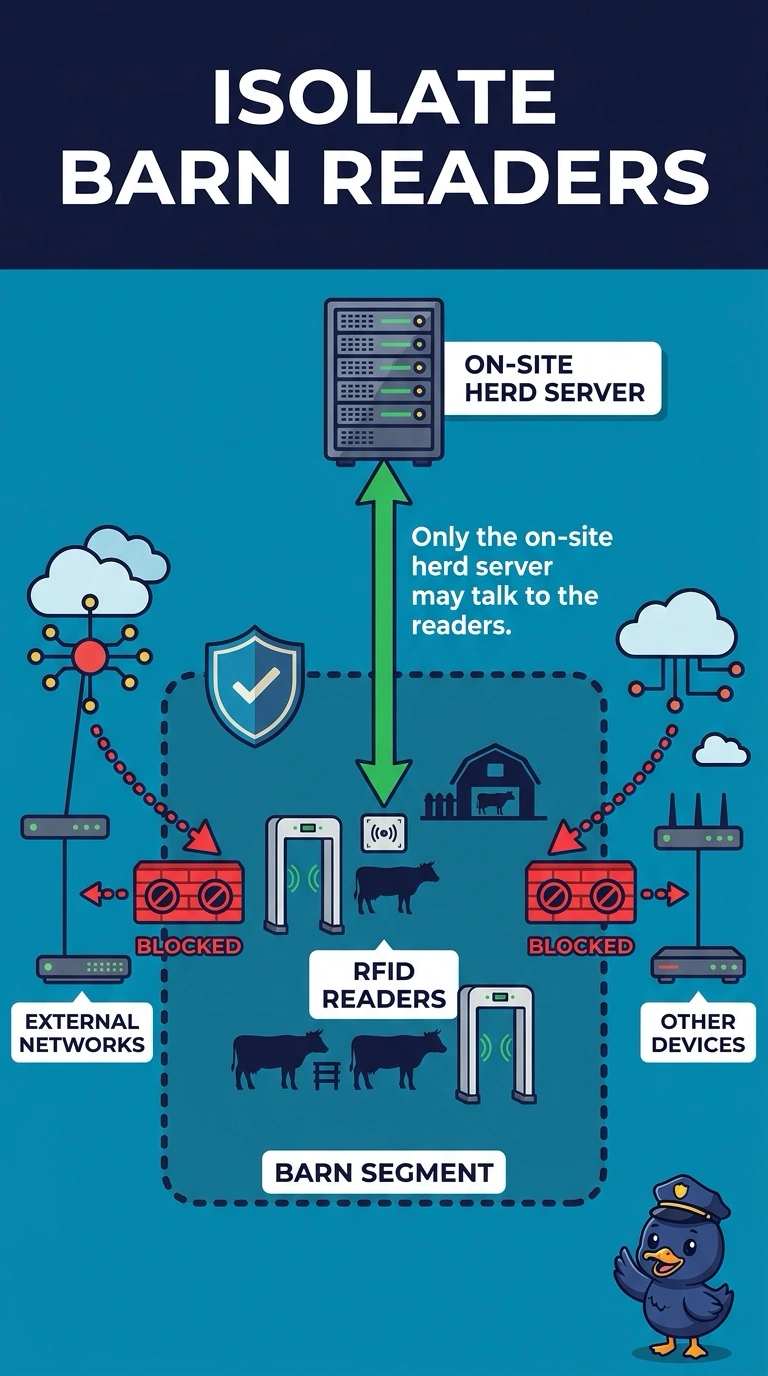
A tag reader is not a laptop and it does not need a door onto the street. You let only the on-site herd server talk to the readers. A public port-forward, the office network, or a laptop agent profile leaves the wrong callers in place.
Full Explanation
These readers cannot host an agent or report their own health, and the only peer they need is the herd server in the barn. Put them on a segment that accepts that server and does not publish them to the internet or the office LAN. A port-forward, a seat on the office network, and a laptop agent profile all treat the reader like a staff PC it is not. A barn segment where only the on-site herd server may talk to the readers is the design that meets this requirement. A public port-forward so the vendor can poll each reader from any network is the wrong fit because a port-forward publishes readers that cannot run an agent and is not required for a herd server that sits on site. The office network, placed beside payroll PCs that do not need to reach the readers is the wrong fit because the office network places unagented readers next to payroll systems that have no need to browse them. An endpoint agent profile built for laptops that these readers cannot run is the wrong fit because a laptop agent profile has nowhere to install on a reader that cannot run a user agent at all. Exam caveat: Allow the herd server's own management path, and do not add a broad vendor remote rule that recreates the port-forward around the barn segment. Operational check: From an outside address and from an office PC, probe a lab reader and confirm both fail, then confirm the herd server still reads a test tag.