
A bakery chain's payroll mail is delivering ransomware through links to cloud documents. The messages contain no files, so the attachment scanner has nothing to open. Which email control addresses this path?
Select an answer to reveal the explanation.
Short Explanation
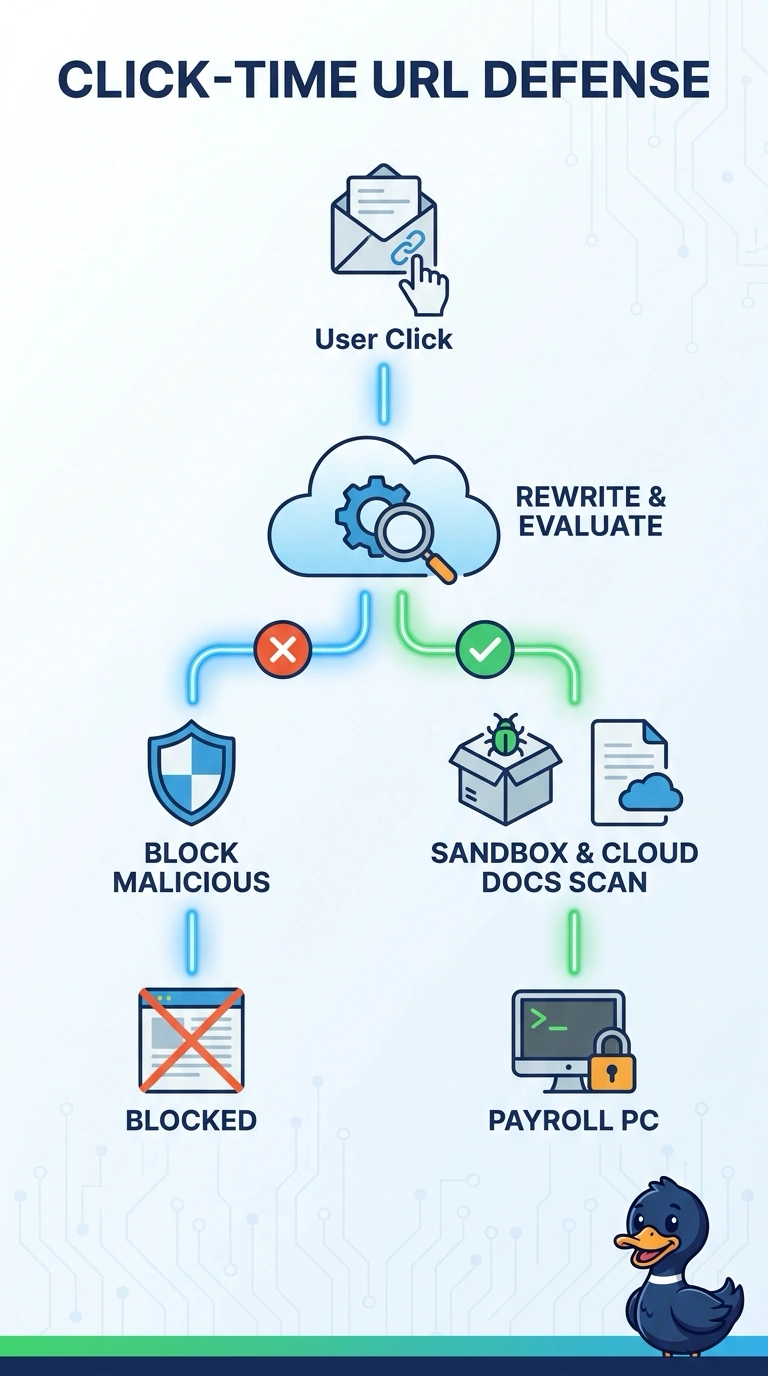
You are dealing with a link, not a file you can pre-open. Rewrite and evaluate the URL at click time, blocking malicious destinations. Scan any resulting file download on the web or endpoint path.
Full Explanation
The payload is the link, not a file, so controls that wait for an attachment never see it. Rewrite and evaluate the URL at click time, blocking malicious destinations. Scan any resulting file download on the web or endpoint path. A URL verdict is separate from an attachment sandbox verdict, so the click-time evaluation protects the payroll PC even when there is no file for the mail sandbox to open. This rewrite-and-evaluate design meets this requirement because it resolves the cloud link at click and prevents connection to a harmful destination. An attachment antivirus policy that has no file to inspect in these messages is the wrong fit because attachment scanning looks for a file, and these messages carry only a link, so the scanner never starts. A reject rule for spoofed bakery-domain mail, a forgery these messages do not attempt is the wrong fit because a reject rule for the bakery's own domain stops forgeries of that domain and does not evaluate a cloud link. An out-of-band phone call used for a payment-change request rather than a malicious link is the wrong fit because an out-of-band call verifies a payment instruction and does not evaluate a destination the employee is about to open. Exam caveat: Time-of-click covers the click the mail gateway can see, while a link copied into chat that bypasses mail is a different path and needs its own control.