
A railroad's routers still accept cleartext remote login from the operations network, so anyone who can capture that traffic can read admin sessions. Which change protects management access?
Select an answer to reveal the explanation.
Short Explanation
Speaking a password across a crowded room lets every listener write it down. You switch router administration to an encrypted protocol and you turn cleartext login off. A passenger web filter, routing-protocol authentication, or a larger forwarding table does not hide that session.
Full Explanation
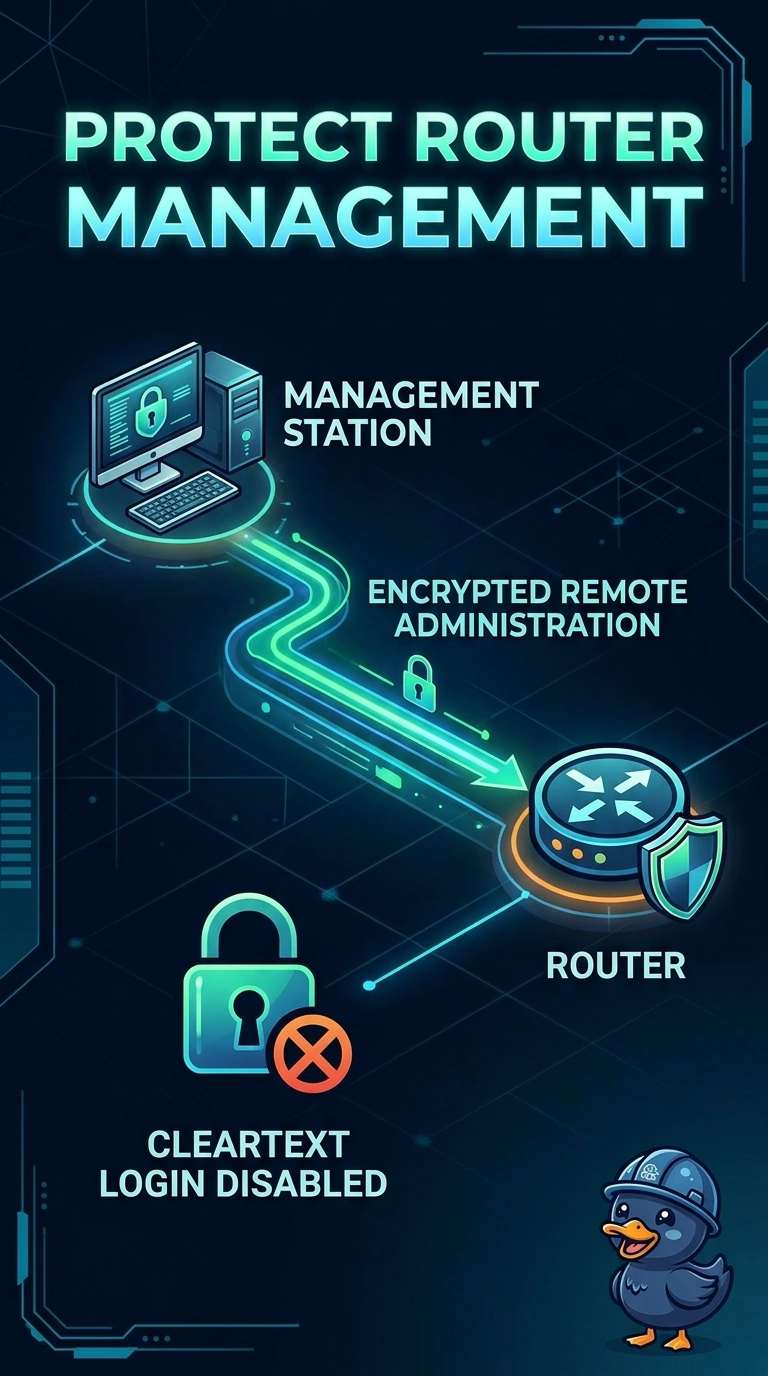
The exposure is the admin session, which crosses the operations network in the clear. Moving administration to an encrypted protocol and disabling cleartext login stops a capture from reading commands and passwords. A passenger web filter, routing-protocol authentication, and a larger forwarding table each deal with other traffic and do not hide this login. Encrypted remote administration from the management station, with cleartext login disabled is the design that meets this requirement. A web filter on the passenger wireless network, away from router administration is the wrong fit because passenger web policy does not change the protocol used when operators log in to the routers. Authentication of the routing protocol, aimed at adjacencies rather than admin login is the wrong fit because routing-protocol authentication stops a rogue peer from forming an adjacency and does not encrypt the admin session. A larger forwarding table so ordinary data-plane routes install with less delay is the wrong fit because the forwarding table serves transit routes and does not protect a session aimed at the router itself. Exam caveat: Encryption does not decide who may log in, so keep the encrypted protocol limited to the management station or every operations host can still attempt it. Operational check: From a capture on the operations network, start an admin session and confirm the payload is not readable, and confirm cleartext login to the router is refused.