
An insurer's rating service runs in a data center and a second cloud. Tier encryption is already in place, and edge firewall rules do not follow the service when it moves. Which design keeps the rules with the service?
Select an answer to reveal the explanation.
Short Explanation
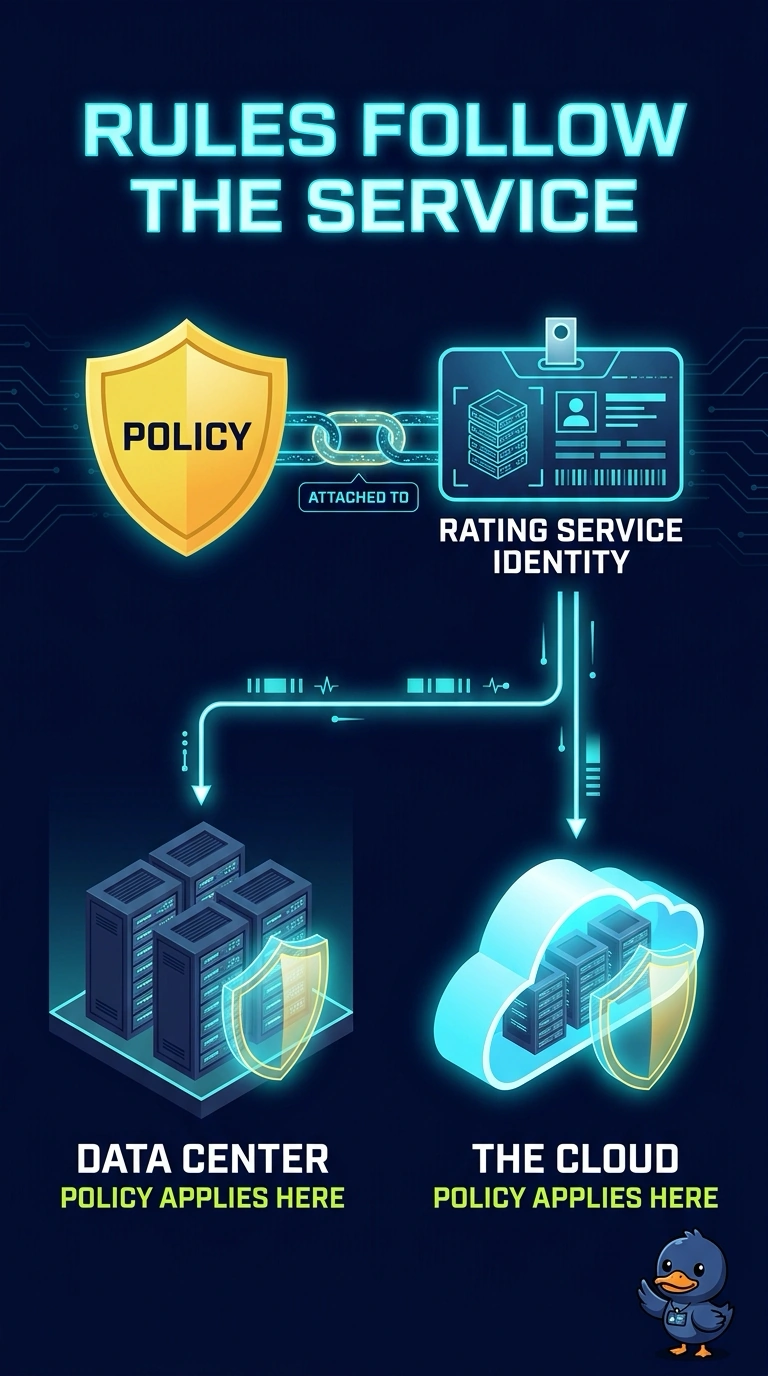
A rule tied to one building cannot follow your service to another. You attach the rating policy to the service identity, so it applies in the data center and the cloud. Two unrelated edge firewalls stay with local subnets, a public internet allow skips the identity check, and a headquarters guest wireless rule is not on the service’s path.
Full Explanation
Encryption between the tiers already addresses confidentiality, so your remaining requirement is for the rules to follow the rating service when it moves. A policy attached to the rating service identity applies in both the data center and the cloud, keeping the same identity-based rule with the service rather than tying it to a site. Two unrelated edge firewalls that each allow a local subnet do not move with the service, so they cannot ensure that its rules remain the same after a move. A public internet allow to both sites makes the service reachable without an identity check, so it does not provide the identity-based policy the requirement calls for. A guest wireless rule at headquarters is on a path the rating service does not use, so it does not govern the service in either location. The identity-attached policy therefore meets the requirement. Exam caveat: This policy does not replace the encryption already in place between tiers; removing that encryption would reopen a confidentiality gap. Practical check: Run the rating service in the data center, record the identity policy that applies, move it to the cloud, and confirm the same policy applies without editing either firewall.