
A studio hires illustrators who use personal home computers the studio does not manage. Design files must not be stored on those computers. Which endpoint design fits?
Select an answer to reveal the explanation.
Short Explanation
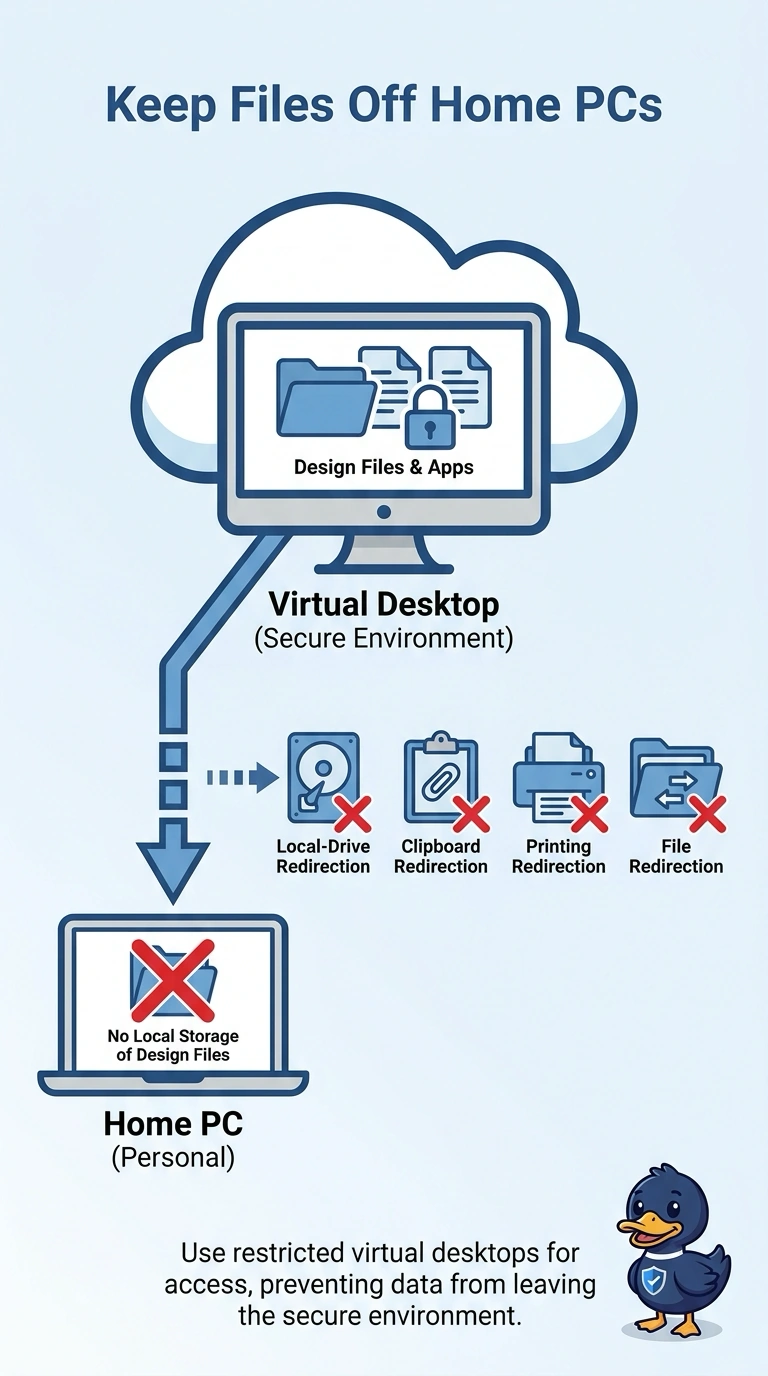
If you do not own the desk, you do not leave the drawings in its drawer. You give the illustrators a virtual desktop and you keep the files on the studio side. A posture agent you cannot install, encryption of a personal disk, or an administration workstation for engineers misses that split.
Full Explanation
The studio does not manage these home computers, and design files must not land on them, so you keep compute and storage in the studio and present only a remote session. Use a virtual desktop with local-drive, clipboard, printing, and file redirection restricted as needed is the design that meets this requirement, because it prevents save-as, copy-paste, and print-to-file paths from placing files locally. A posture agent the studio cannot require on computers it does not own or manage is the wrong fit because a posture agent assumes an endpoint the studio administers, and these home computers are personal. Full-disk encryption of the personal computer, leaving the design files stored on it is the wrong fit because encrypting a personal disk still leaves the design files on the computer the requirement says must not hold them. A dedicated administration workstation intended for privileged engineers, not illustrators in that other design is the wrong fit because an administration workstation is for privileged duties and does not give illustrators a file-free home setup. Enforce those restrictions and test download paths from an unmanaged client.