
Bakery warehouse leads share one inventory password written on a clipboard, and they text one-time codes to whoever is standing nearby. Which identity design fits that floor?
Select an answer to reveal the explanation.
Short Explanation
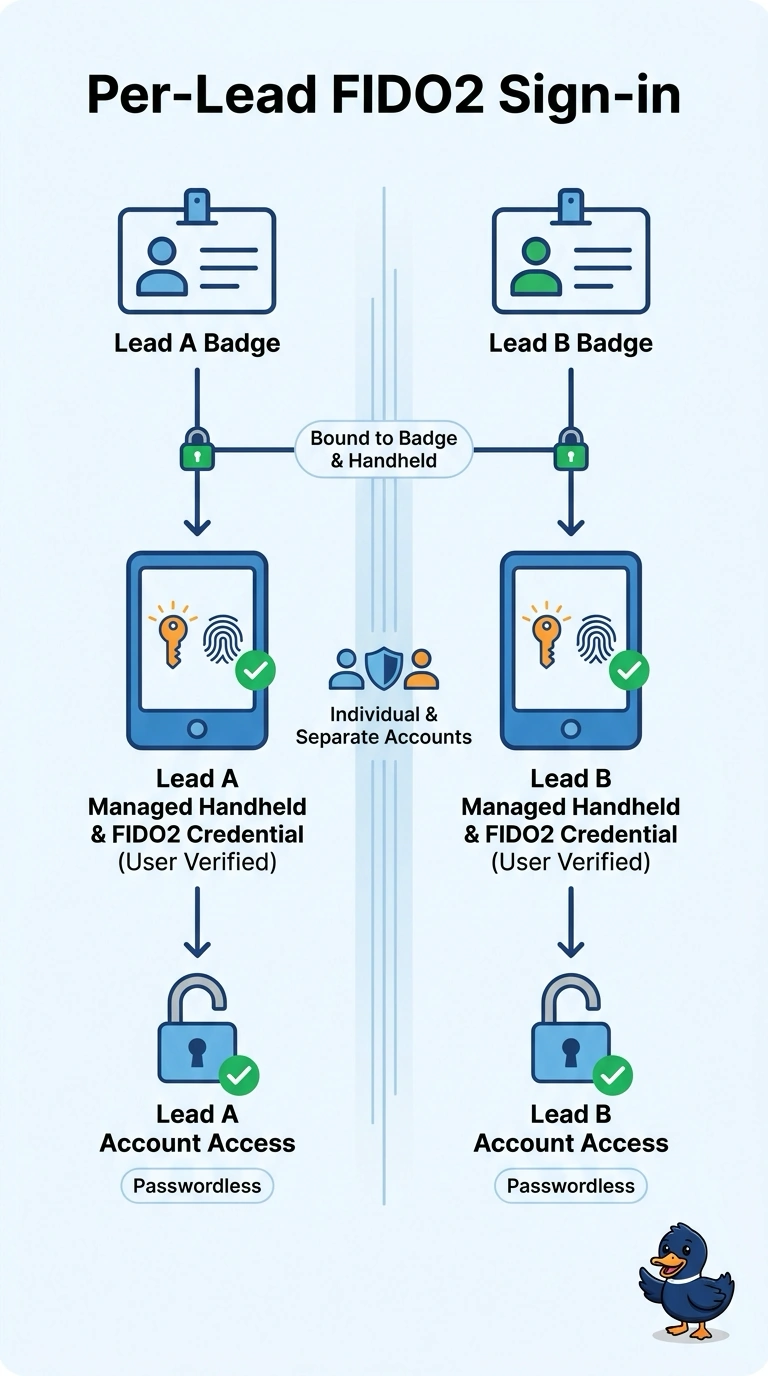
A combination written on the wall is still a combination. You give each lead their own account and FIDO2 credential with user verification so sign-in cannot be texted around. A longer clipboard password, forwarded SMS codes, or break-room security questions stay easy to share.
Full Explanation
The floor's failure is a secret people can copy: one password on a clipboard, and one-time codes that get texted across the room. Give each lead a separate account and an individual FIDO2 credential with user verification on the managed handheld or a personal security key. The credential authenticates its registered account and can require local user verification. That binding means signing in does not work by reading aloud or forwarding a code, because the private key never leaves the credential and verification happens locally to the user. A longer shared password written on the same clipboard beside the time clock is the wrong fit because a longer shared password is still one secret on the clipboard, so anyone who can read it can sign in as a lead. SMS one-time codes that the crew already forwards to whoever is standing nearby is the wrong fit because SMS codes that coworkers forward are not bound to the person who was issued them, and the crew already shares them. Security questions whose answers are posted on the break-room bulletin board is the wrong fit because security questions fail when the answers are public on the break-room board, which is the same sharing problem in another form. Exam caveat: If the handhelds are shared among the shift, the binding fails. The passwordless method has to stay with one lead, not with a device the whole aisle uses.