
A grain elevator needs a vendor tunnel for one maintenance window a month. The tunnel is currently up all the time, and the board suggests insurance instead of a change. Which treatment fits?
Select an answer to reveal the explanation.
Short Explanation
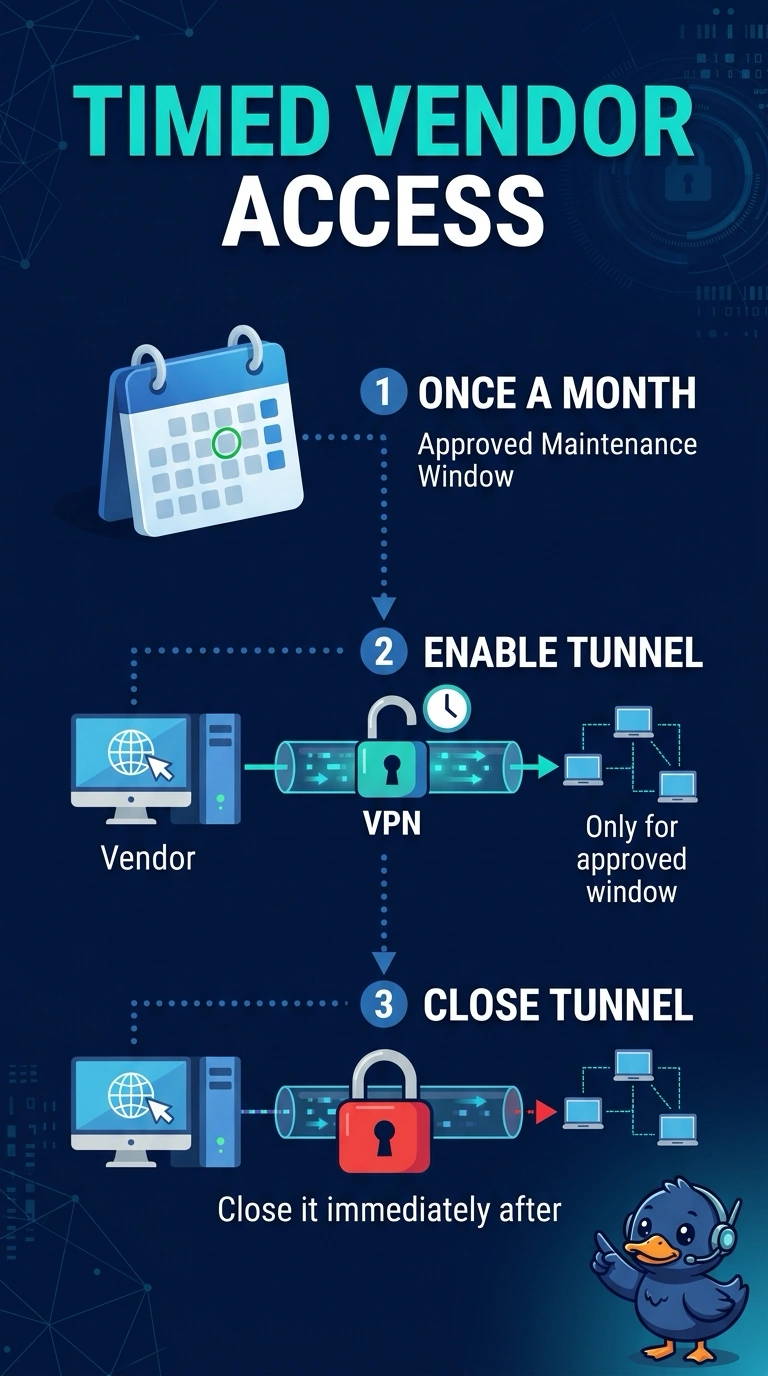
Leave the service door locked except on the day the mechanic is booked. You open the vendor tunnel only for the maintenance window and you close it after. Insurance, accepting an always-on path, or removing the elevator answers a different problem.
Full Explanation
The tunnel is required for a short window and is exposure the rest of the month, so enabling it only for that window reduces the time it can be used. Insurance leaves it connected, and accepting it treats a known vendor as a reason to skip the appetite decision. Removing the elevator still avoids the grain business rather than the idle vendor tunnel. Enable the vendor tunnel only for the approved maintenance window, then close it is the design that meets this requirement. Buy insurance and leave the vendor tunnel up between the monthly maintenance windows is the wrong fit because insurance pays after a loss and does not close a tunnel that stays up when nobody is performing maintenance. Accept the continuous tunnel on the grounds that the vendor company is already known is the wrong fit because knowing the vendor by name does not place a continuous path inside appetite between the monthly windows. Remove the elevator controls so there is no equipment left for the vendor to maintain is the wrong fit because removing the elevator controls avoids the grain operation the cooperative still has to keep running. Exam caveat: Record who may approve an extra window, or an emergency open with no named owner will turn into a continuous path again by the next holiday. Operational check: Outside a test window, confirm the vendor account cannot connect, then open the window and confirm the vendor can reach only the elevator controls.