
A transit SOC opens critical cases from its correlation platform, and several sat with no owner for an hour because the night lead was not paged. Which handling practice closes that gap?
Select an answer to reveal the explanation.
Short Explanation
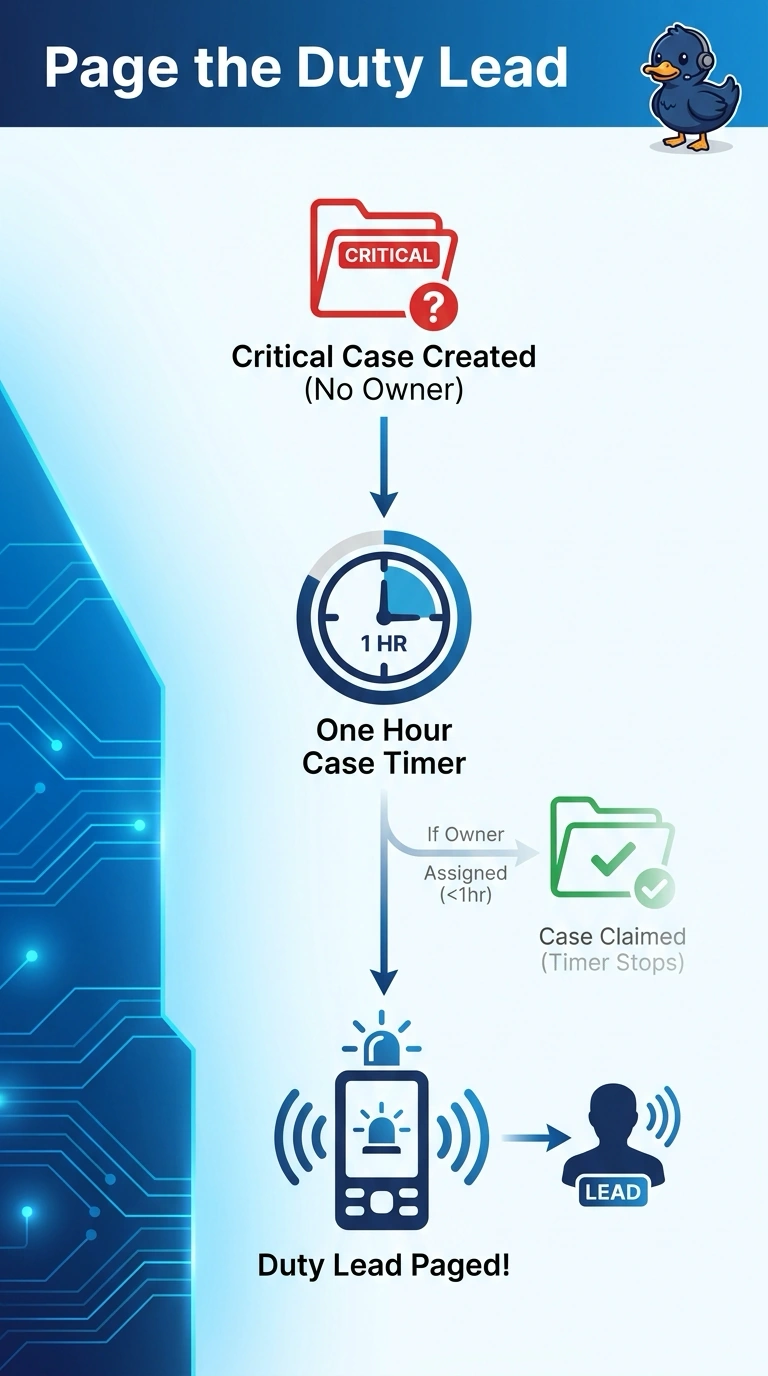
The alarm folder is open on the desk and nobody's name is on it. You page the duty lead when a critical case stays unowned. Another correlation rule, a wallboard count, or a monthly total leaves that folder sitting there.
Full Explanation
The correlation platform already created the case. The handling gap is that a critical case can sit with an empty owner field and nobody is told. A timer on that field pages the duty lead when the case is still unowned, which is the handoff the night shift lacked. Another rule, a wallboard, and a monthly total do not put a name on the case or wake the lead. A case timer that pages the duty lead when a critical case still has no owner is the design that meets this requirement. Another correlation rule that fires on the same fare-system indicator is the wrong fit because another rule on the same indicator creates more alerts and does not give an unowned case a person. A wallboard that counts open cases and does not assign or page anyone is the wrong fit because a wallboard shows a count and does not page the lead when a critical case stays unowned. A monthly mail of case totals to the transit director is the wrong fit because a monthly total arrives long after the hour the night case sat with no owner. Exam caveat: The timer should page a person who can actually take the case, and a lead who is off shift needs a backup or the page becomes noise. Operational check: Open a lab critical case, leave the owner blank, and confirm the duty lead is paged and the case records the page.