
A cannery SOC turned each of four hundred identical alerts from one temperature sensor into its own case during a single hour. Which design fixes that flood?
Select an answer to reveal the explanation.
Short Explanation
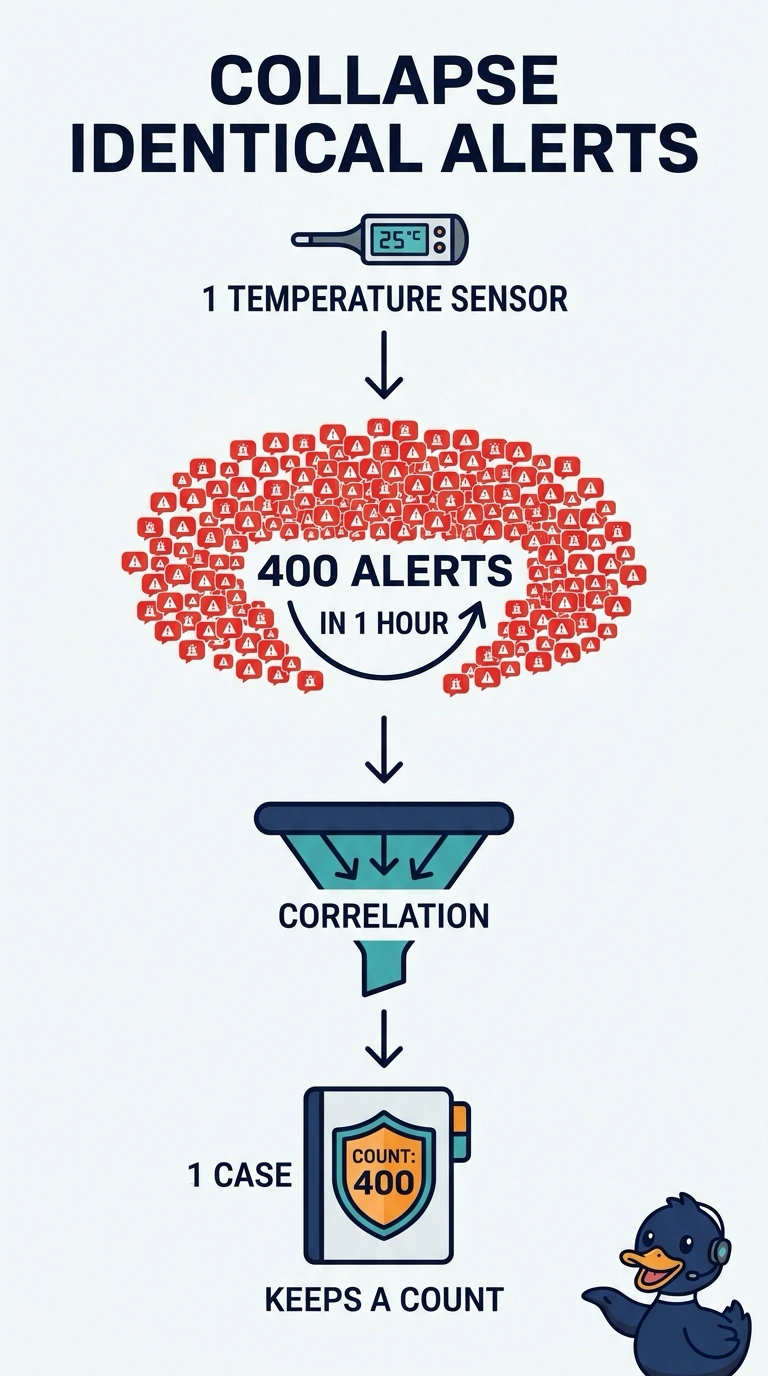
One stuck alarm does not need four hundred fire trucks. You collapse the identical sensor alerts into one case and you keep the count. A tile per alert, the same intel note on every copy, or a playbook that isolates a host each time multiplies the flood.
Full Explanation
These alerts are one sensor repeating, not four hundred incidents, so correlation should collapse them into a single case, keep the count and the time span, and page only once. A wall of tiles is only a display, pasting the same intel note onto every copy adds no relationship, and a playbook that isolates a host per alert treats duplicates as new attacks. Correlation that collapses those identical alerts into one case and keeps a count is the design that meets this requirement. Four hundred separate dashboard tiles, one per alert, with no owner and no count is the wrong fit because separate tiles display the flood and do not give an analyst a single case that carries the alert count. The same threat-intel note pasted again onto every copy of the temperature alert is the wrong fit because pasting the same intel note onto every copy multiplies the reading and still adds no relationship among them. A containment playbook that isolates a new host for every repeated temperature alert is the wrong fit because isolating a host for each repeat would churn the plant once for every copy of one temperature sensor. Exam caveat: Collapse only alerts that share the same sensor, signature, and time window, so a second sensor with a different fault still opens a case of its own. Operational check: Replay a lab burst from one sensor and confirm a single case shows the count, then replay a different sensor and confirm a second case opens.