
A freight railroad already segments its dispatch system, keeps offline backups, and patches on a short cycle. It will not shut dispatch down, and it will not self-fund a month of lost dispatch revenue. Which treatment fits the remaining exposure?
Select an answer to reveal the explanation.
Short Explanation
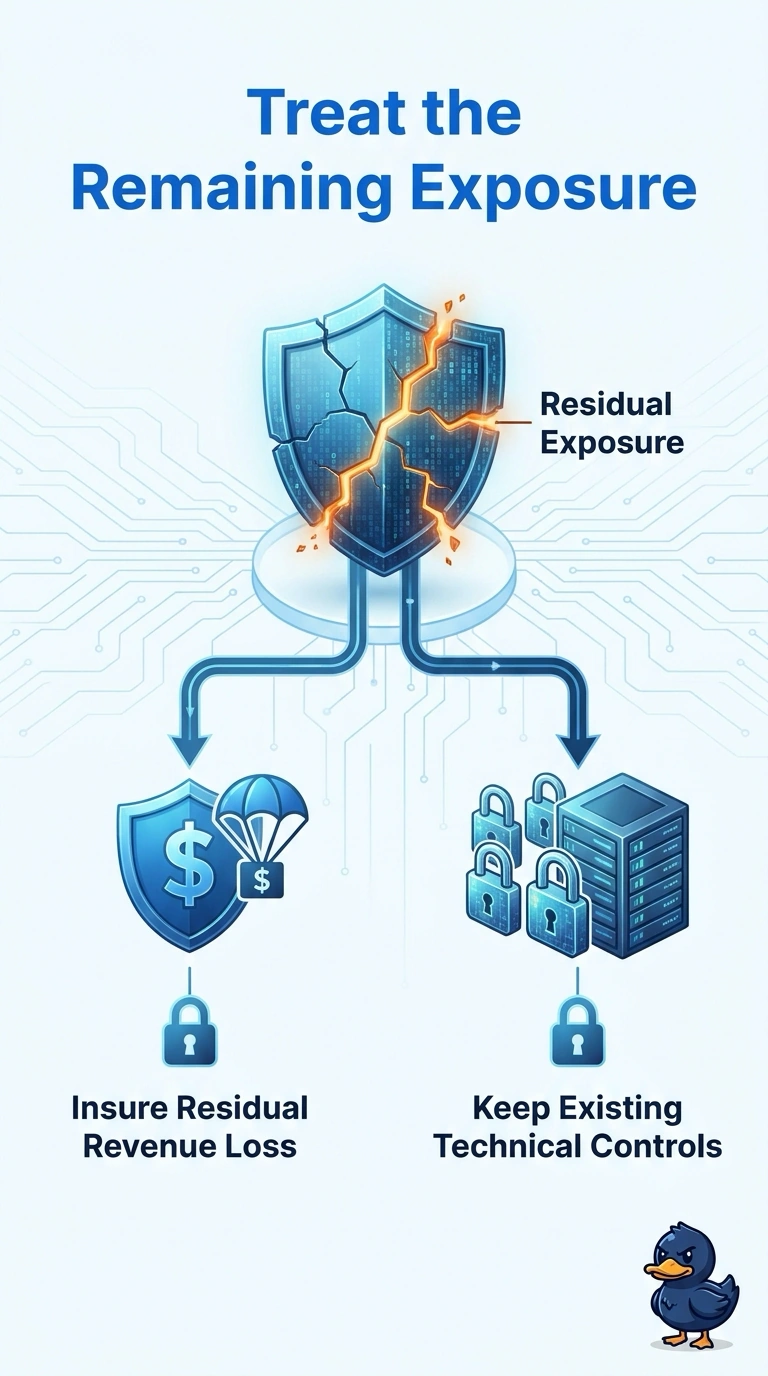
The locks are already on the door, and the worry left is the cost of a bad month. You transfer that residual loss with insurance and you keep the controls you already run. Accepting the loss, shutting dispatch down, or stacking another firewall answers a different problem.
Full Explanation
The technical exposure has already been reduced, the system cannot be turned off, and the remaining worry is a financial loss outside what the board will absorb. Insurance transfers that residual financial impact while the existing controls stay in place. Accepting the loss contradicts the board, shutting dispatch down abandons the service, and another firewall in front of an adequate design does not treat the money. Insure the residual revenue loss and keep the technical controls that are already in place is the design that meets this requirement. Accept the month of lost revenue with no transfer, despite the board refusing to self-fund it is the wrong fit because acceptance would leave the railroad funding a loss the board has already said it will not absorb. Decommission dispatch so the outage risk disappears and the railroad stops running with it is the wrong fit because removing dispatch avoids the outage only by stopping the operation the railroad must keep running. Add a second firewall brand in front of a system the assessment already calls adequate is the wrong fit because another firewall does not address a residual financial loss on a system the assessment already treats as sound. Exam caveat: A policy does not patch a host or restore dispatch, so if a new technical hole shows up, treat that hole on its own rather than pointing at the insurance. Operational check: Record the treatment as transfer, attach the current control assessment, and set a review date so a later open admin port is not quietly called an insurance matter.