
After a ferry reservation system is authorized, the operator must keep checking that the chosen controls still work. Which framework includes that continuing duty?
Select an answer to reveal the explanation.
Short Explanation
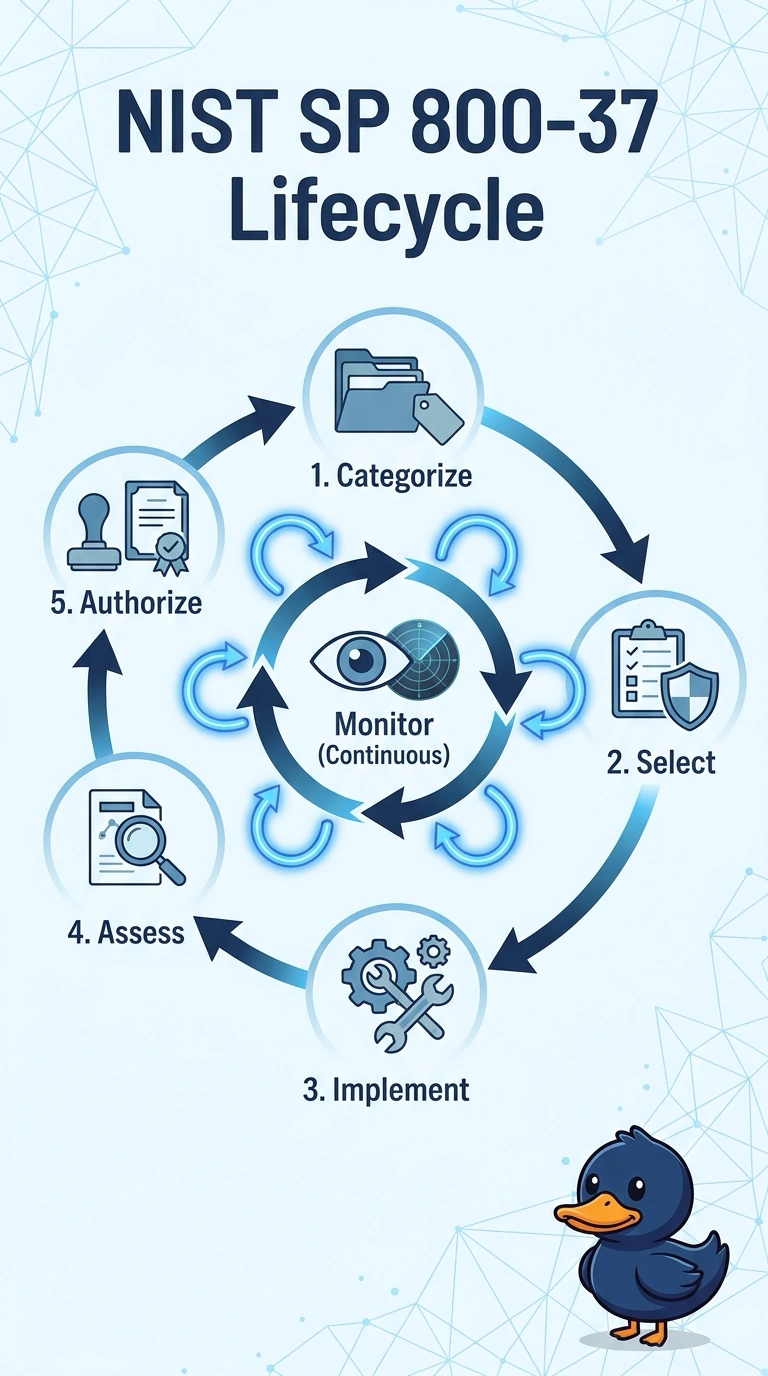
Authorization is the start of ongoing upkeep, not the day your inspections end. You keep checking whether the ferry controls work through the NIST SP 800-37 lifecycle. MITRE CAPEC catalogs attack patterns, Cisco SAFE places security capabilities along a business flow, and project closeout ends oversight at signature rather than continuing it.
Full Explanation
Authorization is not the end of NIST SP 800-37. The lifecycle that prepared, categorized, selected, implemented, assessed, and authorized the ferry reservation system continues with monitoring, so you keep checking whether its controls still work. NIST SP 800-37, the lifecycle that keeps monitoring controls after authorization, meets the requirement. MITRE CAPEC, the catalog of attack patterns that describes how attacks are carried out, does not run the authorization lifecycle or its continuing monitoring step. Cisco SAFE, the reference for placing security capabilities along a business flow, shows where capabilities sit; it does not monitor an authorization over time. Project closeout that ends oversight on the day the authorizing official signs is unsuitable because it drops the monitoring step that continues after authorization. Exam caveat: Monitoring shows whether controls still operate; a failed control still needs a change through the same lifecycle, not a one-time waiver with no owner. Practical check: Pull the reservation system’s authorization record and confirm it names a monitoring activity, an owner, and a review date after signature.