
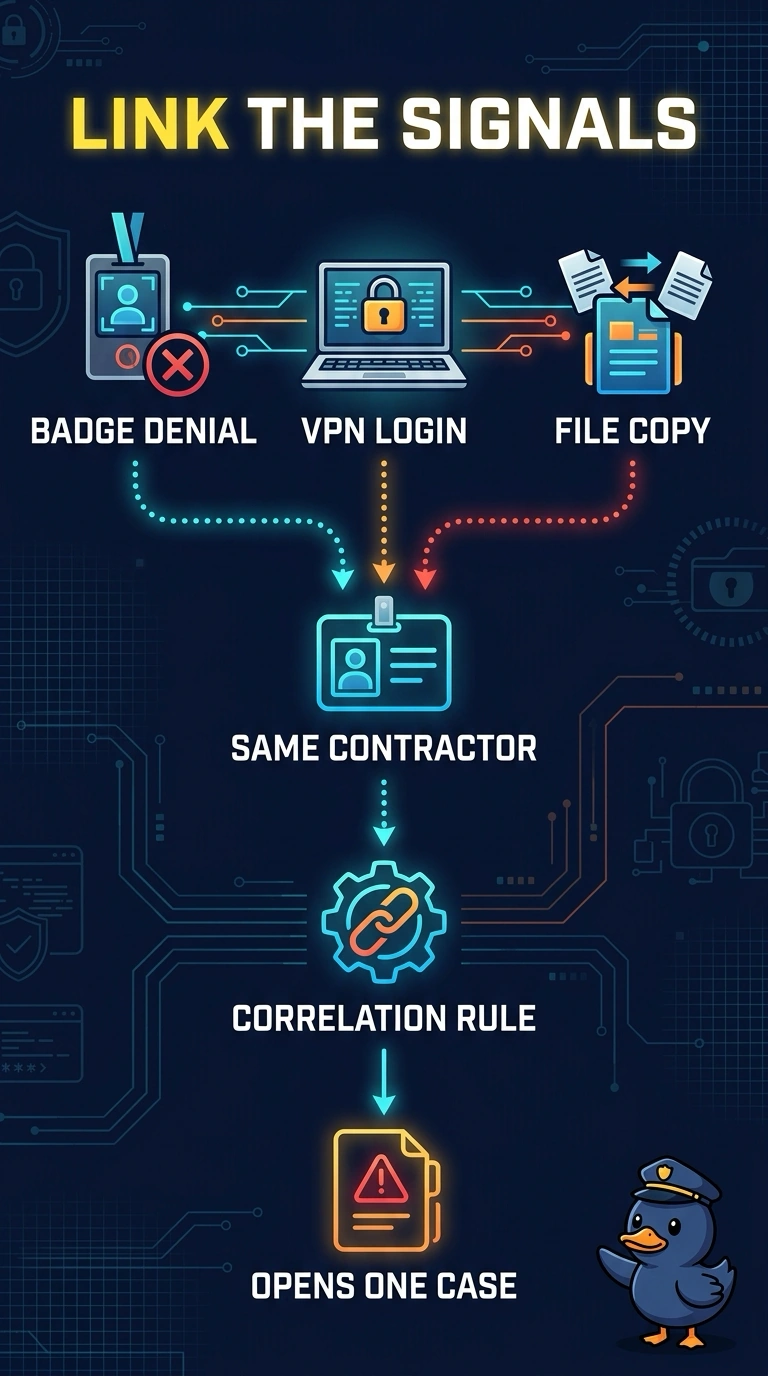
A harbor SOC opens three tickets for one night: a badge denial, a VPN login, and a file copy, all for the same contractor. Which addition links those signals?
Select an answer to reveal the explanation.
Short Explanation
Three bells for one visitor are one visit if you hang them on the same badge. You correlate the badge denial, the VPN login, and the file copy into a single case. A wall tile, a mass email of the same alerts, or isolating every laptop does not make that link.
Full Explanation
The three signals are already collected, and what is missing is a rule that treats them as one incident when they share a contractor in the same window. Correlate the verified contractor identity, time window and supporting indicators into a proposed case, then verify the relationship before containment. That opens one case with all three events attached, so the next shift investigates a person instead of three unrelated tickets. A correlation rule that opens one case when those three events share the contractor is the design that meets this requirement. A dashboard tile that draws the three alerts on one screen and takes no action is the wrong fit because a shared screen does not relate the events or open one investigation for that same contractor. A second copy of each alert emailed to the entire facilities distribution list is the wrong fit because another copy spreads the same three tickets and still does not link them into one case. A playbook that isolates every laptop at the harbor when any single alert fires is the wrong fit because it skips the needed link and contains people who are not this contractor. Exam caveat: a shared kiosk account will glue unrelated people into one case and hide the contractor you meant to find. Operational check: replay the three events for one contractor and confirm one case holds all three.