
A port SOC sees an outbound beacon to an address it does not recognize. Analysts stop to search the address by hand, and the case has no record of what they found. Which tool use closes that handling gap?
Select an answer to reveal the explanation.
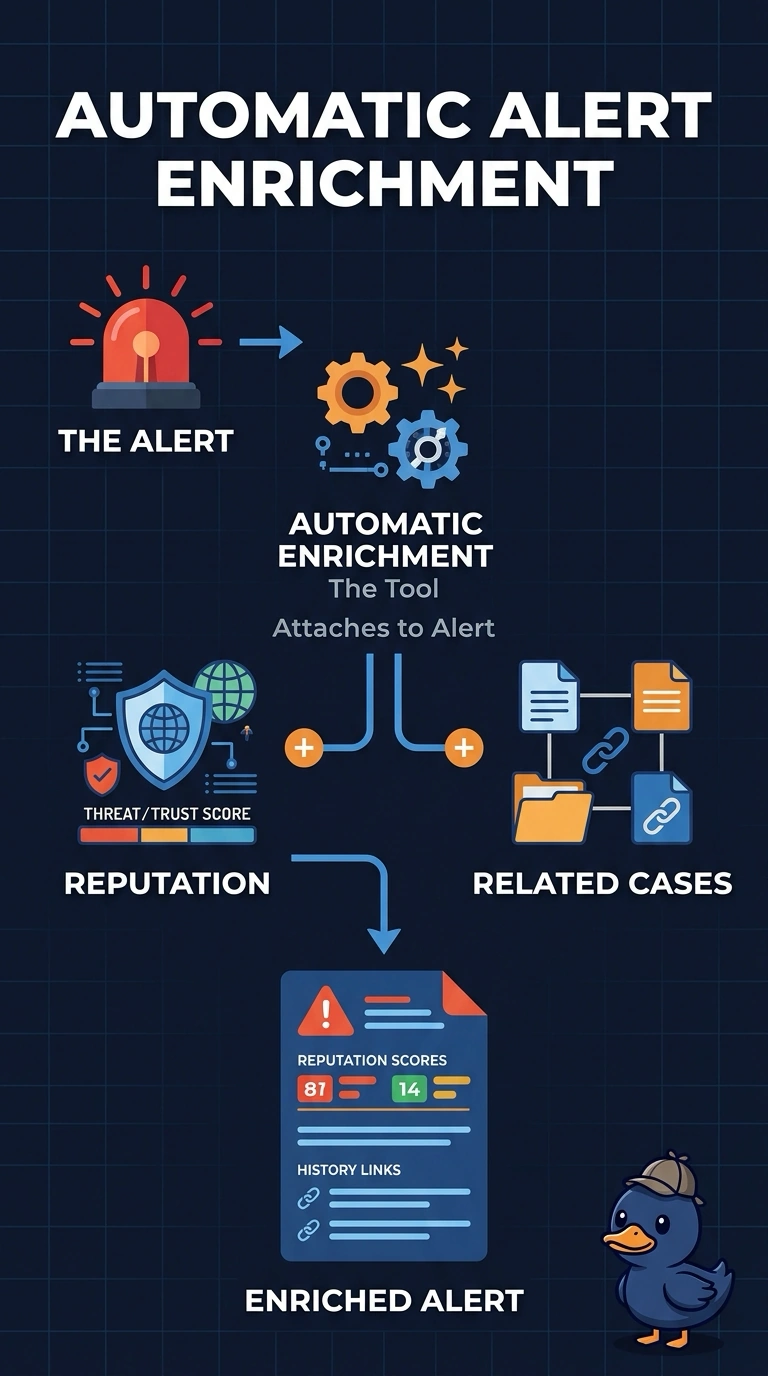
Short Explanation
You close the gap by attaching reputation and related cases to the alert through automatic enrichment. A duplicate alert with no reputation data or an hourly wallboard that stores no indicator leaves you without that context on the case. A ticket that closes after a manual lookup without saving the findings still makes the result unavailable to the next analyst.
Full Explanation
The handling gap is time and memory: each analyst repeats a lookup, and its result is not recorded on the case. Automatic enrichment adds reputation and related cases to the alert, putting useful context where the analyst can review it. A duplicate alert with the same fields and no reputation data still requires a manual search; repeating the alert does not add knowledge about the address. A wallboard that counts alerts per hour and stores no indicator may show alert volume, but it does not attach address-specific context to this investigation. A ticket that closes after a manual lookup without saving the indicator findings leaves the result unavailable to later analysts, so the lookup may need to be repeated. Automatic enrichment that attaches reputation and related cases to the alert meets the requirement by preserving that context with the alert. Exam caveat: Enrichment is only as reliable as its source and the age of the indicator; show the source on the case so an analyst can judge whether a reputation result may be stale. Practical check: Replay a lab beacon and confirm the case displays a reputation result and its source without requiring the analyst to leave the ticket.