
Attackers phished a brokerage clerk, reused the password the same hour, and approved a fraudulent wire. The password has been reset and the wire reversed. Which redesign follows from that incident?
Select an answer to reveal the explanation.
Short Explanation
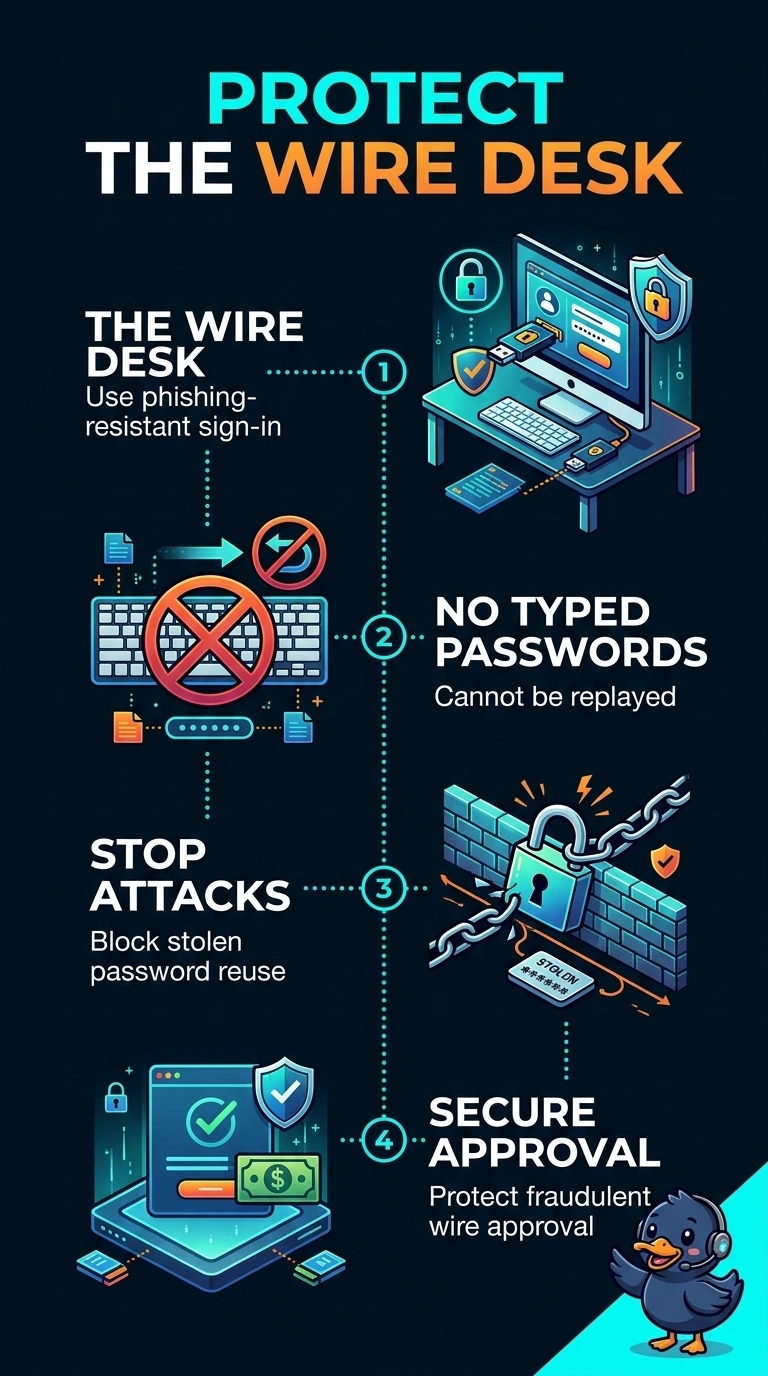
Changing the combination after a break-in helps only if the next thief cannot ask you to read it aloud. You move the wire desk to sign-in that a fake page cannot replay. A longer typed password, a restored mailbox on the old sign-in, or lobby wireless leaves the same trick in place.
Full Explanation
The incident succeeded because a secret the clerk could type was reusable the same hour. Resetting the password removes the stolen value and leaves the next phish with the same kind of secret. Phishing-resistant sign-in binds the authentication to the real site, so the fake page cannot replay it. That is the design change the incident justifies. Lobby wireless and a mailbox restore do not touch the wire-approval path. Phishing-resistant sign-in on the wire desk so a typed password cannot be replayed is the design that meets this requirement. A longer password for the same clerk, still typed into the broker's web page is the wrong fit because length does not stop a site that asks the clerk to type the secret into a fake page. A restored mailbox with the same sign-in the attacker already relayed is the wrong fit because restoring mail on the same sign-in puts the desk back on the path the attacker used. A new guest network for the lobby, unrelated to the wire desk is the wrong fit because the lobby network was not the path that approved the wire. Exam caveat: Apply the stronger sign-in to the approval action, not only to the mailbox, if the wire is approved in a second system that still takes a password. Operational check: On a lab wire desk, complete a login on a fake hostname and confirm the cryptographic prompt refuses it, then confirm a real-site approval still works.