
A transit agency's delay notices include fare-card numbers and leave through its own text-message gateway. The notices are not web traffic. Which control can see those numbers?
Select an answer to reveal the explanation.
Short Explanation
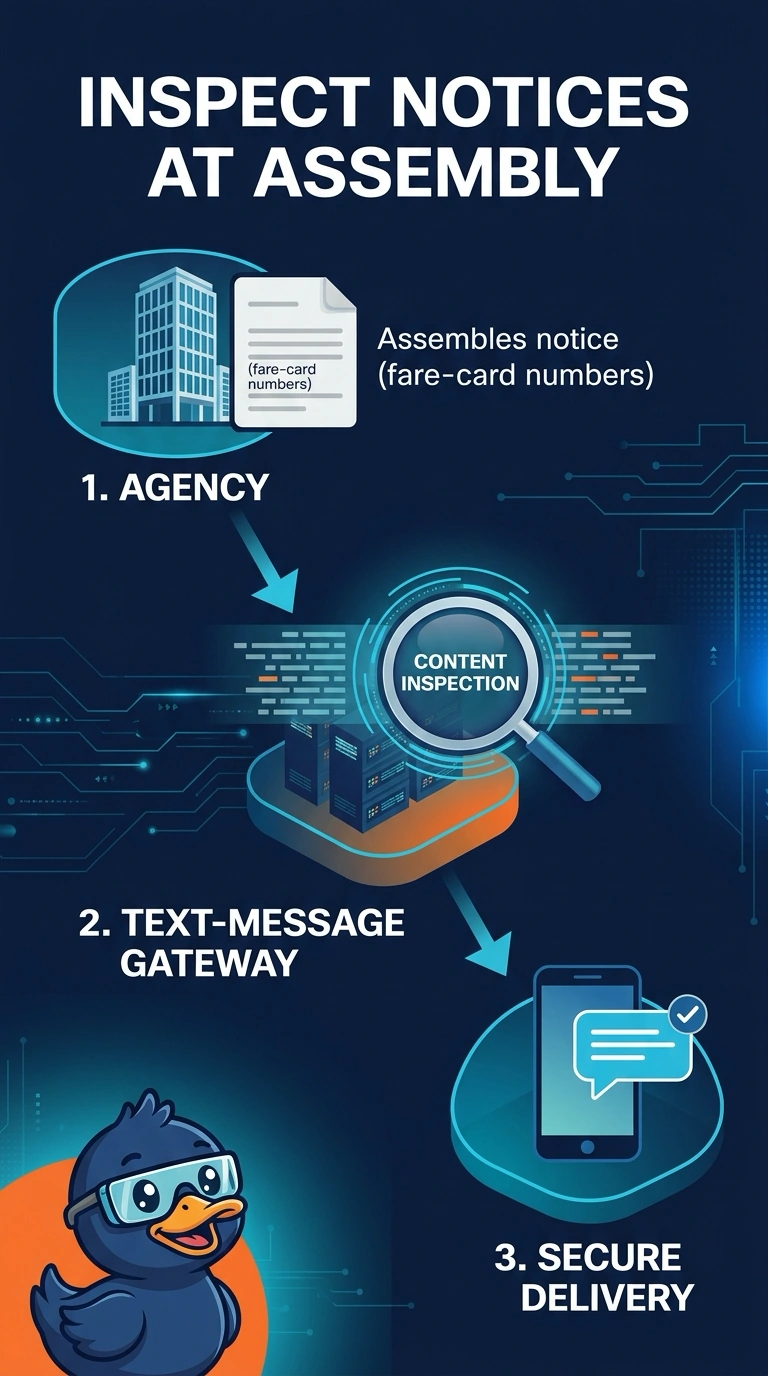
The number is printed on a postcard you hand to the mail slot. You inspect the text at the gateway that writes the postcard. Website decryption, a web firewall on the trip planner, or an agent on a rider's phone does not see that card.
Full Explanation
The fare-card numbers sit in a notice the agency builds on its text gateway, which can read and redact the body before the message is sent to the carrier. The public website and its web firewall see a different application entirely. Riders' personal phones are not agency endpoints, and a control that waits for the phone to display the notice is too late. Content inspection on the text-message gateway where the agency assembles the notice text is the design that meets this requirement. TLS decryption of the agency's public website, a separate flow from these delay notices is the wrong fit because website decryption sees browser sessions and does not sit on the path that sends the delay notices. A web application firewall on the trip-planning site, a path that does not carry these notices is the wrong fit because the trip-planning site is HTTP traffic, and the fare-card numbers in this scenario leave as text messages. An endpoint agent on riders' personal phones, devices the agency does not own is the wrong fit because riders' phones are unmanaged, and the numbers are already present on the agency gateway before the phone displays them. Exam caveat: Inspection at the gateway sees notices the agency sends, and a text that a person types on a personal phone outside that gateway is a separate path. Operational check: Send a lab delay notice containing a test fare-card string and confirm the gateway log shows that string before the message is released to a phone.