
A fruit cooperative trained a sorting model and left a copy of the weights in a bucket the whole company can read. Which design protects that model?
Select an answer to reveal the explanation.
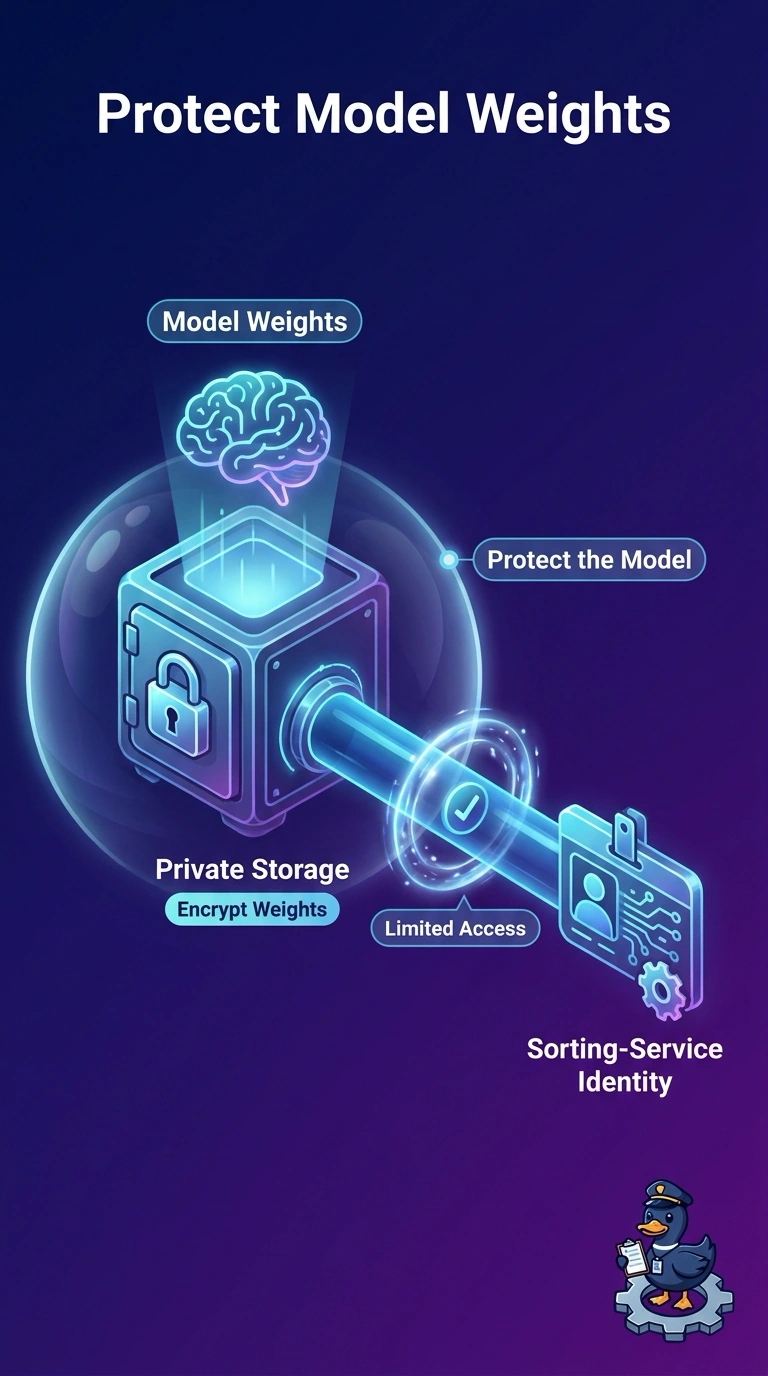
Short Explanation
The recipe book is sitting on the break-room table. You put the weights in private storage, encrypt them, and let only the sorting service read them. A chatbot prompt boundary, a vendor no-training clause, or archive crypto agility does not lock that bucket.
Full Explanation
The weights are the model, and anyone who can read the bucket can copy the sorter and study how to fool it. Private storage, encryption, and a grant limited to the sorting-service identity stop that copy from leaving with a staff account. A chatbot prompt boundary, a vendor training clause, and a long-term archive plan do not change who can read this bucket. Private storage for the weights, with encryption and access limited to the sorting-service identity is the design that meets this requirement. A prompt boundary aimed at a customer chatbot the cooperative does not operate is the wrong fit because there is no customer chatbot in this path, so a prompt boundary does not change who can read the bucket. A vendor contract that forbids training on chat prompts from a public assistant is the wrong fit because a no-training chat clause governs a vendor assistant, and these weights are already the cooperative's own model. A crypto-agility plan for archive files that must stay secret for many years is the wrong fit because archive agility plans for long-lived files do not remove a world-readable copy of this model. Exam caveat: Encryption does not help if every analyst shares the sorting-service identity, so the grant has to be the service that loads the model rather than a shared login. Operational check: From a normal staff account, confirm the weights object is denied, and from the sorting-service identity confirm the model loads and a test sort still runs.