
A timber cooperative's mill application sends queries over TLS that ends only on the database host, and a capture on the path shows ciphertext. Which control can see the query text?
Select an answer to reveal the explanation.
Short Explanation
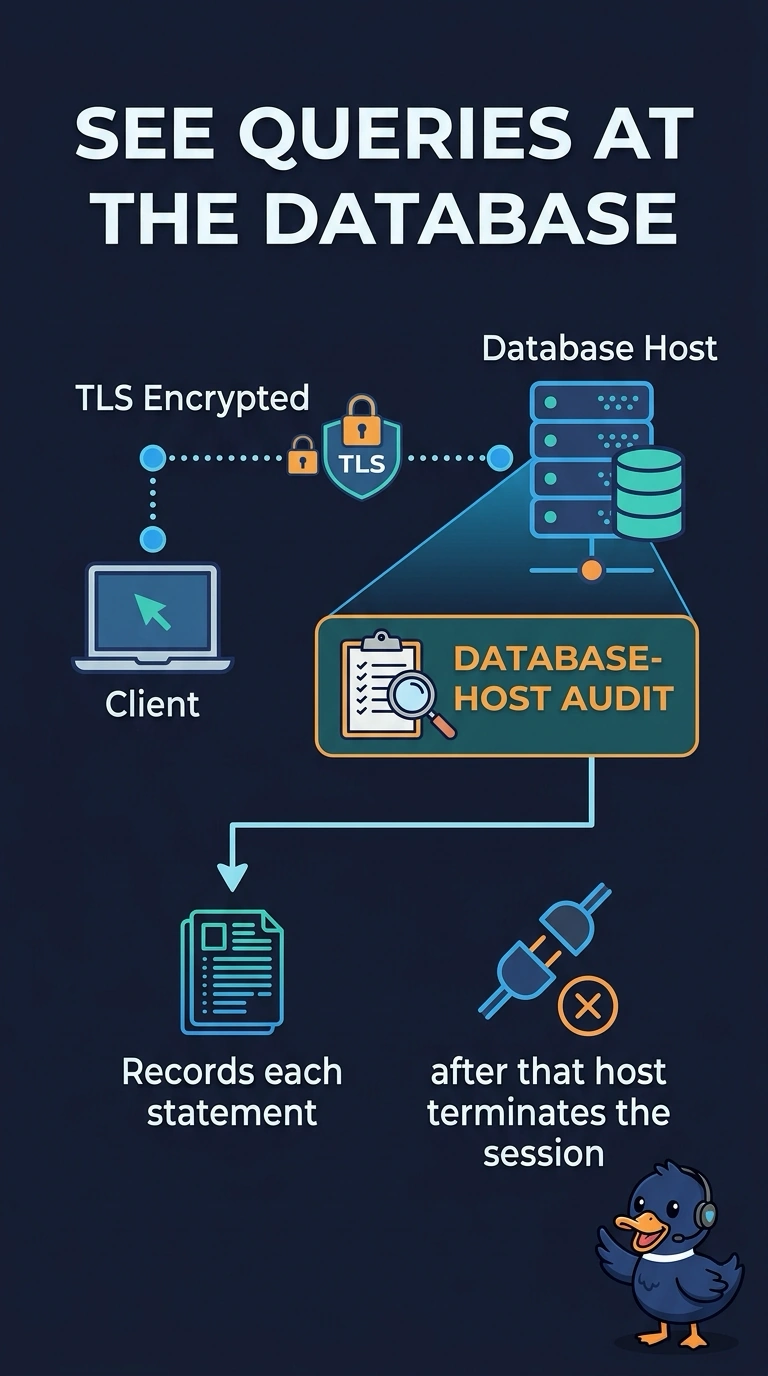
The letter is sealed until the clerk at the last desk opens it. You read the query on the database host that terminates the session. The internet firewall, staff-web decryption, or an agent on a logger's phone is watching a different envelope.
Full Explanation
The wire capture contains ciphertext. Enable database statement auditing at the database host, where TLS terminates, and verify which queries and parameters its audit policy records. Staff-web decryption and a phone agent sit on other flows, so neither one can read this mill SQL. A database-host audit that records each statement after that host terminates the session is the design that meets this requirement. The cooperative's internet firewall on the public edge, away from this internal database query is the wrong fit because the internet firewall is not on the internal path and would see ciphertext even if the packets passed it. TLS decryption of staff web browsing, a flow that does not carry these mill queries is the wrong fit because staff web decryption inspects browsing and does not terminate the mill application's database session. An endpoint agent on loggers' phones the cooperative does not own or manage is the wrong fit because logger phones do not hold the SQL text, and the cooperative has no agent on those unmanaged phones. Exam caveat: A host audit can miss statements the database writes only into a local buffer, so confirm the audit destination is off the host that an attacker might wipe. Operational check: Run a lab query containing a distinctive test string and confirm the database audit log shows that string while a packet capture on the path does not.