
An insurer's claims bot may read a customer's message and must not let that message override its instructions or call the payment tool. Which design enforces the boundary?
Select an answer to reveal the explanation.
Short Explanation
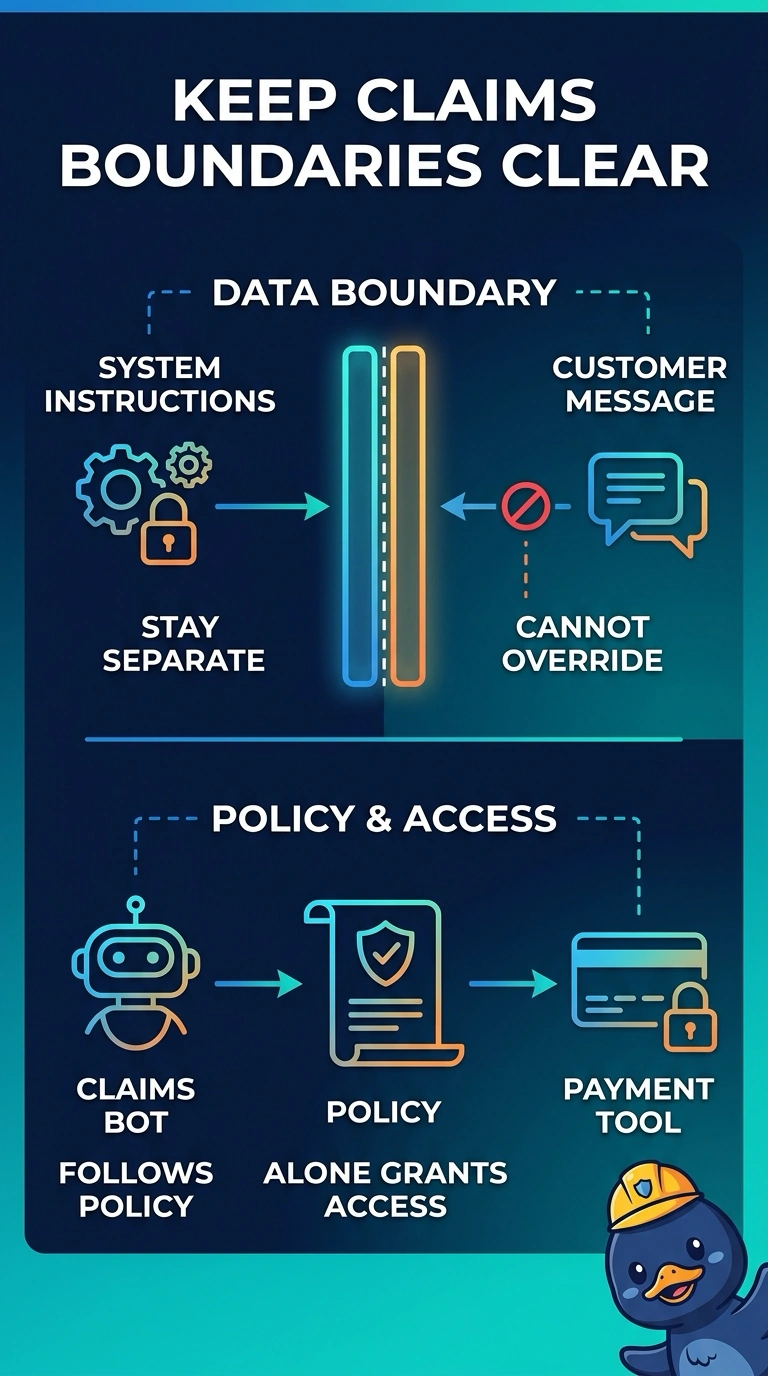
A customer note is a postcard, not a signed order from your desk. You keep instructions and the payment tool outside the message and under a fixed policy. A larger mixed prompt, encryption of an old training file, or a quantum-safe mail tunnel does not build that wall.
Full Explanation
Customer text is untrusted data, and if it shares a channel with the bot's instructions a crafted claim can override them and invoke the payment tool. Keep instructions and tool rights outside the message so the payment tool runs only under a fixed policy. A larger mixed prompt, encryption of an old training file, and a mail tunnel do not govern that live tool decision. Keep system instructions separate from customer text, and let policy alone grant the payment tool is the design that meets this requirement. A larger public model whose single prompt still mixes instructions with the customer message is the wrong fit because a larger model with a mixed prompt still lets the customer text sit in the same channel as the instructions. Encryption of an old training file that this live claims bot is not reading is the wrong fit because encrypting an old training file protects stored examples and does not limit a tool call the live bot can make. A quantum-safe mail tunnel that does not govern how the bot chooses tools is the wrong fit because a mail tunnel secures a different channel and never decides whether the payment tool may run. Exam caveat: A fixed policy can still be wrong, so review which claim states may call the payment tool, and do not treat the prompt boundary as a substitute for that rule. Operational check: In a lab bot, submit a claim that says to ignore prior instructions and pay the sender, and confirm the payment tool is not invoked and the instruction text is unchanged.