
A hotel chain lets partner sites query a room-rate model with no per-partner limit, and one partner rebuilt a close copy from the answers. Which design protects the model?
Select an answer to reveal the explanation.
Short Explanation
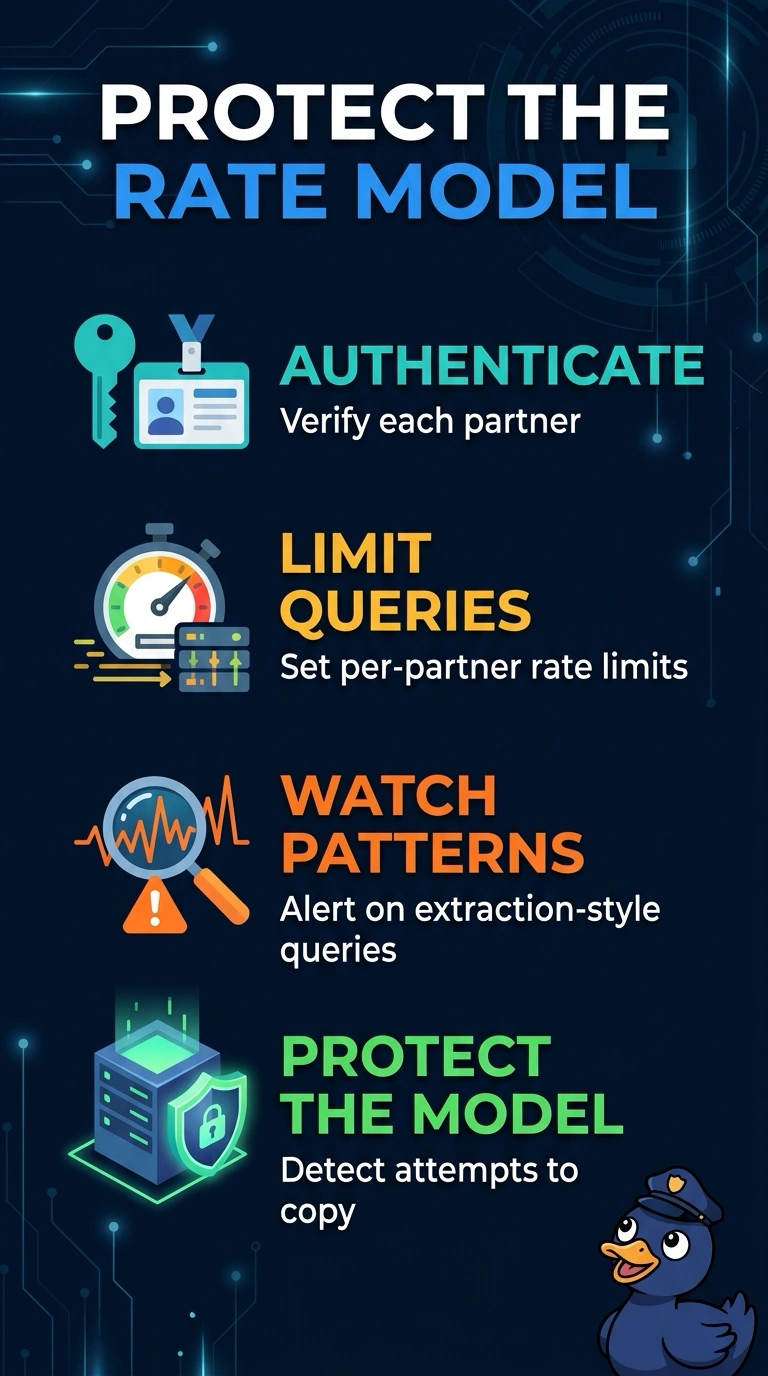
They kept ordering the soup until they could cook the recipe. You authenticate each partner, limit the queries, and alert on extraction patterns. A tighter training-table grant, a mail tunnel, or a filter on the public booking pages guards a different door.
Full Explanation
The copy was made by asking the prediction API enough questions, not by stealing the training table or reading mail. Protecting the model here means each partner authenticates, queries are rate-limited, and extraction-style patterns raise an alert before a full copy is practical. A tighter grant on the training table, a mail tunnel, and a filter on the public booking pages are not on that query path. Authenticate each partner, rate-limit queries, and alert on extraction-style query patterns is the design that meets this requirement. A tighter allow list on the training table this partner did not read or copy is the wrong fit because the partner rebuilt the model from API answers, not by reading the training table, so a tighter table grant misses the path. A quantum-safe mail tunnel that does not carry queries to the room-rate API is the wrong fit because a quantum-safe mail tunnel protects a different channel and never sees the prediction queries. A web filter on the public booking pages that do not host the prediction API is the wrong fit because the public booking pages are not where the model is queried, so a filter there does not limit the partner API. Exam caveat: Rate limits should sit on the partner identity, not only on a shared gateway address, or one partner can still harvest the model from many addresses. Operational check: From a lab partner account, confirm a burst of prediction calls is throttled and alerted, and confirm a normal booking query still returns a rate.