
A bakery chain's pipeline scans each container image, then production pulls whatever the tag latest currently points at. Last week that tag was moved to a build that had not been scanned. Which next step closes this hole?
Select an answer to reveal the explanation.
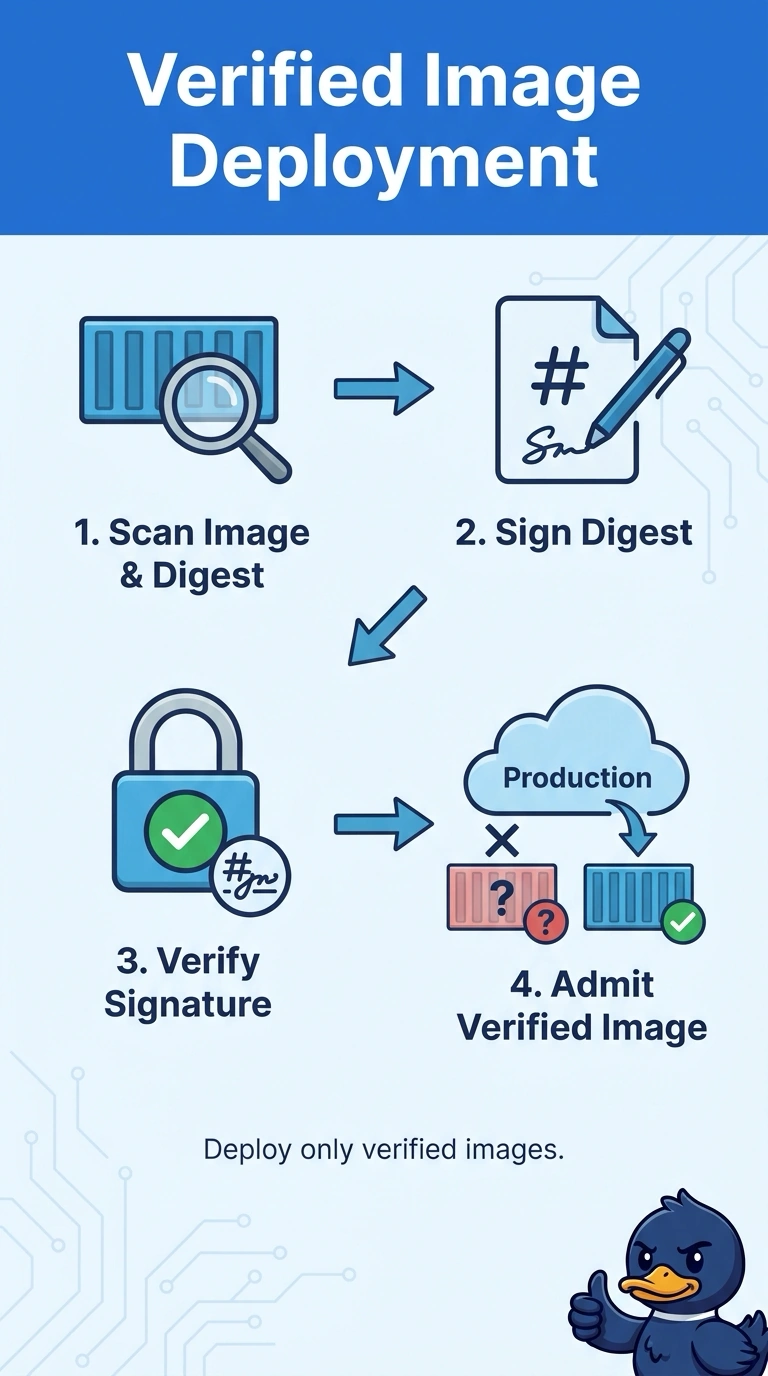
Short Explanation
You want the seal on the exact image you checked, not on a tag someone can move. Sign the scanned digest and admit only an image whose signature checks out. A network-plan gate, secret rotation, or another scan of a movable tag leaves this hole open.
Full Explanation
The scan already happened; the hole is that production follows a tag that can be repointed to different image bytes. Signing the digest that passed the scan, then admitting only an image whose signature checks out, ties production to the scanned build. A policy gate on a network plan judges a different part of the pipeline and does not bind the image bytes production pulls. A secret block and rotation address an exposed credential, but this incident has no exposed secret; its problem is a tag moved after a clean scan. Another scan of whatever the latest tag points at still trusts a movable name, so the tag could move after the scan and direct production to unscanned bytes. Exam caveat: Admission must verify the signature against the digest it pulls; merely having a signature file without checking it does not close the tag swap. Practical check: In a lab registry, move the latest tag after a signed scan and confirm that production rejects the new target while the original signed digest still deploys.