
A stadium wants a model to sort contractor badge requests into complete and incomplete piles during a hiring surge. Policy forbids the model from issuing badges or opening doors. Which use fits?
Select an answer to reveal the explanation.
Short Explanation
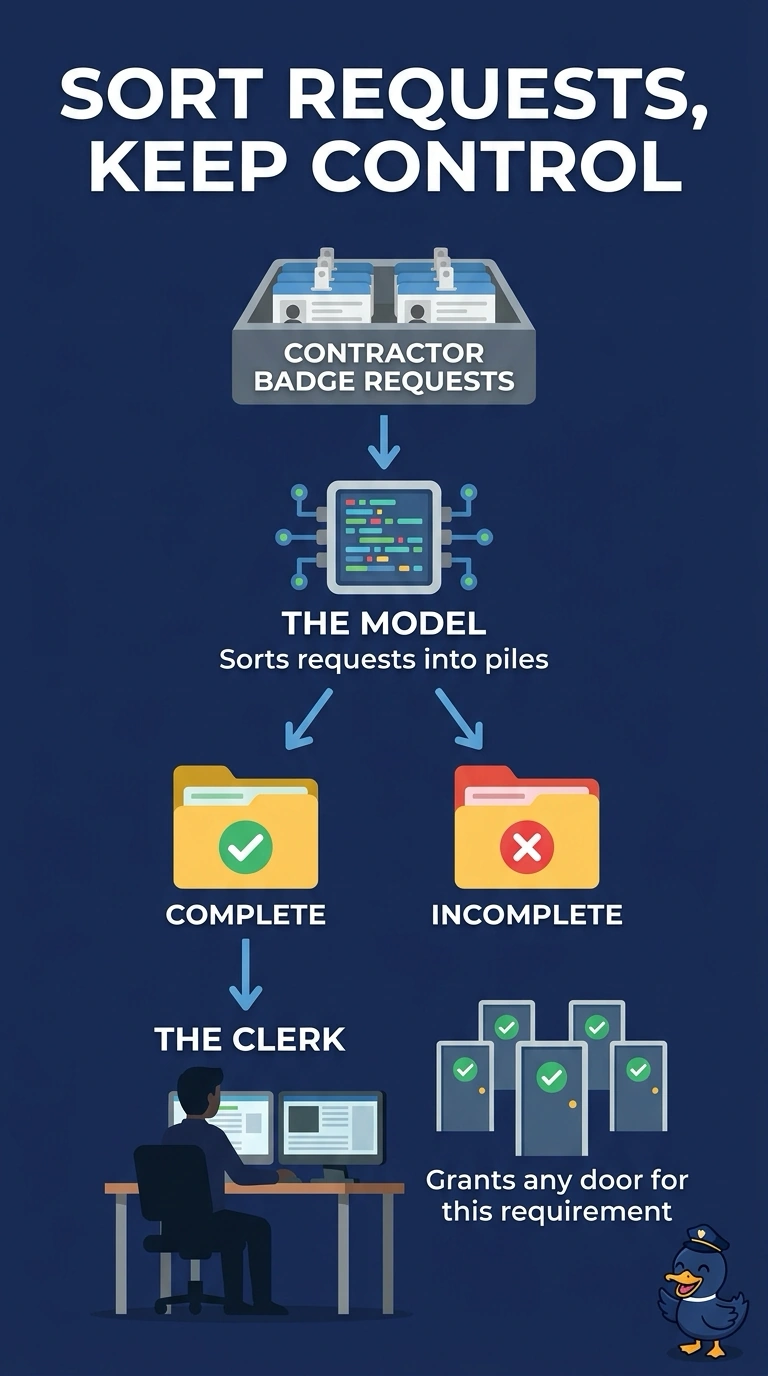
You can use clerical sorting to separate complete badge packets from incomplete ones, while a clerk grants any door. Issuing badges, deleting door-control rules, or closing requests without a clerk review crosses the written boundary.
Full Explanation
Sorting packets is a clerical draft, and the policy allows the model to separate complete requests from incomplete ones while leaving every grant to a clerk. A grant changes who can enter the stadium, so the clerk remains the person who actually grants access. Having the model sort the piles while a clerk grants any door fits the requirement. Automatically issuing badges and unlocking approved doors after sorting complete packets is the wrong fit because issuing badges and opening doors are access grants the written policy keeps with a person. Deleting door-control rules so the clerk can rebuild them later is the wrong fit because changing those rules is outside the permitted sorting task. Approving the pile and closing every request without a clerk review is the wrong fit because it skips the human grant the policy still requires. Exam caveat: If a later policy allows the model to issue a visitor badge, name that badge type and the door groups it can touch before widening this sorting task. Operational check: Run a lab packet through the tool and confirm it returns a sorted pile only, with badge-issue and door-open actions absent from the tool list.