
A city parking system is built by clicking in a console, the servers drift apart, and CPU alerts already page the on-call staff. Which automated element is missing?
Select an answer to reveal the explanation.
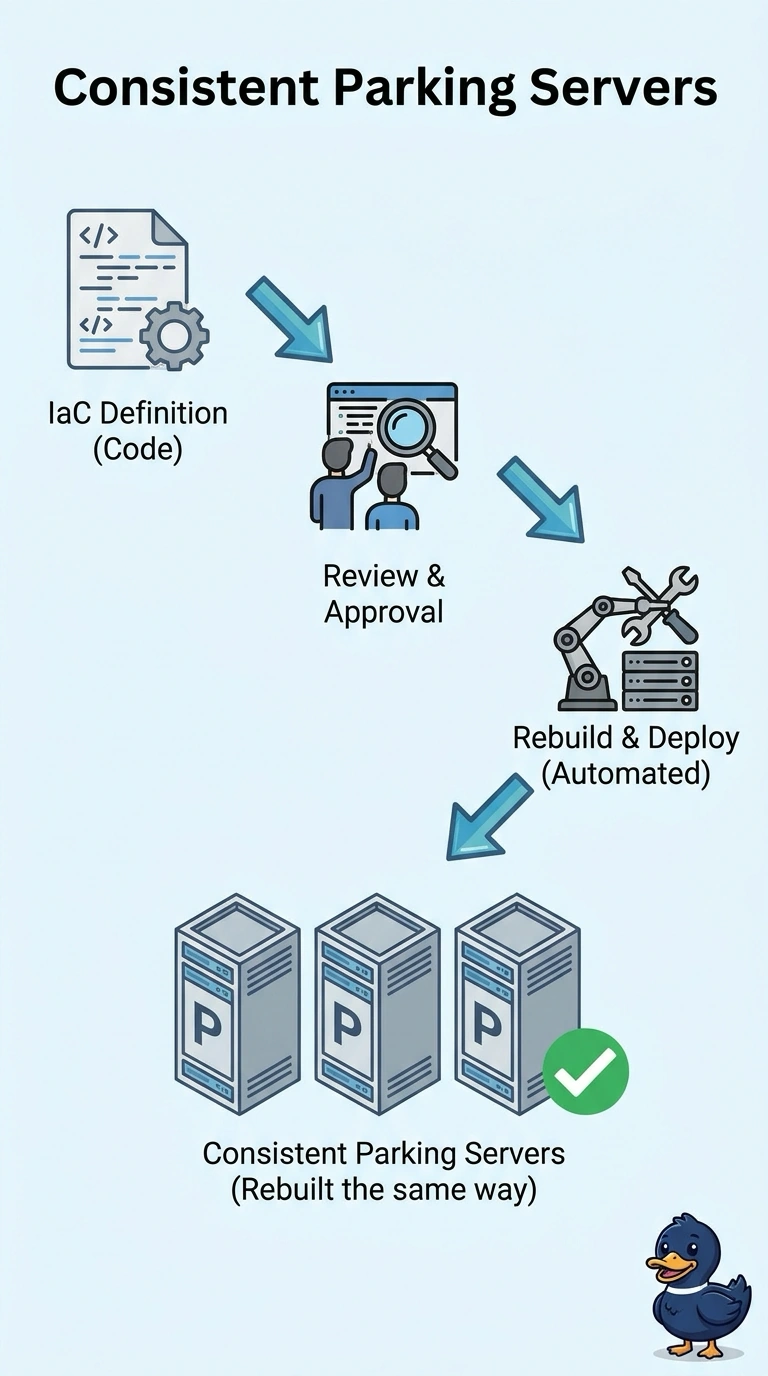
Short Explanation
A shed rebuilt from memory will not match the shed next to it. You define each parking server in code so the build is reviewed and repeated the same way. Another CPU dashboard, a container scan for a system that is not containerized, or an incident playbook does not give you that definition.
Full Explanation
The gap is how the servers are defined, because console clicks produce drift and skip review. Infrastructure as code makes each server a reviewed definition that can be rebuilt the same way, and that reviewed definition is the missing piece. Monitoring is already paging on CPU, there is no image to scan, and an incident playbook does not become the build input. Infrastructure as code that defines each parking server so a change is reviewed and rebuilt the same way is the design that meets this requirement. Another monitoring view of the CPU alerts the on-call staff already receive is the wrong fit because CPU alerting is already in place, so another view of the same alerts does not stop the servers from drifting. A container-image scanner for a system that is not built or deployed as images is the wrong fit because image scanning applies to container builds, and this parking system is not delivered as images. An incident playbook that starts only after an outage is already underway is the wrong fit because a response playbook runs after an incident and does not give the servers a definition anyone can review. Exam caveat: Code definitions still need the CPU alerts you already have, since a reviewed template can still be overloaded once the servers are running. Operational check: Rebuild one lab parking server from the code definition and confirm it matches the reviewed template without anyone clicking changes in the console.