
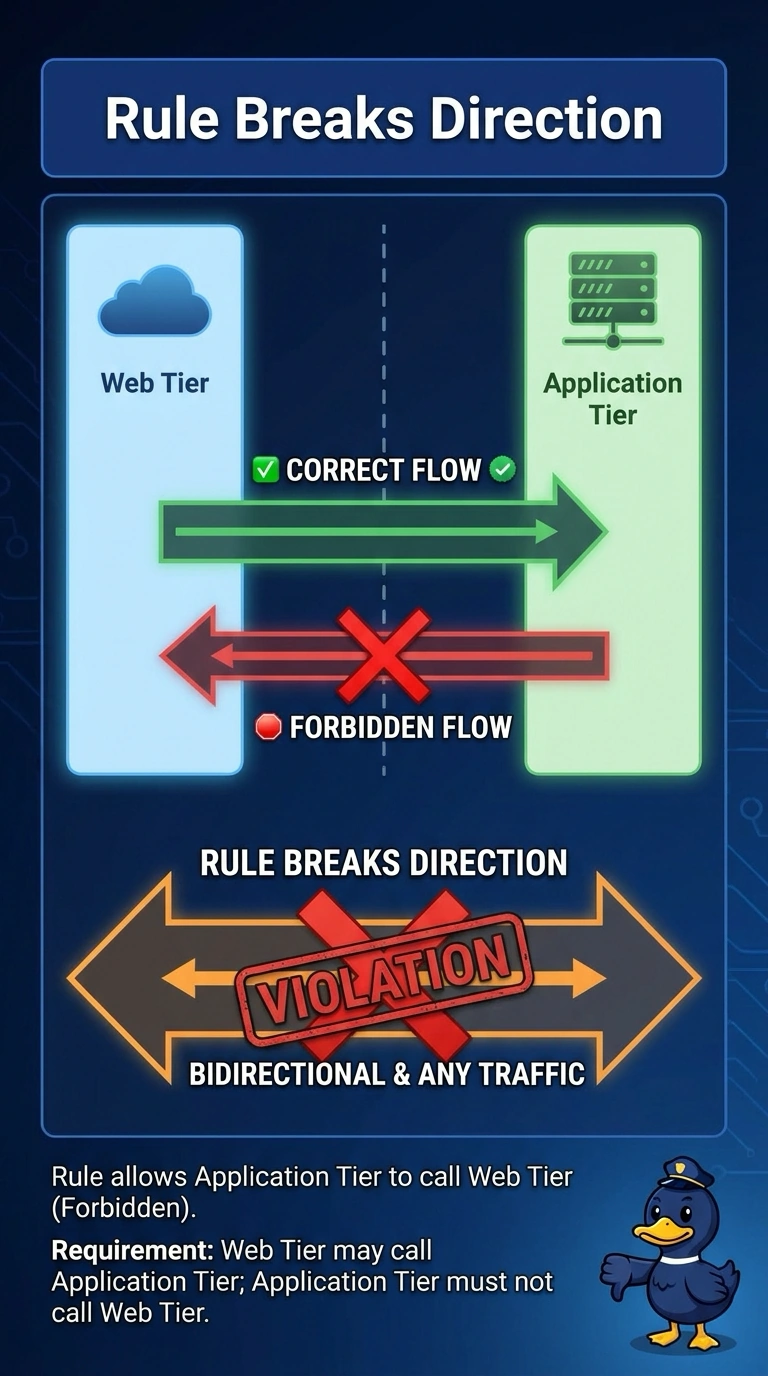
At a regional utility, the web tier may call the application tier and the application tier must not call the web tier. A proposed Secure Workload rule allows any traffic in both directions. What is wrong with approving that rule?
Select an answer to reveal the explanation.
Short Explanation
A two-way street is not a one-way street with a polite sign. The web tier may call the application tier and the reverse call is forbidden, so you reject a bidirectional any rule. Approving it lets the application tier reach back to the web tier.
Full Explanation
Microsegmentation is supposed to name who may call whom. The web tier may call the application tier, and the reverse direction is forbidden. The proposed rule is bidirectional and any, so it allows the application tier to call the web tier, which this requirement forbids, and it should not be approved. Nothing material is wrong only if that bidirectional any rule expressed a one-way call, and it does not, because the reverse direction is included. Putting the direction on a perimeter intrusion-prevention signature misses the conversation when the tiers talk inside the utility network and the flow does not cross the edge firewall. Direction between these tiers is a workload policy. Treating the rule as acceptable in monitoring mode misstates what monitoring does. Monitoring mode records both directions. It does not drop the reverse direction while allowing the forward call. Exam caveat: a later one-way rule has to name the web tier as the consumer and the application tier as the provider, or the same break returns under a new label. Operational check: with a corrected one-way policy in enforcement, confirm the web tier can reach the application tier and that a connection started from the application tier toward the web tier is dropped.