
An airline baggage platform has Secure Workload enforcement turned on, and operators want to stop collecting flow records because unapproved flows are already being dropped. What should they keep doing?
Select an answer to reveal the explanation.
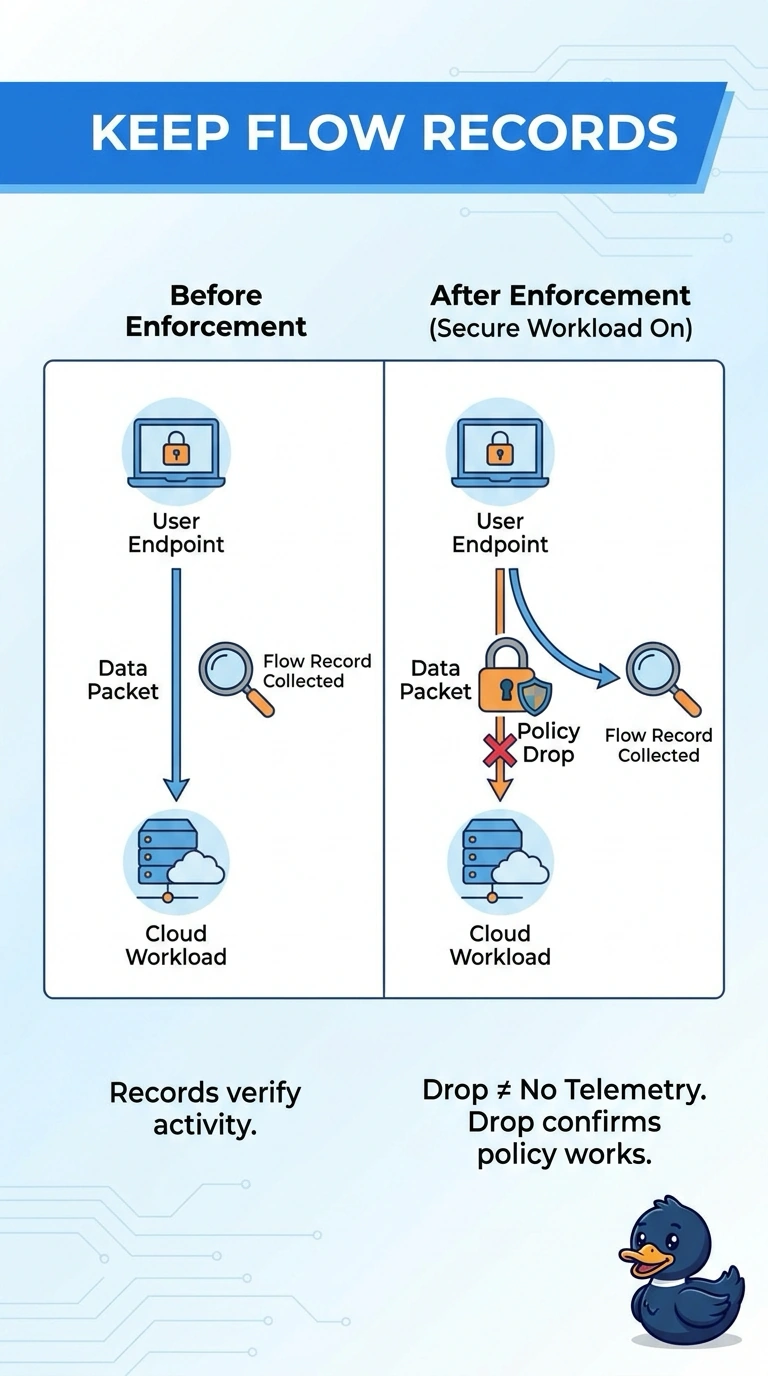
Short Explanation
Locking the door does not throw away the log that proves it stayed locked. Enforcement drops the unapproved baggage flow, and you still keep the flow records that confirm the policy. Stopping collection because drops are already on leaves you unable to show what the policy did.
Full Explanation
Enforcement drops flows the policy denies, and the flow records are how the airline proves which conversations were dropped and which still succeed. Keep collecting workload flow records after enforcement is enabled, because a drop does not replace the telemetry that confirms the policy is working. Stopping flow collection once enforcement is on leaves operators with a deny they cannot show later. Telemetry is not useful only while the scope is monitoring. Switching the baggage scope back to monitoring mode would keep a record, and unapproved flows would be logged rather than dropped, which abandons the requirement that was just turned on. Relying on the perimeter firewall log alone misses east-west conversations that stay inside the segment and do not cross that firewall. Workload enforcement does not make those flow records unnecessary. Exam caveat: a record of a deny is not the same signal as packet loss on a path, and the two should not be tuned as if they were one incident. Operational check: after enforcement, produce an unapproved baggage connection and confirm the flow record shows the deny together with the workload that attempted it.