
A laboratory called its Secure Workload policy complete, then a new microservice began calling the results database. The dependency map still omits that service. What has to happen before the map is trustworthy?
Select an answer to reveal the explanation.
Short Explanation
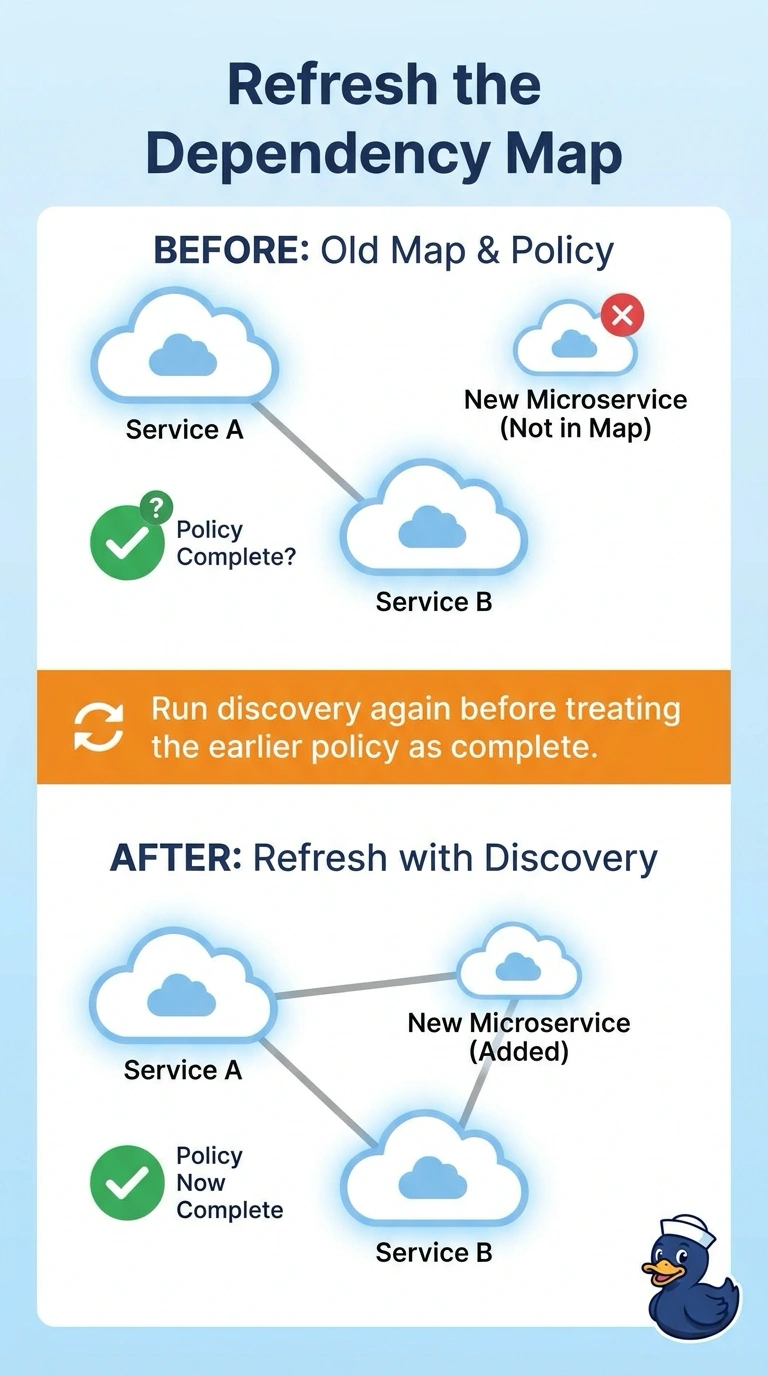
A map printed before the new road opened will send you into a field. The microservice appeared after the policy was called complete, so you run discovery again and let the map include it. Enforcement of yesterday's picture does not reveal a service the inventory has not seen.
Full Explanation
Discovery is how the workload map learns a service. The policy was marked complete before this microservice existed, so the map omits it until the team runs discovery again and the new microservice is added before anyone treats the earlier policy as complete. Switching the completed scope straight to enforcement assumes the new service is already covered without another discovery pass. Enforcement of an incomplete map can miss the new conversation or drop a dependency nobody has named. Deleting the traffic baseline hides the comparison that would show a new conversation. The microservice does not need a new name, and hiding the baseline does not put it on the map. Moving the perimeter intrusion-prevention sensor next to the database may inspect packets that reach that sensor. It does not discover internal services into the workload map. Exam caveat: a service that stays inside the segment remains invisible to a perimeter sensor even when that sensor is moved closer to the database. Operational check: run discovery, find the new microservice and its calls to the results database on the map, and only then decide whether a new allow or deny belongs in the policy.