
An airline's public booking site is being exhausted by an HTTP flood. Which control can sit in front of the site and filter that application-layer traffic?
Select an answer to reveal the explanation.
Short Explanation
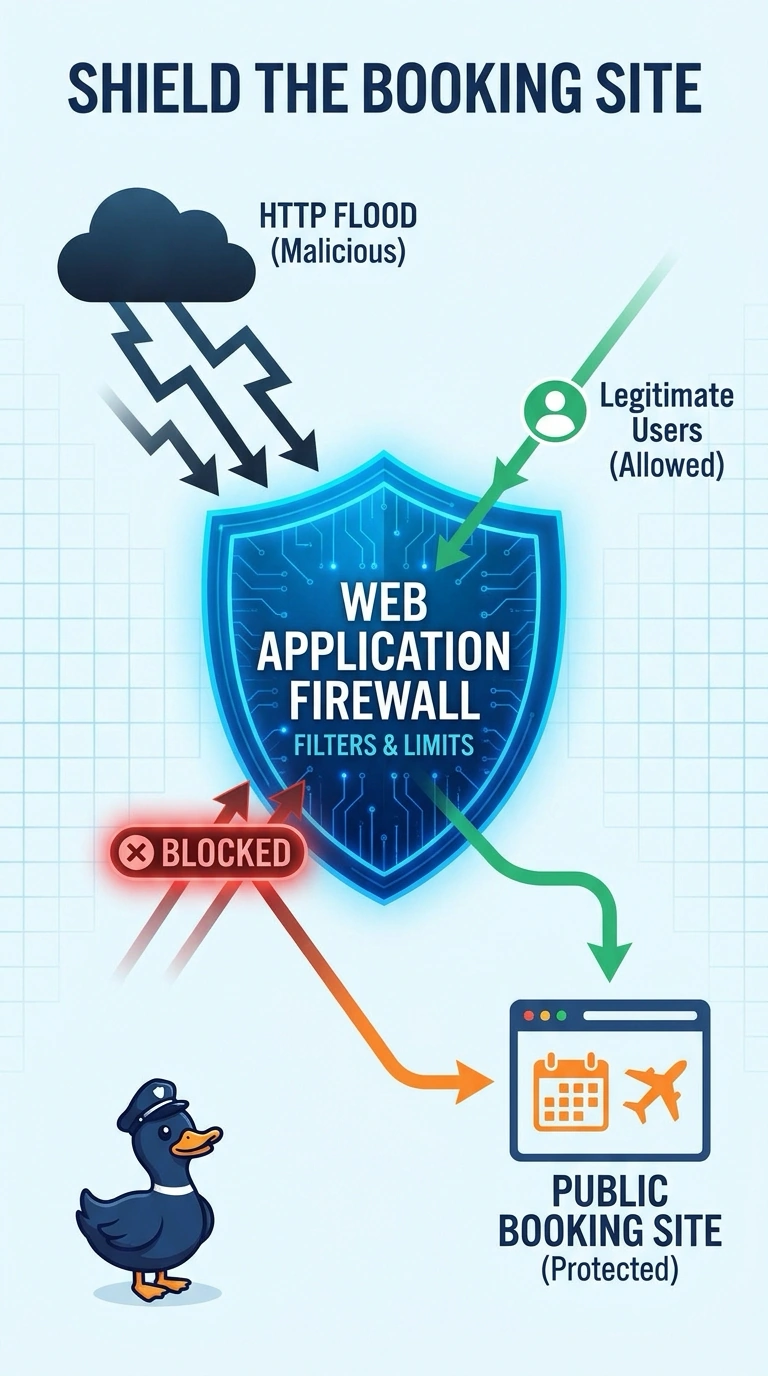
You can think of a web application firewall as a bouncer at the booking site’s door: it can filter and limit the HTTP flood. A crew-laptop firewall and a branch-to-headquarters IPsec tunnel are not in front of the public site, while blocking the booking name at DNS keeps travelers from reaching it. You want the control that filters the traffic without removing the site for travelers.
Full Explanation
A web application firewall sees HTTP and can filter application attacks and application-layer floods. Placing it in front of the public booking site puts that inspection on the path the flood is already using, so requests can be limited without taking the airline off the internet entirely. Enabling the host firewall on a crew laptop in the operations office does nothing for packets aimed at the public site, because that laptop never sits in front of the booking service. Building an IPsec tunnel from a branch router to headquarters protects a network path between those two points; it does not parse or rate-limit the HTTP flood hitting the public listener. Blocking the booking name at DNS stops legitimate travelers from resolving the site and does not filter application traffic from clients that already have the address. Exam caveat: a volumetric flood that fills the circuit before HTTP is formed is a different problem and needs scrubbing ahead of the pipe; that is not this HTTP flood. Practical check: confirm the booking listener’s traffic is steered through the web application firewall and that flood rules rate-limit the abusive HTTP pattern while a normal booking still completes.