
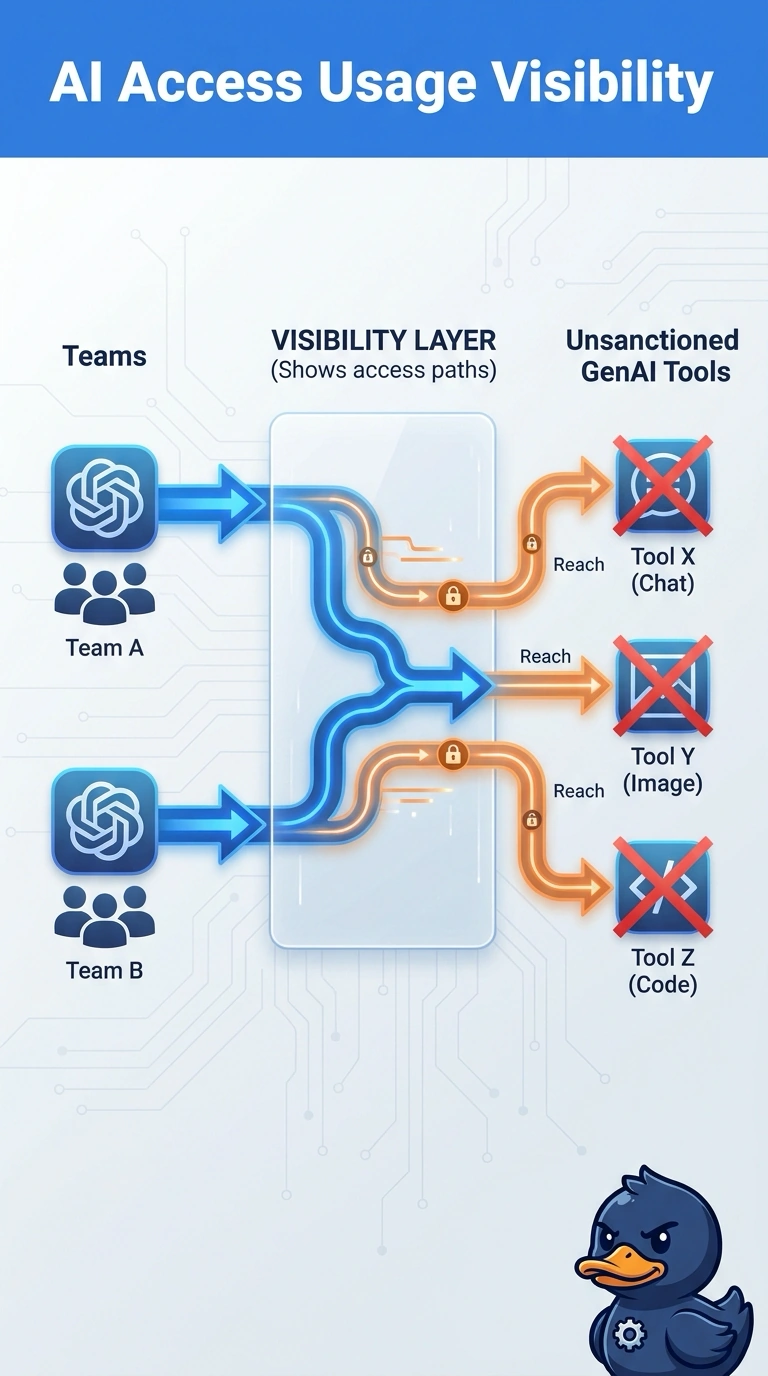
A factory security lead wants to know which teams are using which unsanctioned generative AI tools during the workday. Which capability answers that usage question?
Select an answer to reveal the explanation.
Short Explanation
Store cameras tell you who walked into which shop, while a crash test only tells you whether a car you built is sound. You want AI Access usage visibility for unsanctioned tools, not a validation test of an internal model. The trap is treating a category block or a prompt rule as that team-by-team inventory.
Full Explanation
AI Access identifies third-party AI use in inspected traffic, including tools the factory never sanctioned. Correlate user identities in the usage records with the organization's team roster for a team-by-team view. A validation test of the internal model the factory fine-tuned belongs to AI Defense, which checks models the enterprise builds or tunes, and that result does not list shadow-tool use by team. Blocking the entire generative-AI web category may stop the traffic, but it skips the report the lead asked for and hides which teams were involved. An AI Guardrails privacy rule inspects prompts, responses, and files for classes such as personal data. It is not an inventory of unsanctioned applications, and prompt inspection cannot stand in for usage visibility when the question is who uses which tool. Exam caveat: AI Defense and AI Access answer different jobs, so a model-validation pass does not describe employee tool use. Operational check: review the AI Access view of generative-AI activity and confirm it breaks results out by team and by application rather than by an internal model score.