
A university security team needs an inventory of models and AI workloads running inside the university, not only the names of public generative-AI services employees visit. Which capability builds that inventory?
Select an answer to reveal the explanation.
Short Explanation
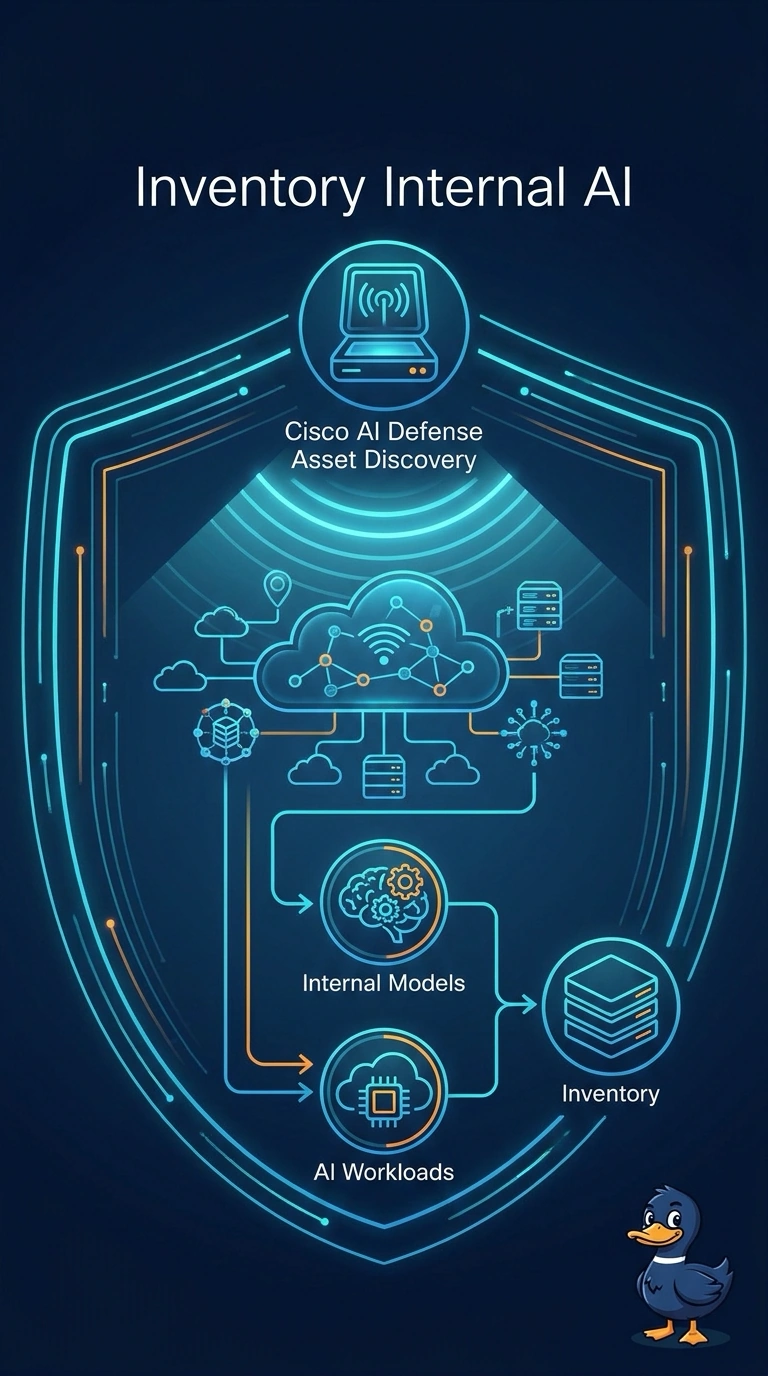
Counting taxis on the public street does not tell you which engines are running in your own garage. You use AI Defense asset discovery to inventory the internal models and AI workloads. The trap is a list of public chatbot names, which is a different catalog entirely.
Full Explanation
Cisco AI Defense asset discovery is aimed at the enterprise's own AI assets, so it is the inventory of internal models and AI workloads rather than a list of public websites. A secure web gateway report of public chatbot category names shows destinations employees browse and is not a catalog of models running inside the university. Cloud posture findings on storage buckets describe configuration of those buckets, which is a different object from an AI workload. AI Access discovery of third-party generative-AI sites is the employee-use view inside Secure Access, and stopping there misses the internal models the team asked for. Exam caveat: discovering an asset is not the same as validating it, and a model that is fine-tuned later still needs validation again. Operational check: compare the discovery output with the university's known model hosts and confirm internal workloads appear even when they are not public chatbot names. Ask each model owner which hosts should be present, and treat a public chatbot name with no internal workload as a separate finding rather than proof that the asset catalog is empty.