
An internal human-resources site at a warehouse stays allowed, yet it serves a document that contains macro malware. What stops that document while the site remains available?
Select an answer to reveal the explanation.
Short Explanation
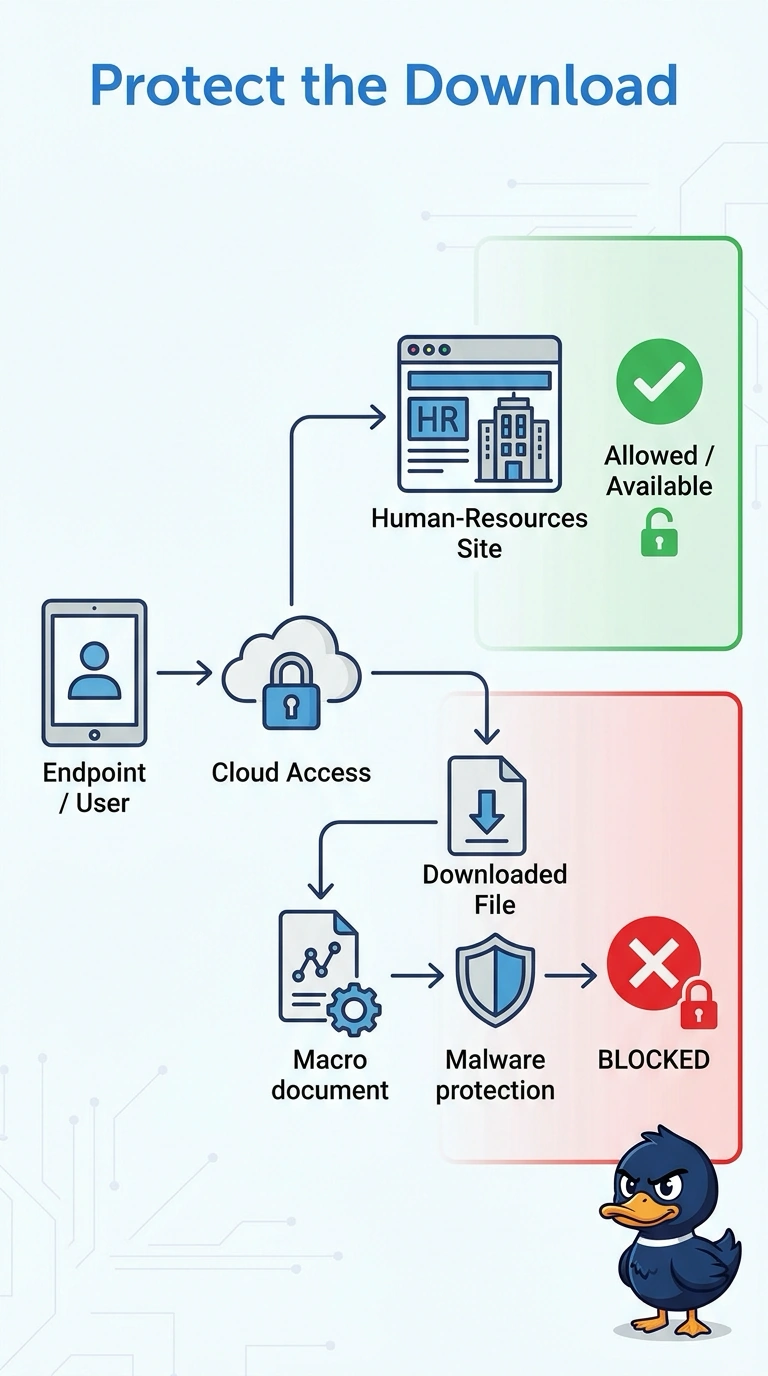
You can keep the human-resources site available and still stop its macro-infected document. Malware protection on the downloaded file blocks it before you open it, while a category allow does not scan the document. A category block would remove the site, and encryption at rest would not scan the download.
Full Explanation
The human-resources site is intended to remain available; the downloaded document is the threat. Malware protection on the downloaded file blocks the macro document while leaving the site allowed, addressing the file without removing access to the site. A category block of the human-resources site would also hide the document, but it would remove a site the warehouse intends to keep available, so it fails the availability requirement. A category allow admits the site for the workforce but does not inspect the document for macro malware; allowing the category is not a malware verdict. Encryption at rest on the human-resources server protects stored bytes, but it does not scan the document during download. Exam caveat: malware protection needs access to the file body, so a decryption bypass on that destination would hide the macro document from inspection. Practical check: download the test document through the inspected path and confirm that it is blocked for macro malware while the human-resources site itself remains allowed. If the destination is left outside decryption, the file body never reaches malware protection.