
A university researcher passes both the identity check and the endpoint posture check, then a file from an allowed private portal is still blocked as malware. Why was the file blocked?
Select an answer to reveal the explanation.
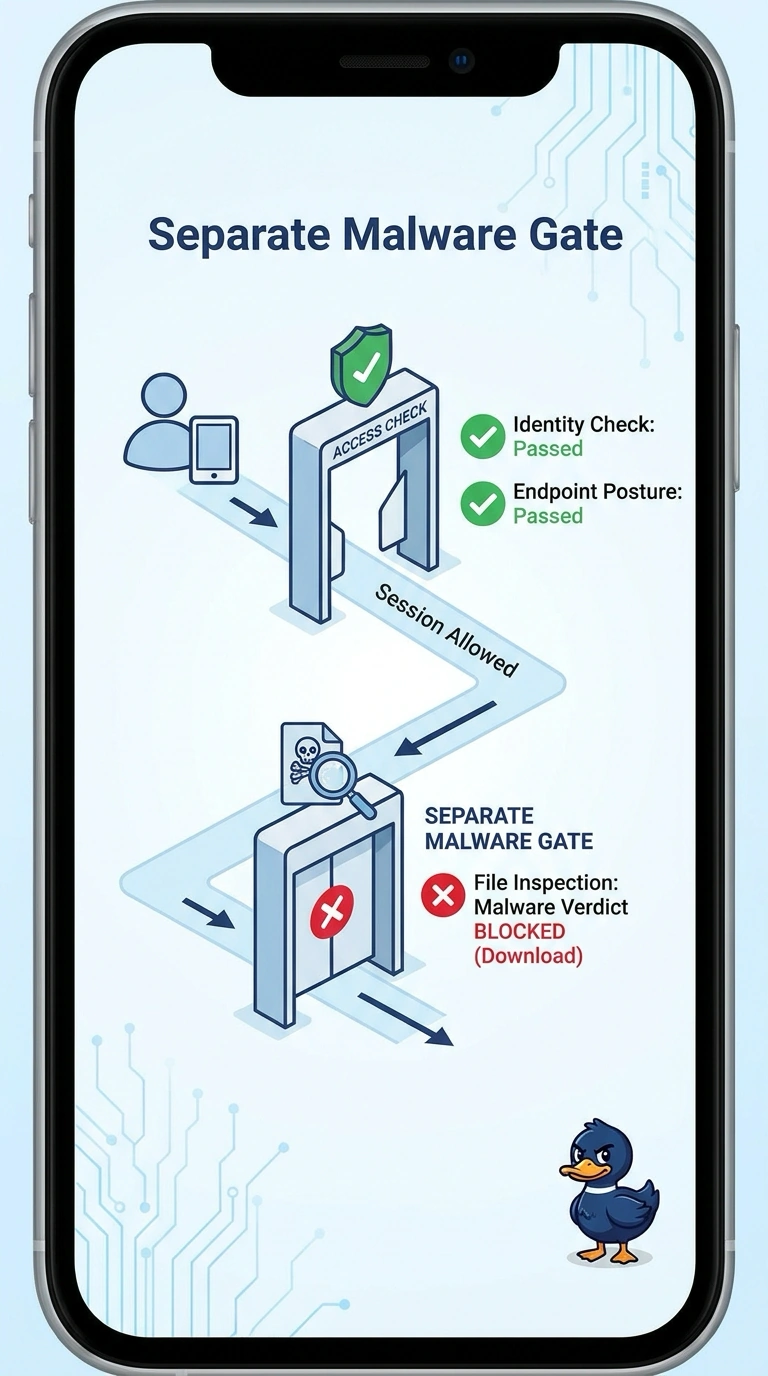
Short Explanation
Clearing the front desk does not mean the package in your bag is safe. Identity and posture both passed, and the file was still blocked because enabled file inspection returned a malware verdict. That verdict is its own gate, separate from the allow you already earned.
Full Explanation
An allow based on identity and posture is not a malware verdict. Enabled file inspection blocked the download on a malware verdict after the access decision allowed the session, which is a separate gate from the identity and posture allow that already succeeded. File inspection can block using reputation or antivirus; sandbox analysis does not hold the first unknown download for a verdict. Endpoint posture failed does not fit, because the researcher passed the health check, so the block is not a health decision against an unmanaged laptop. The identity provider refused the session does not fit either, because the identity check passed and the downloaded file did reach inspection. Data-loss prevention matched a sensitive pattern would be a content verdict rather than a malware verdict on the file. The block was reported as malware, so a sensitivity match is the wrong gate. Exam caveat: do not collapse identity, posture, content, and malware into one allow. Each can fail on its own. Operational check: read the block reason on that download and confirm it is a malware disposition while the identity and posture results for the same session stay successful.