
A clinic's Cisco Secure Access Zero Trust Activity Search shows private-access failures for an internal scheduling application. Before anyone edits policy, what should the analyst read on those events?
Select an answer to reveal the explanation.
Short Explanation
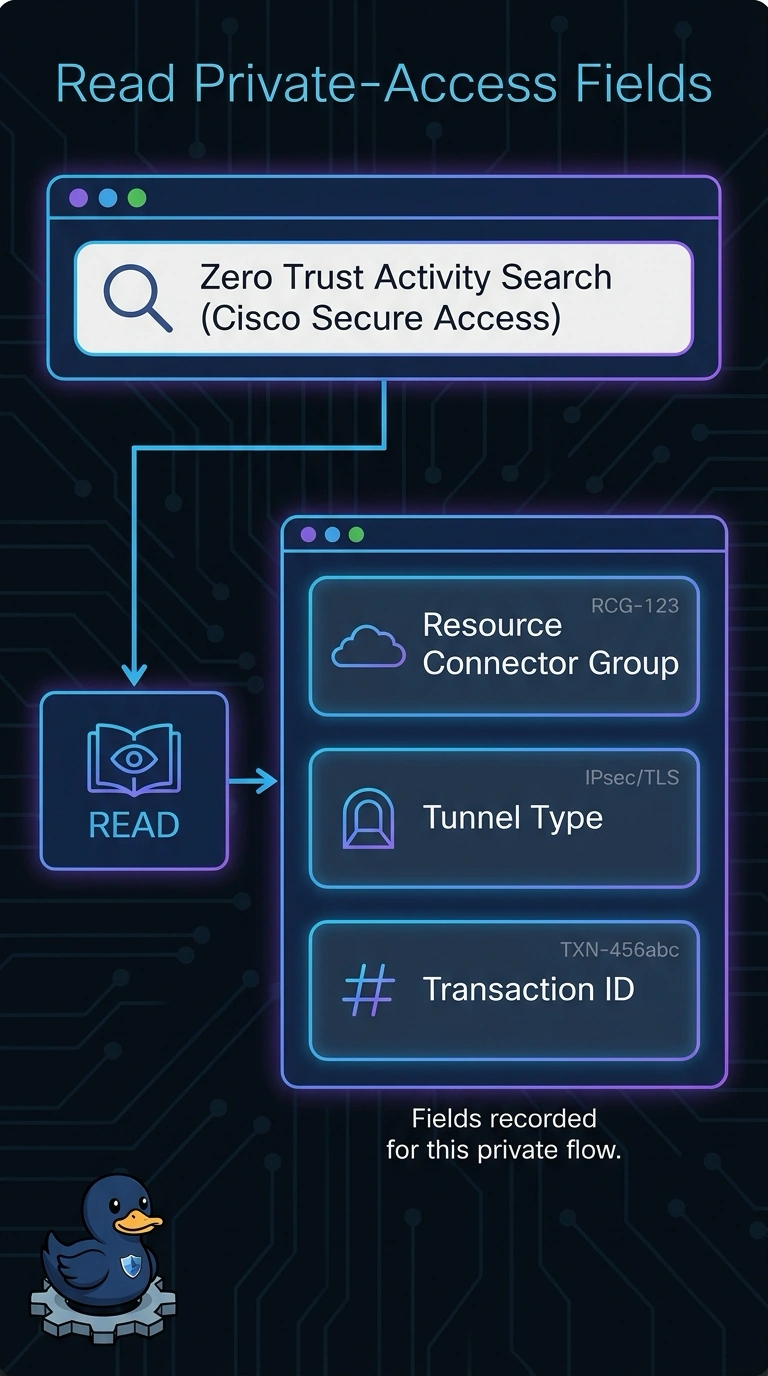
The stamp on a package tells you which dock it came through before you rewrite the mailroom rules. You read the Resource Connector Group, Tunnel Type, and Transaction ID fields in Zero Trust Activity Search for this private flow. The trap is editing a public web category this private scheduling flow never used.
Full Explanation
Zero Trust Activity Search records the Resource Connector Group, Tunnel Type, and Transaction ID for private-access events. Reading those fields on the failing events shows which connector group and tunnel type the flow used and gives a transaction identifier to follow, so you gather those facts before touching policy. A public web category this private scheduling flow never used is a web-gateway control, and changing that category will not repair a private-access failure. The age of a malware signature for files that were not part of the failing private scheduling session explains a file verdict, not a connection failure. A CPU chart for a clinic internet proxy node that did not carry this private scheduling attempt shows load on the wrong device. Exam caveat: block reason, identity, and the connector and tunnel fields are the first facts on a private-access event, and a web category is relevant only when the flow actually used the web path. Operational check: open one failing event in Zero Trust Activity Search and record the Resource Connector Group, Tunnel Type, and Transaction ID before you change any category or signature.