
A public library's baseline loses a required conversation between the checkout system and its payment service. How should operations treat that gap?
Select an answer to reveal the explanation.
Short Explanation
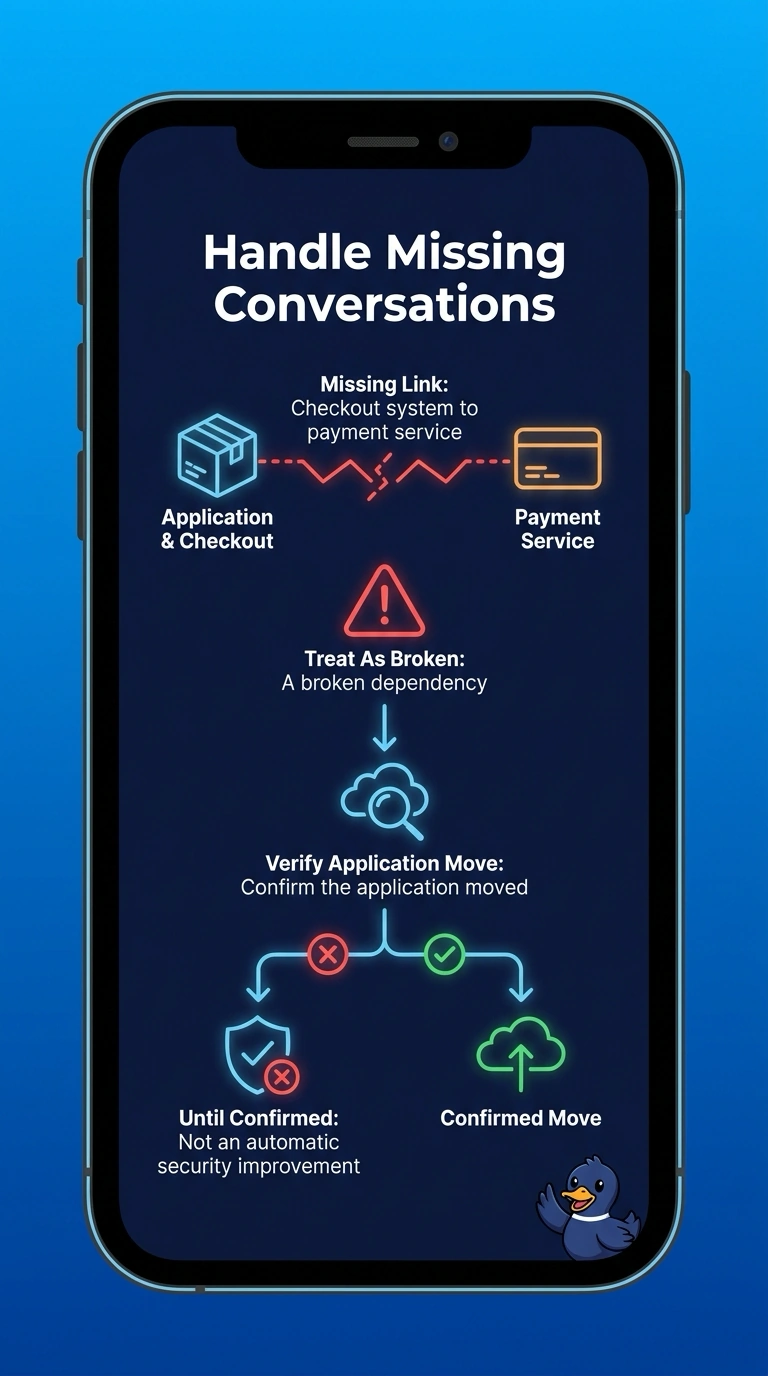
When a shipment that shows up every morning suddenly does not, you call it a missed stop before you call the street safer. You treat the missing checkout conversation as a broken dependency until you confirm the application moved. Fewer lines on a chart are not automatically a security improvement.
Full Explanation
A baseline is useful because a required conversation that disappears is a signal. You treat the missing checkout conversation as a broken dependency until you confirm the application moved, not as an automatic security improvement. The flow may have been cut by a bad deploy, a dead service, or a policy that is dropping a legitimate dependency. The choice to close the gap as a security improvement because the library baseline now shows one fewer application conversation to worry about assumes less traffic is safer, which you cannot know until you confirm the application was supposed to move. The choice to raise the baseline threshold so the missing required conversation no longer stands out against ordinary daily noise hides the gap the baseline was there to show. The choice to compare the sitewide CPU graph and dismiss the gap when processor use looks the same as it did the prior week uses a processor signal that does not tell you whether checkout can still reach payment. Exam caveat: a missing required flow is not a security win by default, and it stays a broken dependency until the move is confirmed. Operational check: verify whether the checkout and payment services are healthy and whether an approved change moved that conversation, and only then update the baseline.