
A research lab phone that has been rooted requests the sample-tracking application, and the access policy says a rooted device must not pass. What should the posture decision do?
Select an answer to reveal the explanation.
Short Explanation
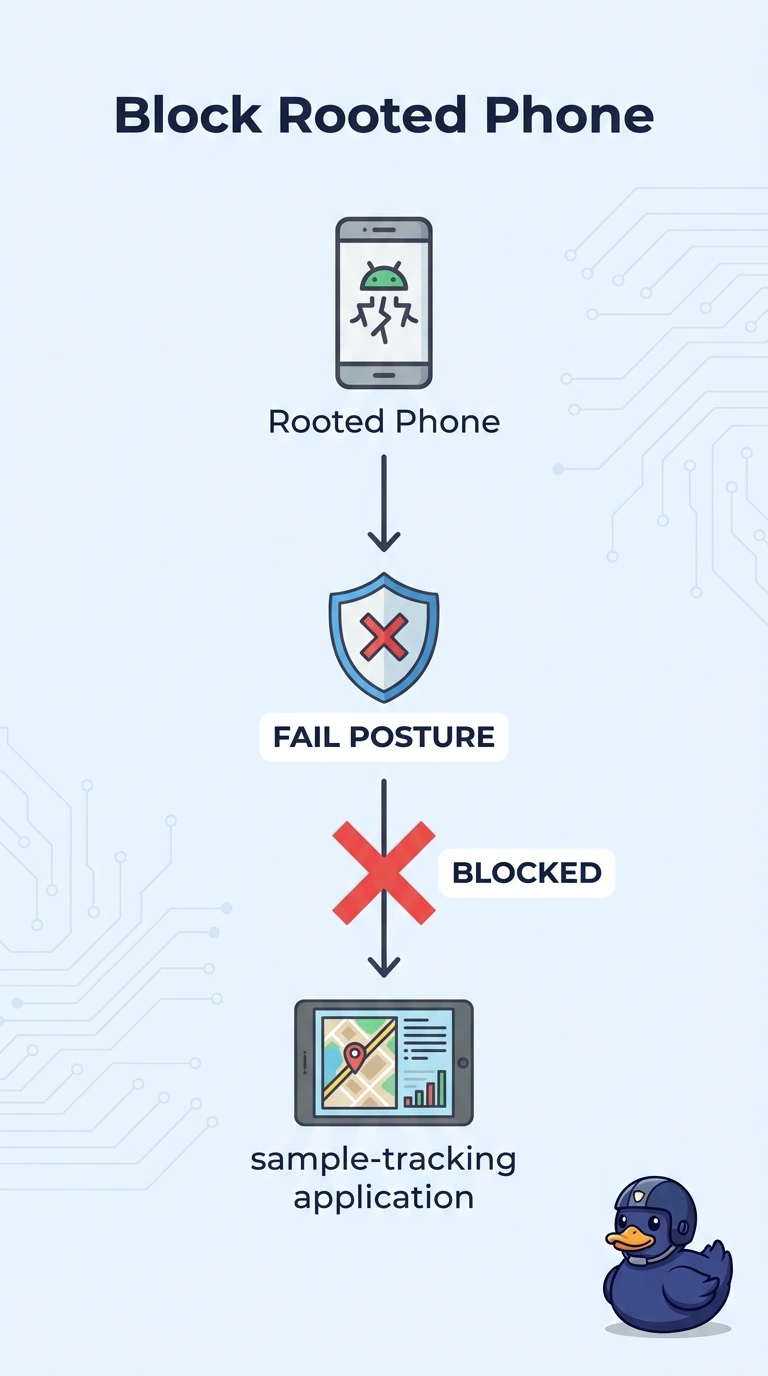
A broken seal on a sample container means you do not carry that container into the clean room. You fail posture for the rooted phone so the sample-tracking application stays closed to it. The trap is trusting a browser header, a sign-in that never looked at the device, or a pass from last quarter.
Full Explanation
Mobile posture includes jailbreak or root, and a policy that says a rooted device must not pass has to fail that phone before the sample-tracking application is granted. Passing the phone because a browser header calls it mobile uses a weak signal and ignores the stronger endpoint finding that the device is rooted. A SAML sign-in authenticates the user and does not measure whether the phone has been rooted, so it cannot clear the posture failure. Accepting last quarter's posture pass treats a stale result as current and skips the root check on this request. Exam caveat: a posture failure changes access when the policy says noncompliant devices are denied, which is the rule stated here. Operational check: attempt the sample-tracking application from the rooted phone and confirm the access log shows a posture deny tied to the root finding. A rooted device can hide the controls that application expects, so granting it would ignore the rule the lab already wrote. Retry only after the phone is restored and posture is evaluated again on that new attempt.